
Last updated November 15, 2026
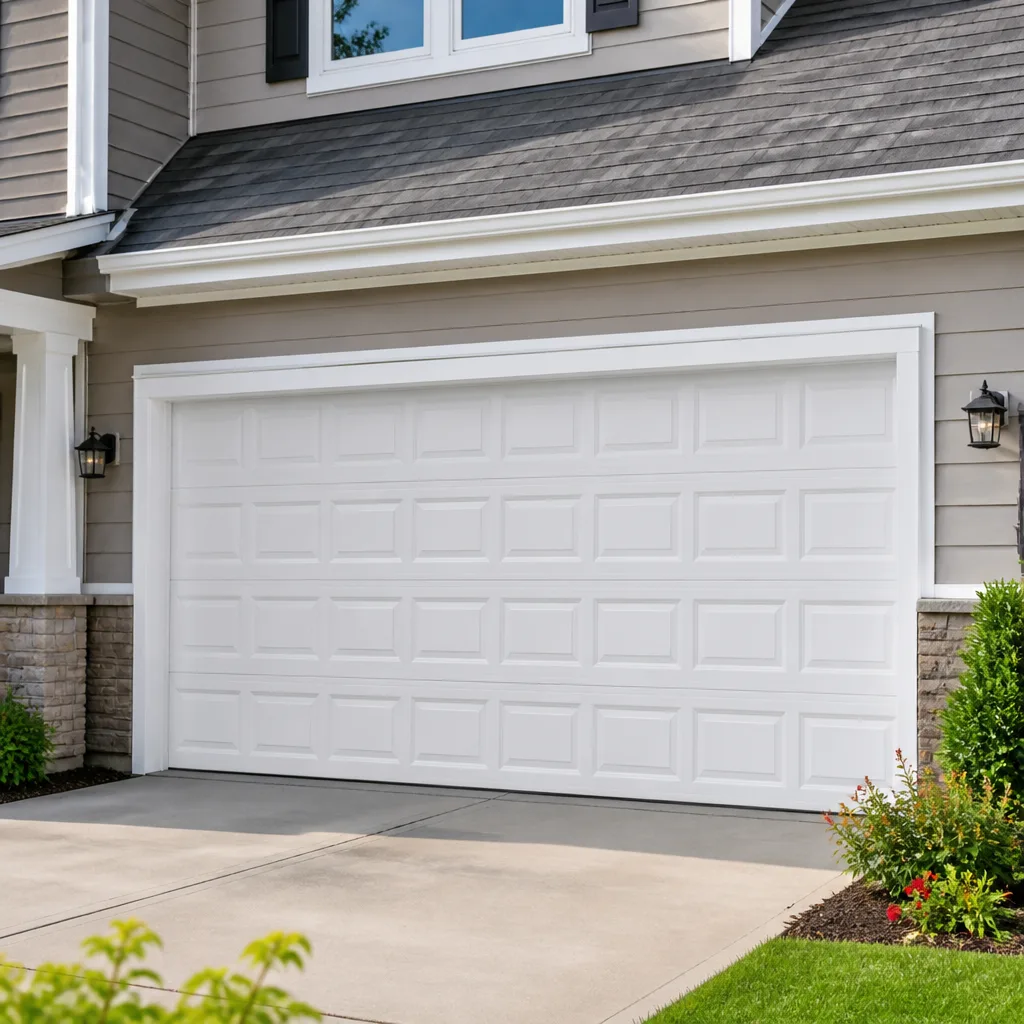 Raised-panel steel
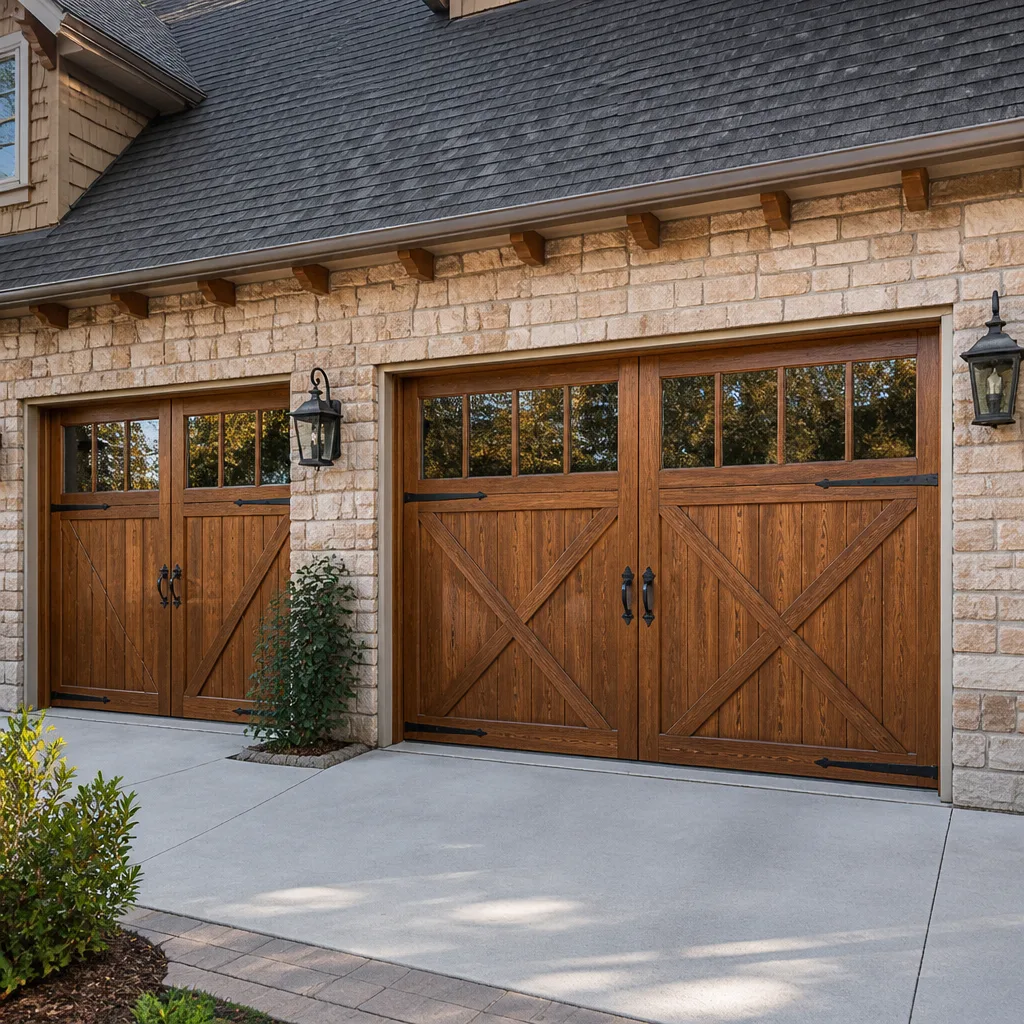 Carriage house
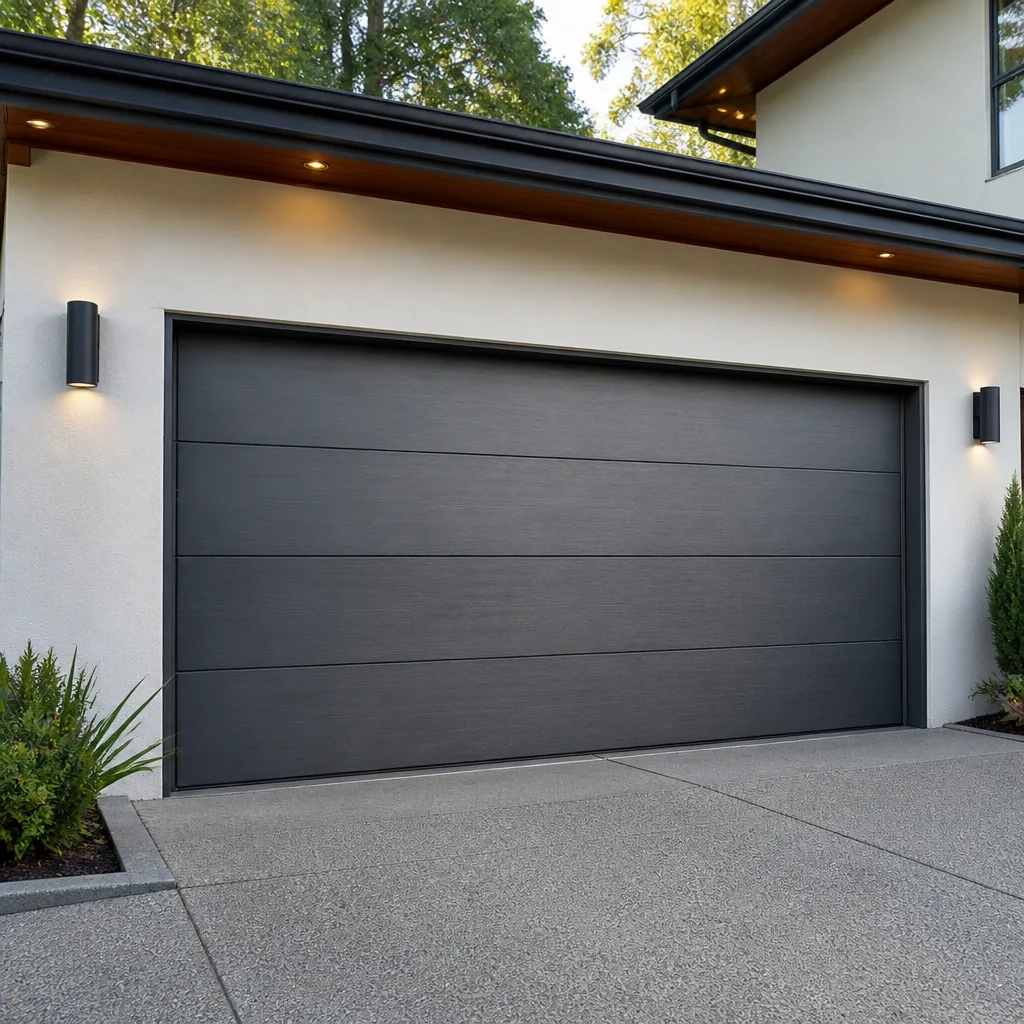 Modern flush
 Full-view glass
 LiftMaster openers
 Chamberlain openers
Full 25-point door and opener safety check with every visit - springs, cables, rollers, tracks, and your LiftMaster or Chamberlain opener included
You get a price before we start. It does not change when the pro arrives.
Get your free estimateDIY vs Professional Garage Door: The Suffolk Homeowner’s Decision Guide
Most homeowners who get hurt working on a garage door don’t get hurt because they lack skill. They get hurt because they didn’t know which parts of the door are load-bearing death traps and which parts are basically a hinge. A torsion spring under tension stores enough energy to send a wound cable across a garage at speed, and that’s not a scare tactic – it’s physics. It’s also why spring work has a consistent injury record even among capable DIYers who watched three tutorials first. This guide splits the job task by task: what’s genuinely safe to do yourself in Suffolk, what isn’t worth touching no matter how handy you are, and how to decide in under a minute.
Quick Answer
You can safely handle lubrication, sensor alignment, weather seal replacement, and remote reprogramming yourself. You should never touch torsion springs, cables, or high-tension hardware, and you should hire out anything involving the opener’s internal wiring or a door that’s come off its track. The real dividing line isn’t skill – it’s whether a task has injury potential, voids a warranty, or needs a tool that costs more than the repair.
Styles & brands we work with
- Raised-panel steel
- Carriage house
- Modern flush
- Full-view glass
- LiftMaster openers
- Chamberlain openers
Table of Contents
- The Task-by-Task Split
- The Real Cost Comparison
- How Virginia Treats Homeowner Garage Door Work
- When a DIY Attempt Voids Your Warranty
- The 60-Second Decision Flowchart
- Why Suffolk Doors Age the Way They Do
- Common Mistakes to Avoid
- When to Call a Professional
The Task-by-Task Split: What’s DIY-Safe and What Isn’t
Here’s the split that actually matters, organized by what a homeowner in Suffolk can pick up a wrench and do versus what needs a trained hand. We work on what you already have, and part of that means being honest about where the line sits.
Genuinely DIY-safe tasks
These are tasks where the worst outcome is a door that still doesn’t work and a wasted afternoon. No stored energy, no overhead load, no risk of a finger or worse.
- Lubrication: Hinges, rollers, and the torsion bar bearings take a garage-door lubricant, not WD-40. Two or three times a year keeps the door quieter and puts less strain on the opener motor.
- Photo-eye sensor alignment: If the door reverses on the way down for no obvious reason, the sensors near the floor are usually out of line or have something in front of them. Straighten them until the indicator lights settle, and clear cobwebs or debris from the lenses.
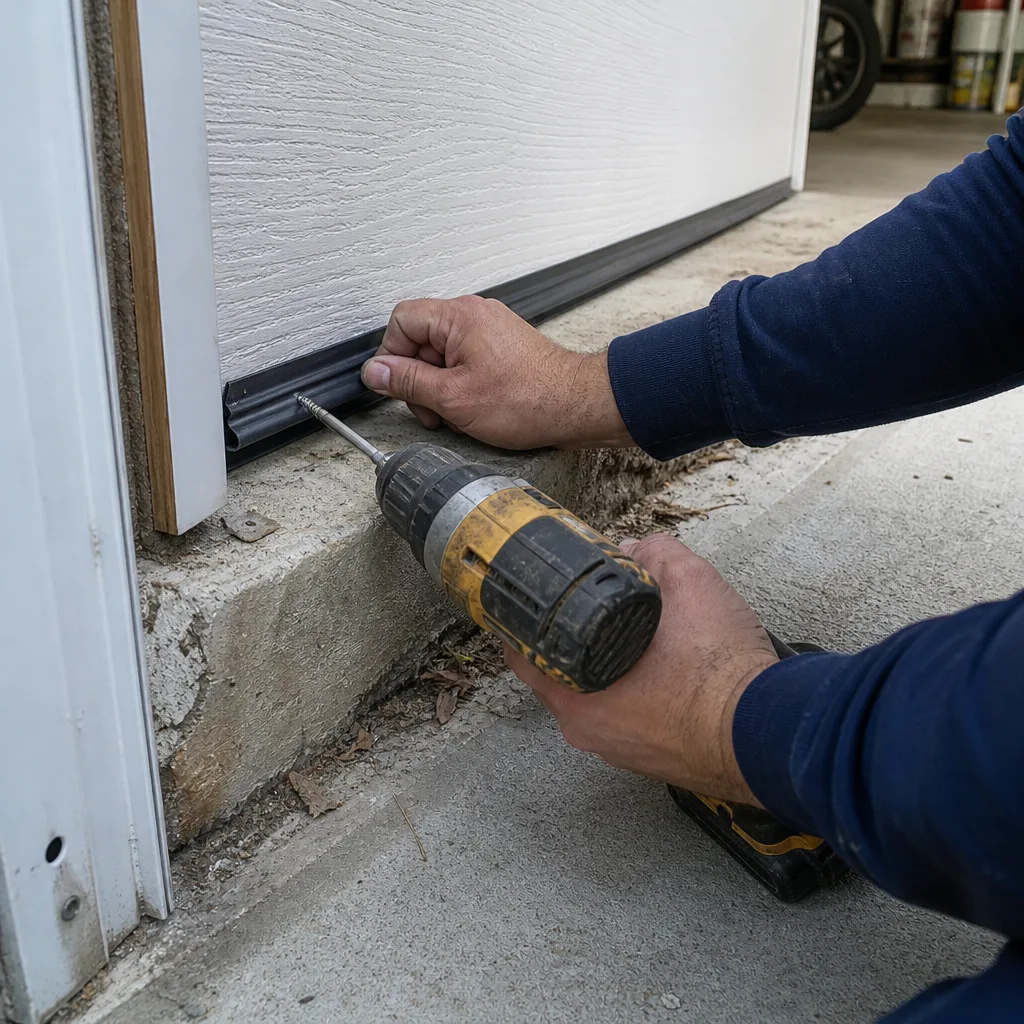
- Weather seal replacement: The rubber or vinyl strip along the bottom of the door slides out of its aluminum retainer and pushes back in. A homeowner can swap it in 20 minutes with the right width. It’s one of the highest-value small fixes in a climate like Suffolk’s, where summer humidity and driving rain work on that seal year after year.
- Remote reprogramming: Clearing and re-pairing a remote is a manual-and-a-button-press job. Most LiftMaster, Chamberlain, Genie, and Craftsman remotes follow a similar pattern, and the process is printed on the motor head.
- Visual inspection: Look at the springs for gaps or rust, check the cables for fraying, and listen for grinding. You’re not fixing anything, but you’re catching problems before they become an emergency.
Professional-only tasks, no exceptions
These involve stored mechanical energy, the full weight of the door overhead, or line voltage. A capable DIYer with good tools is still at serious risk here, and a trained technician can spot a worn cable or a failing bearing during the same visit.
- Torsion springs: These sit on the bar above the door and store the tension that counterbalances the door’s weight. Winding or unwinding one requires two proper winding bars and a working knowledge of which way the drum is loading. Get it wrong and the bar spins free with enough force to break a wrist.
- Extension springs and cables: Same story, different geometry. A snapped cable can whip, and a stretched one under load should never be handled by hand.
- Track realignment after a door comes off: A door that’s jumped its track is heavy, unpredictable, and can fold or drop. This is not a two-person job with a pry bar.
- Opener internal wiring and capacitor work: Line voltage, stored charge in a capacitor, and no margin for guessing. Leave it alone.
- Panel replacement on a sectional door: The panels are interlocked under load, and pulling one changes the balance of the whole system.
The pattern is simple: anything holding the door’s weight up, anything storing energy, and anything carrying house current is a professional job. Everything else is fair game.
The Real Cost Comparison: Retail Parts vs. Hiring It Out
The honest math most DIY guides skip: by the time you buy the parts at retail and the tool you don’t own, the savings on anything beyond the simplest fix tend to shrink or disappear. And if the first attempt doesn’t work, you’ve paid for the parts and now you’re paying a technician to undo it.
Tool purchase versus hiring out
The tools a real garage door repair needs aren’t exotic, but they aren’t cheap either. Two winding bars, a proper set of vise grips rated for the load, a cable puller, and a torque wrench that can hit spec add up fast. For a homeowner who’s going to do this once, buying that kit costs more than paying someone who already owns it. That’s the quiet reason spring work doesn’t make sense to DIY even for a confident homeowner: the tool investment alone usually exceeds the labor on a single spring replacement.
Parts markup at retail
Retail springs, cables, and rollers are priced for the one-off buyer. A contractor buys in bulk and passes a portion of that through, so the parts line on a professional estimate is often not far off what you’d pay retail – and sometimes less. That’s before you factor in the correction call.
The correction-call cost
This is the number nobody budgets for. A DIY attempt that goes wrong costs you the retail part, plus the labor to install the correct part, plus any collateral damage from the failed attempt – a bent track, a stripped drum, a cracked panel. On a garage door, a failed spring replacement can turn a straightforward job into a track realignment and a new drum on the same visit. When you’re pricing the DIY route, add a realistic correction cost to the parts and tool total. It’s a simple question: what’s the worst-case bill if this goes sideways, and can I absorb it?
Where DIY genuinely wins
Seals, lubrication, sensor alignment, and remote reprogramming are real savings. A $20 seal and 20 minutes beats any service call, every time. Lubrication is free. Those are the tasks worth doing yourself, and they’re the ones that keep the bigger problems away longer.
How Virginia Treats Homeowner Garage Door Work
Homeowners in Virginia are generally allowed to perform work on their own home without a contractor’s license, and that extends to a garage door. The complication isn’t the work itself. It’s permits, resale, and what happens when a permitted project gets signed off by someone who wasn’t licensed to do it.
When a permit is involved
Most garage door replacements – and any structural change to the opening, the header, or the track system – require a permit from the city. That’s a rule that lives with the local building department, so the exact requirements for your project in Suffolk should be confirmed with the City of Suffolk’s building department before you start. As a general rule: if the job touches the structure of the opening, assume a permit is needed.
What that means for a homeowner doing the work
Virginia allows a homeowner to pull a permit and do the work on their own primary residence. The catch is that the permit has to be pulled in the owner’s name, the work has to pass inspection, and the homeowner is the one who signs off on the inspection. That’s fine if you’re confident the work will pass. It’s less fine if the inspection fails and you have to un-do it and redo it. The other catch is timing: if you sell the home and the buyer’s inspector finds unpermitted work on the garage door, the sale can stall while it’s resolved.
The resale angle
Garage door replacement is one of the higher-return home projects a homeowner can do, and buyers and their inspectors do look at the door. An unpermitted replacement – especially one where the springs, tracks, or opener were changed without a record – can raise a question at closing. A permitted replacement with a clean inspection record doesn’t. If you’re planning to sell within a few years, the permit trail is worth more than the money you’d save doing it yourself.
A licensed technician already knows the permit requirements for your area and can quote the job with the permit and inspection included. Call (888) 404-3987 for a free estimate and we’ll walk you through what your specific project needs.
When a DIY Attempt Voids Your Warranty
Manufacturer warranties on garage door parts and openers are specific about what a homeowner can and can’t touch. The general rule: if the failure traces back to improper installation or unauthorized service on a component, the warranty claim gets denied. That’s true across every brand we work on, but some are more aggressive than others about enforcing it on service calls.
What typically voids a claim
- Signs of unauthorized spring work: Winding marks, scratch marks on the torsion bar, a spring installed backward, or a mismatched spring pair. A technician can spot these on sight, and so can the manufacturer’s warranty department.
- Opener internals opened by the homeowner: Breaking the seal on an opener housing is often enough on its own, regardless of what’s found inside.
- Track modifications or a re-clocked drum: If the geometry has been changed by anyone other than a trained installer, the manufacturer will treat the whole door’s warranty status as suspect.
- Use of non-spec parts: A pulled-in spring from a big-box store that doesn’t match the door’s rated capacity can void the whole assembly’s coverage if a failure follows.
Which brands are stricter
In our experience, the opener manufacturers are the most consistent about enforcement. LiftMaster and Chamberlain build their warranties around authorized installation, and a service claim that shows obvious homeowner work typically doesn’t go through. Craftsman, which shares a lot of engineering lineage with Chamberlain, follows a similar pattern. On the door side, Clopay and Amarr warranty their panels and hardware, but a failed spring installed outside their spec can leave the rest of the door’s coverage up for debate. Raynor and Wayne Dalton are generally similar – the brand matters less than whether the failure traces back to an unauthorized touch. If you’re not sure whether your door is still covered, that’s a call worth making before you pick up a wrench.
The 60-Second Decision Flowchart
Three questions. Answer them in order, and stop at the first “yes.” That’s your decision, and it takes less time than reading the rest of this paragraph.
Question 1: Does the task involve a spring, cable, or track that’s already under load?
If yes, call a professional. No exceptions, no skill level that overrides it. This is the single question that catches the most dangerous cases.
If no, go to Question 2.
Question 2: Does the task touch the opener’s internal wiring or the door’s electrical supply?
If yes, call a professional. Line voltage and capacitors are a different category of risk from the mechanical side, and a handyman who isn’t trained on garage door openers shouldn’t be in the housing.
If no, go to Question 3.
Question 3: Does your manufacturer’s warranty still cover the component, and is there a real chance a DIY attempt would void it?
If yes, call a professional. This is the quiet case that catches homeowners who would otherwise be perfectly capable. The brand knowledge matters here – knowing how LiftMaster or Chamberlain handles a claim versus how Clopay or Wayne Dalton does is the difference between a covered fix and an out-of-pocket one.
If you answered no to all three, do it yourself. Lubrication, sensors, seals, remotes, and visual inspection are all in that bucket. If you answered yes to any of them, that’s the call.
Why Suffolk Doors Age the Way They Do
Suffolk’s climate writes the maintenance schedule for a garage door. Hot, humid summers, the occasional nor’easter pushing wind-driven rain at the door, and cold snaps in winter that don’t get extreme but do get regular – that’s the cycle a garage door in Suffolk lives through, and it’s a different cycle from what a door in a dry climate sees.
What humidity does to the hardware
Summer humidity in Suffolk is hard on the unpainted hardware: springs, hinges, and the torsion bar. Rust on a torsion spring isn’t cosmetic – it changes the spring’s effective life and how it behaves under load. That’s one reason lubrication and a visual check matter here more than they might in a drier part of the country. A door that starts sticking or getting loud in July is telling you something about the hardware, not just the temperature.
What the weather does to the seal and track
The bottom weather seal takes the worst of it. Driven rain, winter freeze-thaw cycles that work the seal, and the summer humidity that keeps the rubber flexible but also degrades it faster. Replacing the bottom seal is a 20-minute DIY job and it’s cheaper than letting water get under the door and into the framing. Tracks also shift slightly with the ground’s seasonal movement, which is why a door that tracked fine in October can scrape in April.
Why this changes the DIY calculus
The tasks this climate makes urgent – seals, lubrication, sensor cleaning – are exactly the DIY-safe ones. The tasks this climate makes expensive – spring replacement, cable work, track realignment – are exactly the professional ones. That’s a good split for a homeowner in Suffolk. The frequent, cheap maintenance is all on your side of the line, and the expensive, dangerous stuff is the once-every-few-years call.
Common Mistakes to Avoid
- Buying springs by size instead of by door weight. A spring rated for the wrong door weight will fail early or leave the door out of balance. The spring has to match the door’s rated capacity, and that’s not printed on the box.
- Using WD-40 as a garage door lubricant. It thins the existing grease and attracts grit. A garage-door-specific lubricant stays put and keeps the rollers and hinges working.
- Pulling a permit in the wrong name. A Virginia homeowner can pull their own permit, but a permit pulled by anyone else on a homeowner-occupied project creates a paperwork problem at inspection and at reale.
- Adjusting the opener’s force limits to compensate for a sticking door. The force limits are a safety feature, not a performance tune. If the door sticks, the door needs service – cranking up the force can turn a small problem into a door that closes on something it shouldn’t.
- Skipping the warranty check before touching anything. A five-minute check with the manual or the manufacturer’s line can save you a denied claim. If the part’s still covered, don’t void it.
- Assuming a quiet door is a healthy door. A door that stops making noise after years of creaking is sometimes a door whose spring has already weakened. If the door gets heavy to lift, that’s the signal, not the silence.
- Leaving a door off-track “for now.” A door sitting in a track it’s jumped is a door that can drop. Don’t lift it by hand to check. Close it, secure it if you can safely, and call.
See the difference
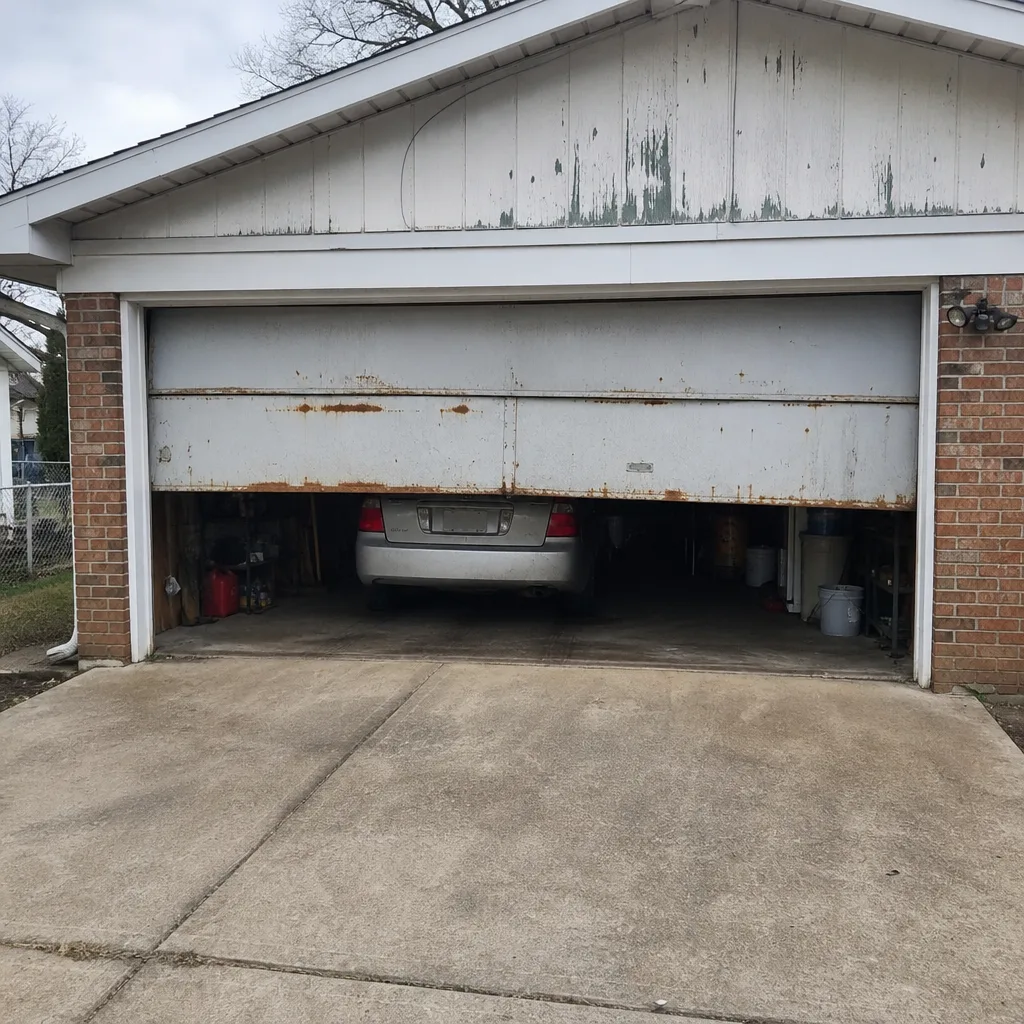 Before
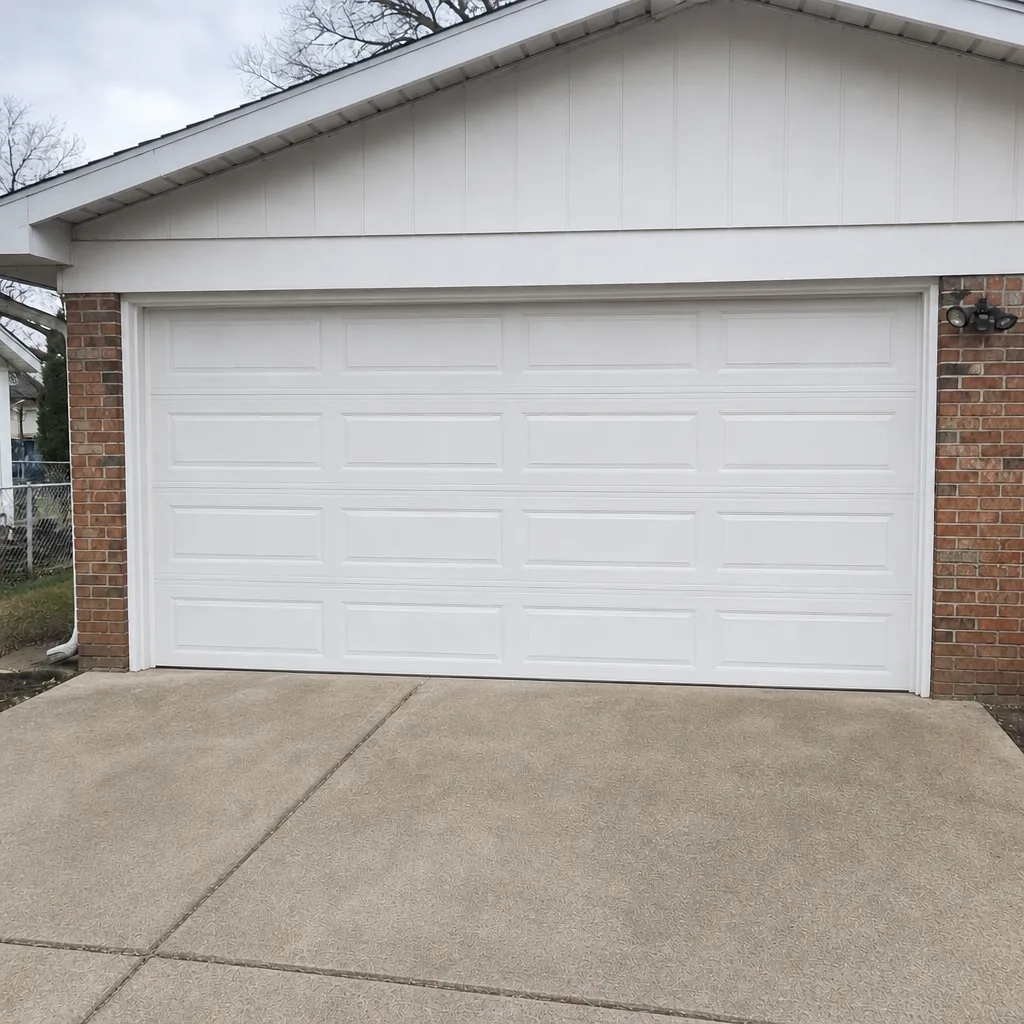 After
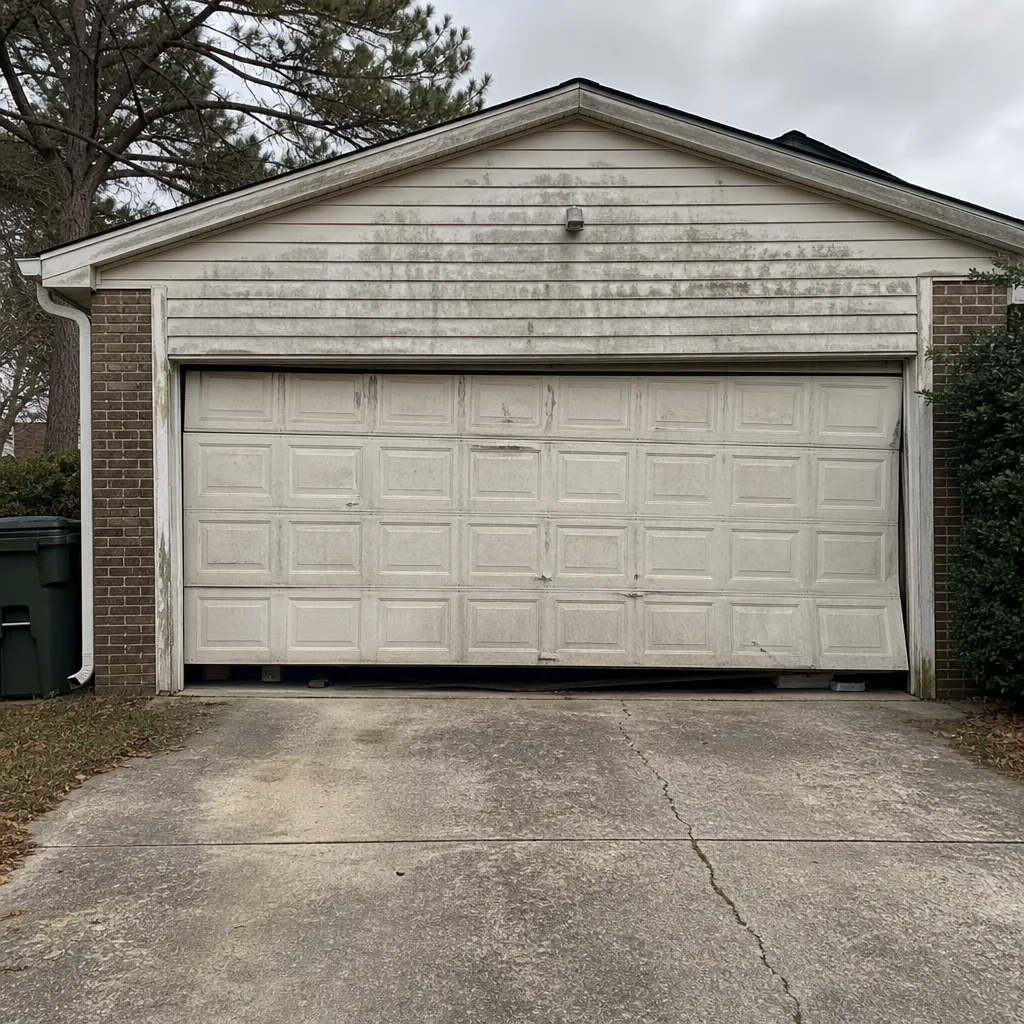 Before
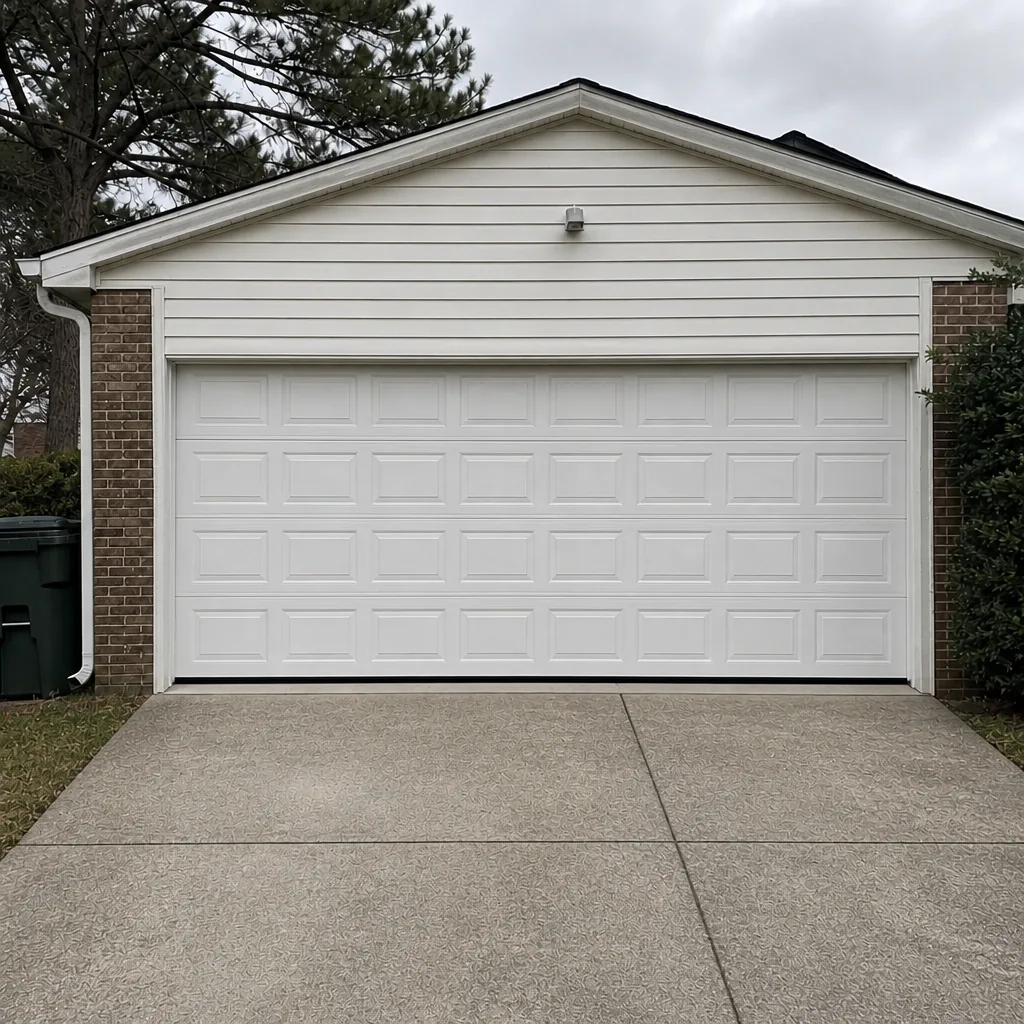 After
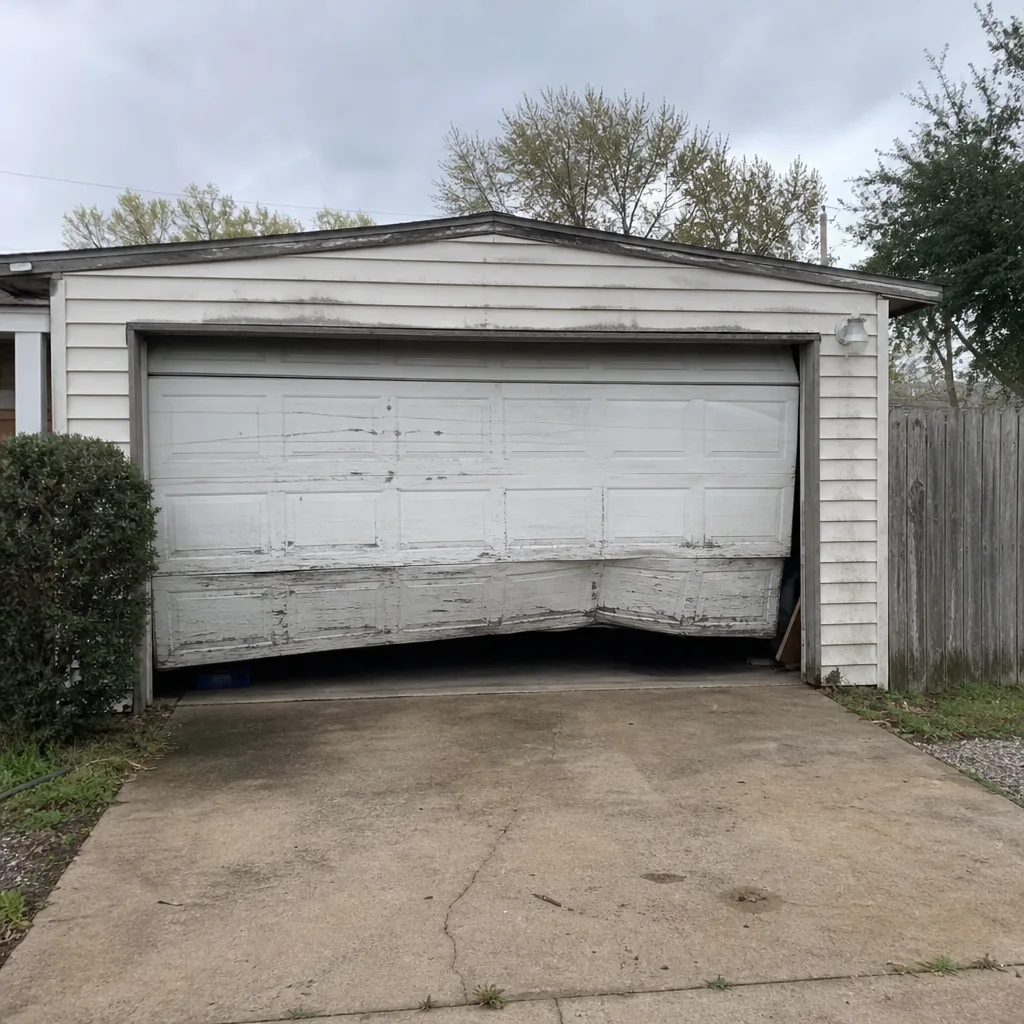 Before
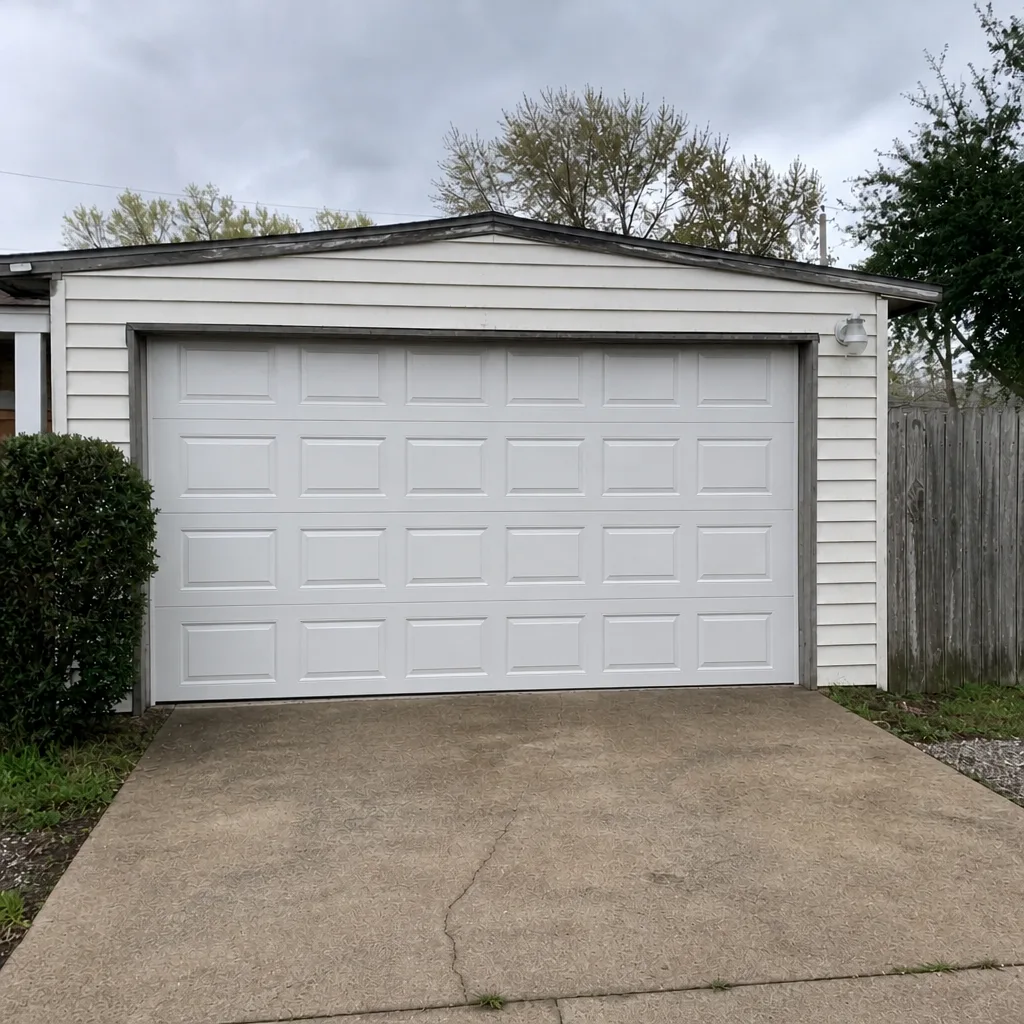 After
When to Call a Professional
Call a professional if the task involves a spring, a cable, the door’s structural track, or the opener’s wiring. Also call if the door has come off its track, if the door feels heavy, if the opener’s chain or belt has snapped, or if you hear a loud bang from the garage and the door won’t open. Those are all signs that the system is out of balance and needs a trained technician, not a YouTube refresher. We’ve seen the same failure patterns enough times to recognize them from a description, and it’s worth the call before the damage spreads to the panel or the drum.
Thrive Garage Door Repair offers free estimates in Suffolk – call (888) 404-3987. We answer 24/7. Fast dispatch from 7am to 7pm, Sunday through Friday. Estimates are free, and the price is set per job by the written estimate before any work starts.
Frequently Asked Questions
No. Torsion and extension springs are under enough stored tension to injure you seriously, and the tools to do the job safely cost more than a single spring replacement. It’s the one task on the whole door that’s not worth considering DIY, no matter your skill level. Professional labor on a spring replacement is the cheaper path when you account for the tools and the risk. Call (888) 404-3987 for a free estimate.
It can, yes. If the manufacturer can trace a failure back to unauthorized work, the claim typically gets denied. Opener makers tend to be the strictest – a warrantied LiftMaster or Chamberlain unit with an opened housing is usually a declined claim – and door manufacturers like Clopay and Amarr will look closely at spring or hardware work. Check the manual before you touch anything you’re not sure about. If the component is still covered, work with a licensed technician. Call (888) 404-3987 for a free estimate.
In most cases, yes – especially if the replacement changes the opening, the header, or the tracks. Permits are handled by the City of Suffolk’s building department, so confirm the requirements for your specific project before you start. A homeowner can generally pull a permit on their own primary residence in Virginia, but if a sale is on the horizon, having the permit trail in order is worth more than the money saved.
We quote per job by written estimate, and the written price is the price – no surprises once the work starts. We don’t publish a fixed rate card because the range for a repair depends on the part, the door, and the brand, and quoting a number before we’ve seen the door would be a guess. The written estimate is the number both of us agree to before any work begins. Call (888) 404-3987 for a free estimate.
Yes, for work on your own primary residence – Virginia doesn’t require a contractor’s license for a homeowner working on their own home. What it does require is a permit for most replacement and structural work, pulled in the owner’s name, and passing the inspection. If the work touches the tracks, the header, or the opener’s electrical supply, the safe answer is to hire it out. Call (888) 404-3987 for a free estimate.
We’re closed on Saturday. Call us and we’ll book you into the next opening, Sunday through Friday, 7am to 7pm. If it’s an emergency – a door stuck open, a spring that’s snapped and left the door unsafe – treat it as a hazard until we arrive: don’t force the door, don’t try to lift it by hand, and keep kids and vehicles clear.
The Bottom Line
The DIY versus professional question on a garage door isn’t about whether you’re handy. It’s about three specific things: whether the task involves stored energy, whether it involves line voltage, and whether the warranty is at risk. Lubrication, seals, sensors, remotes, and visual inspection are yours. Springs, cables, tracks under load, and opener internals are ours. When you’re honest about where the line sits, the decision takes about 60 seconds – and most of the expensive mistakes happen when a homeowner crosses that line by a foot instead of a mile. If you’re in Suffolk and you’re not sure which side you’re on, that’s the call. We work on what you already have, and the free estimate is there for a reason.
Call (888) 404-3987 for a free estimate. We answer 24/7. Fast dispatch from 7am to 7pm, Sunday through Friday. Our technicians have up to 8 years of experience, and we’re certified to work on 8 of the most widely installed garage door and opener brands in North America. Whether it’s a stuck spring or a full new door, the written estimate sets the price before any work starts.
Written by the team at Thrive Garage Door Repair.
Related reading: Thrive Garage Door Repair for our full service range, garage door repair when something’s stuck or broken, garage door opener repair for motor and remote problems, and our Suffolk service page for local details.