
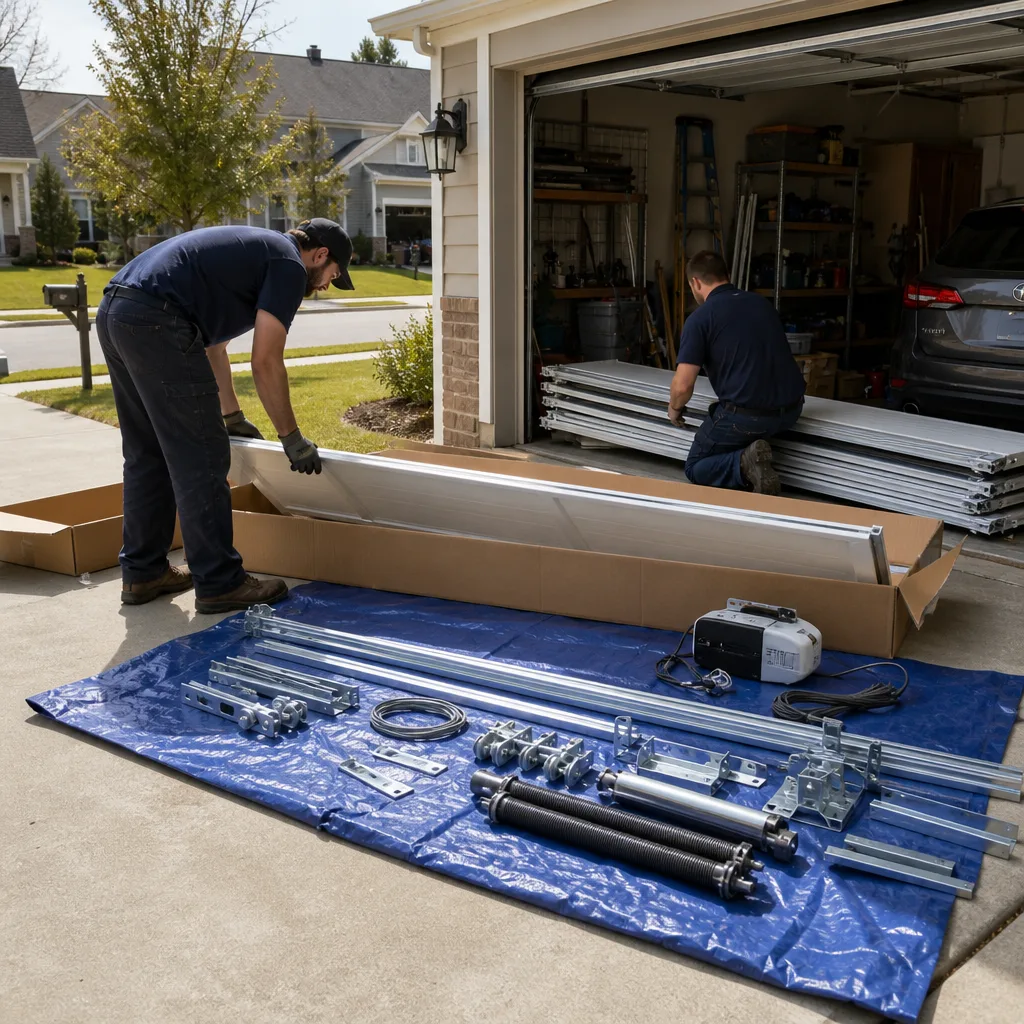
Last updated November 15, 2026
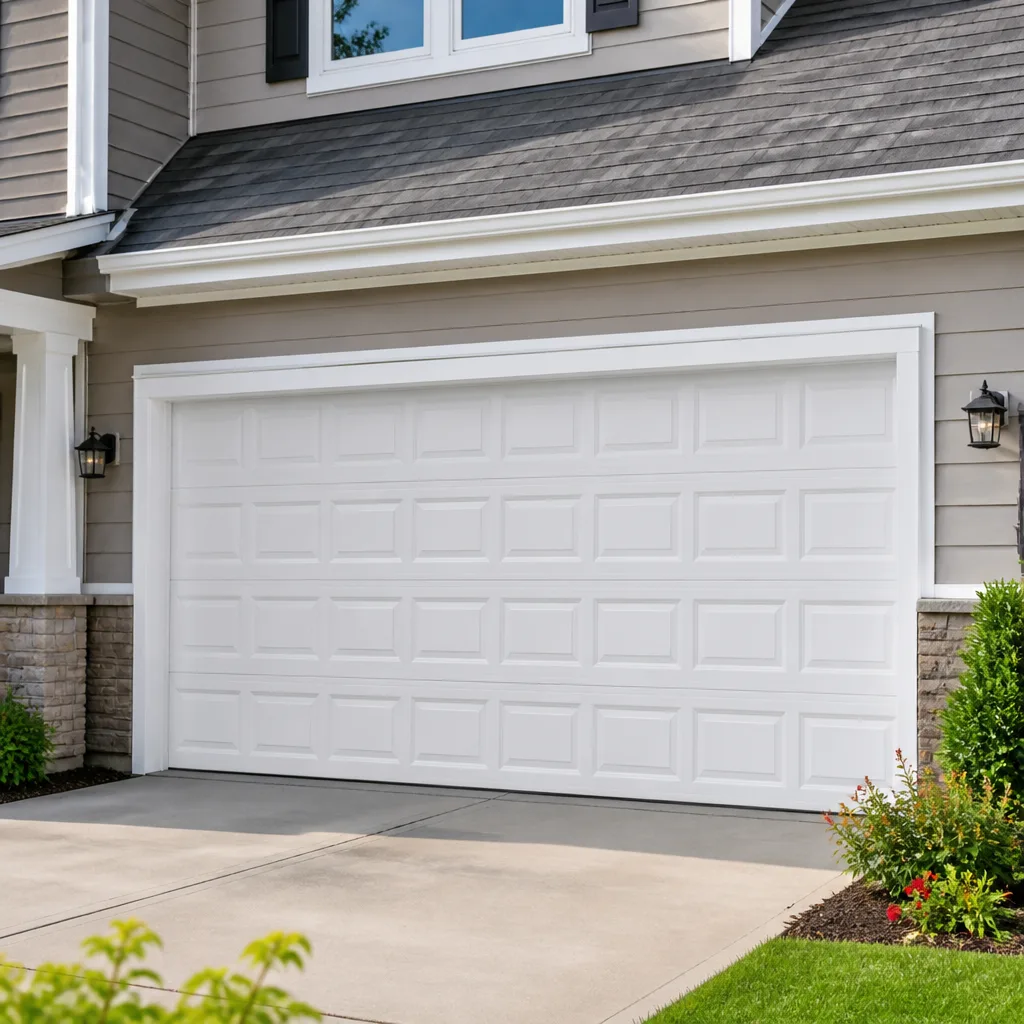 Raised-panel steel
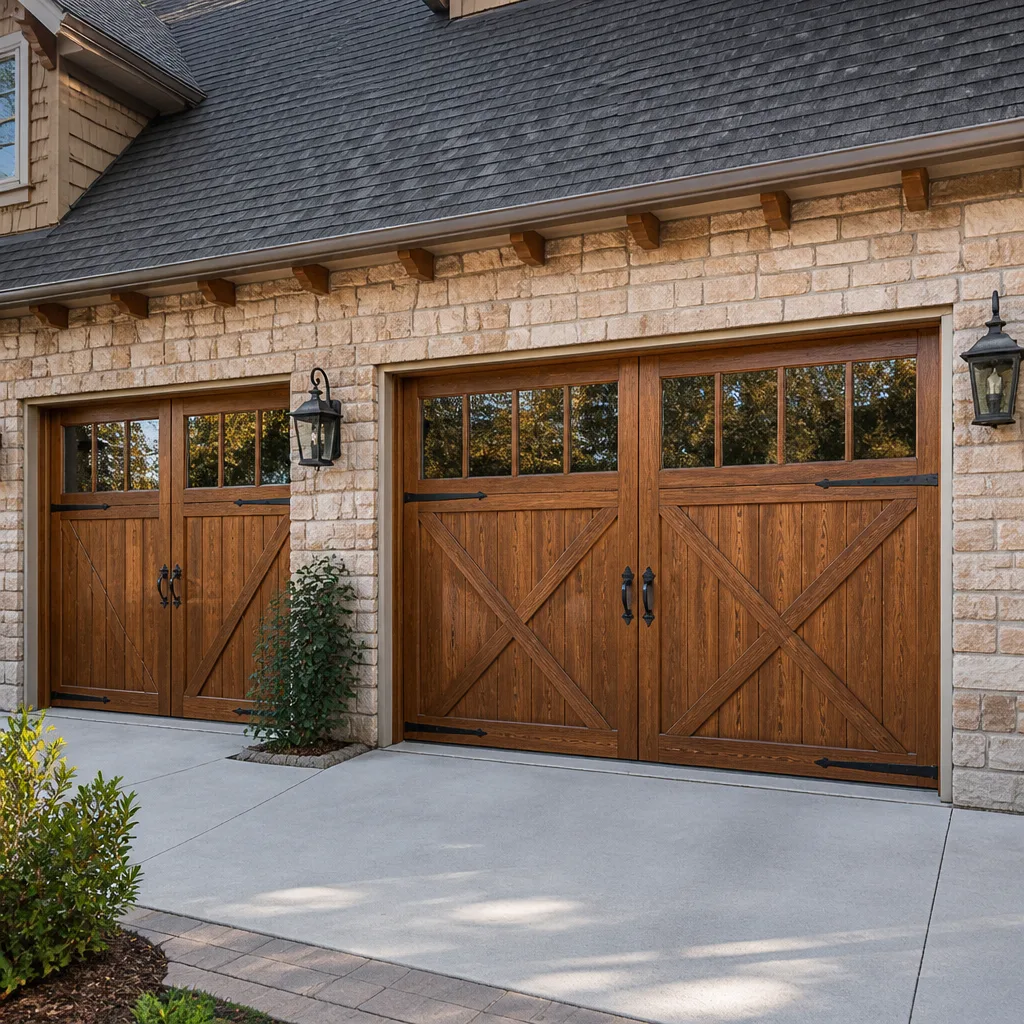 Carriage house
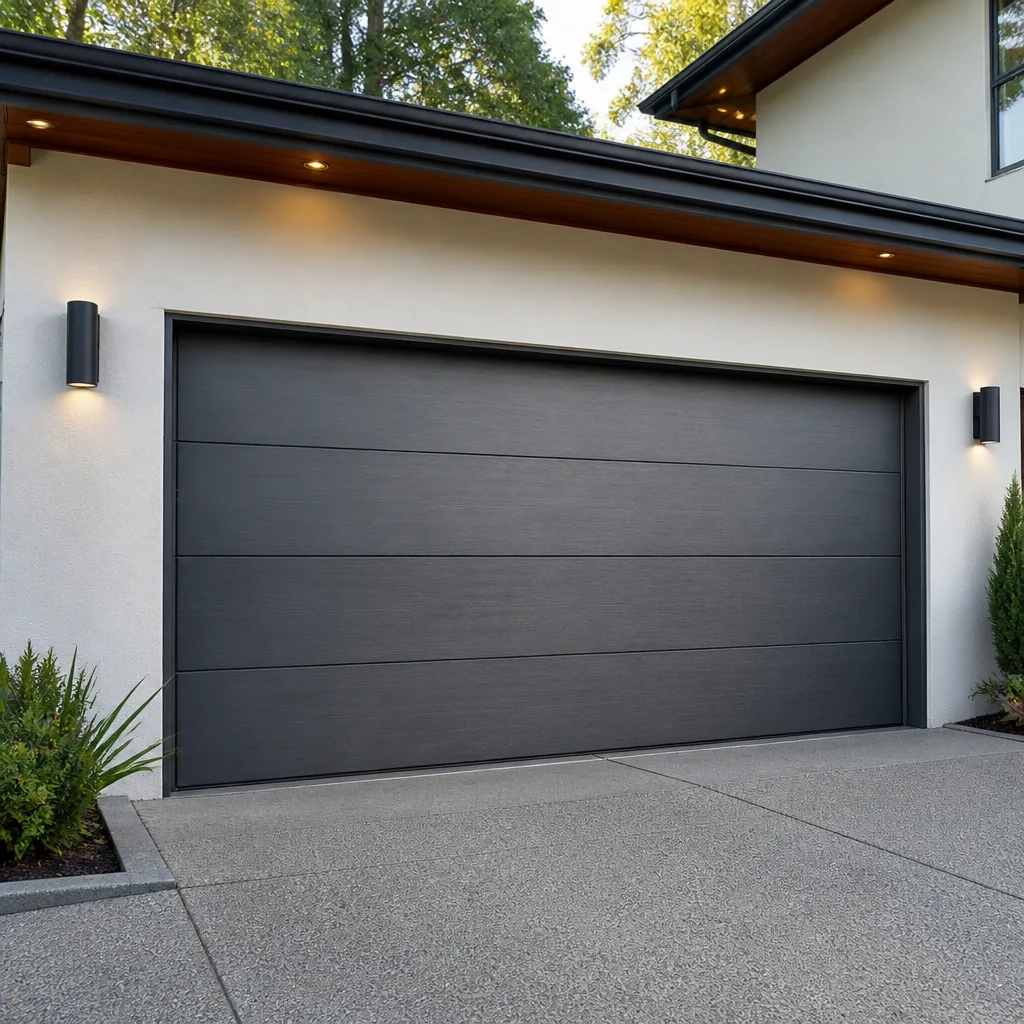 Modern flush
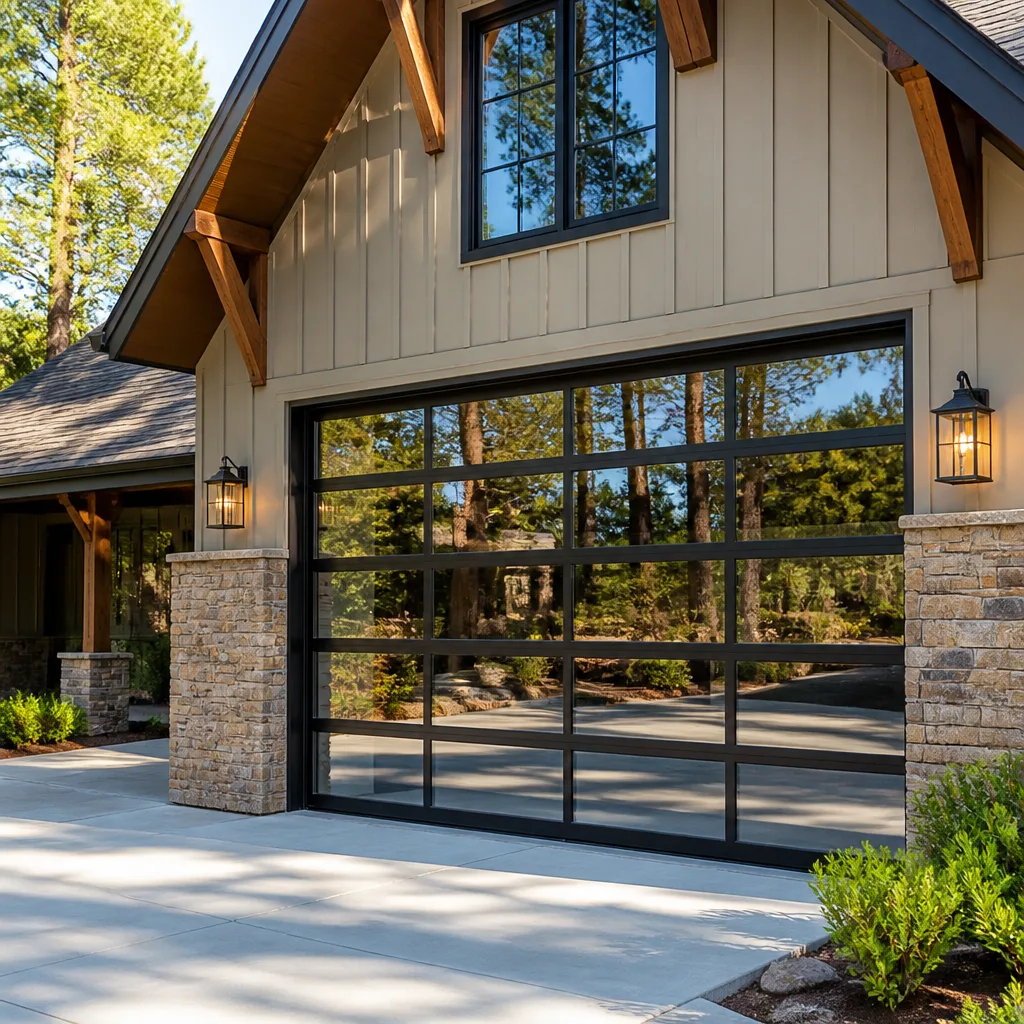 Full-view glass
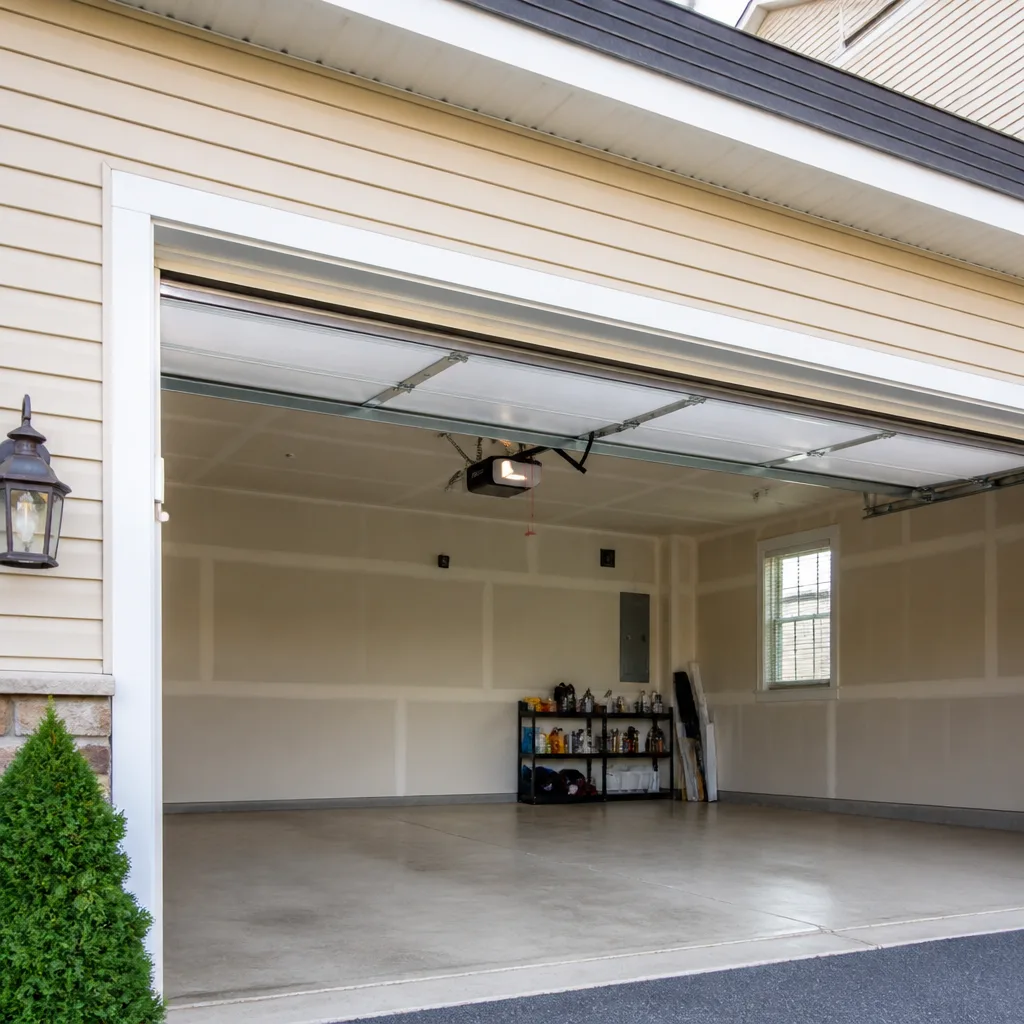 LiftMaster openers
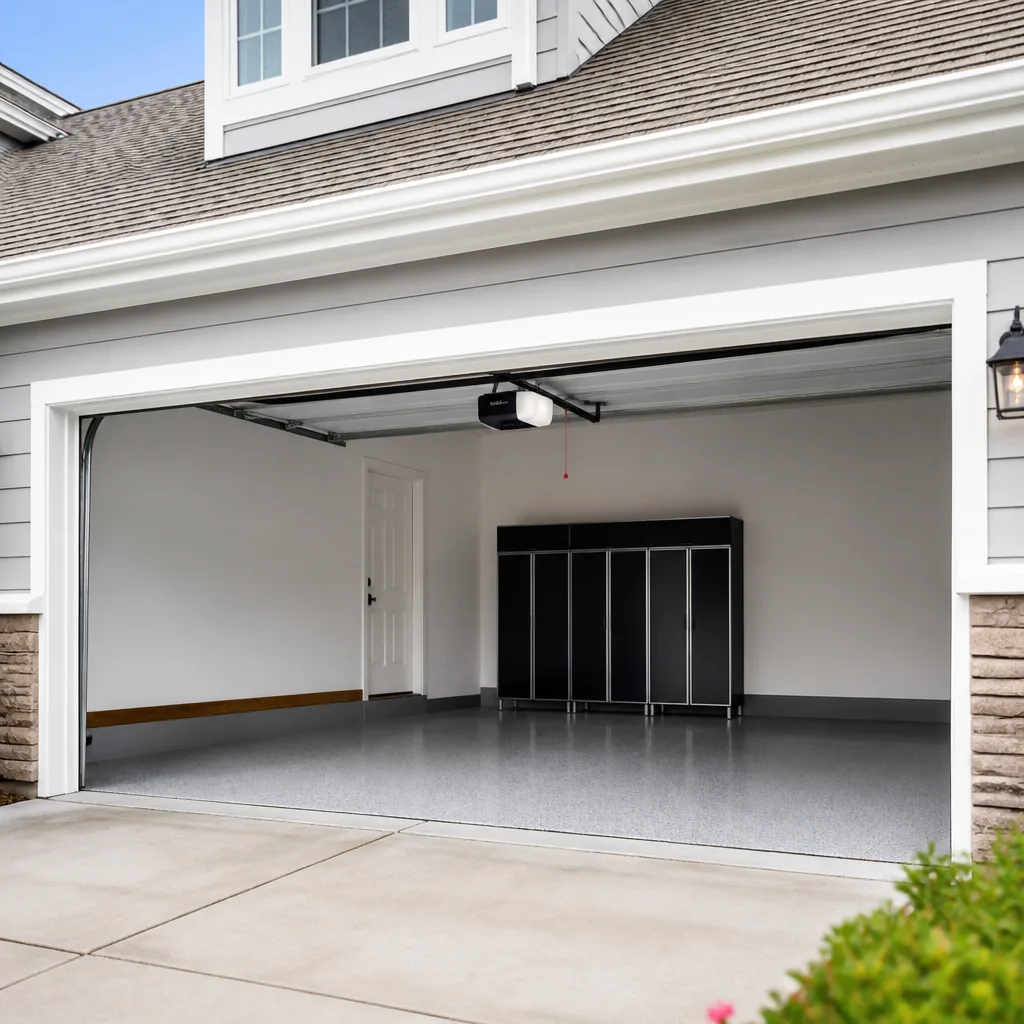 Chamberlain openers
Full 25-point door and opener safety check with every visit - springs, cables, rollers, tracks, and your LiftMaster or Chamberlain opener included
You get a price before we start. It does not change when the pro arrives.
Get your free estimateGarage Door Emergency Preparedness Guide for Suffolk Homes
Most homeowners in Suffolk treat the garage door as a convenience until the wind picks up. Here’s the counterintuitive part: your door is usually the largest moving opening on the house, and in a high-wind event it’s the likeliest point of failure in the whole building envelope. The doors that fail fastest aren’t the oldest ones. They’re the doors a previous owner fitted with a newer opener but never brought up to a wind load rating. An opener does nothing for wind pressure. That’s a structural job the door and its hardware do on their own. In this guide we’ll walk through how to find your door’s wind rating, how the emergency manual release actually works, a 48-hour pre-storm checklist, what to do if the door gives out mid-storm, and how to inspect it afterward before you press the button. It’s written for Suffolk homes and the storm seasons we live with here.
Quick Answer
A garage door in Suffolk needs three things to be storm-ready: a wind load rating appropriate for its exposure, the correct reinforcement or bracing for that rating, and a working manual release you know how to use. Before a storm, secure the door and clear the tracks. If it fails during the event, don’t force it; secure the opening from inside with what you have. After the storm, inspect the panels, tracks, springs and cables before you operate the door, and call a professional if anything looks bent, sagging or out of line. We answer 24/7 at (888) 404-3987, with fast dispatch from 7am to 7pm, Sunday through Friday.
Styles & brands we work with
- Raised-panel steel
- Carriage house
- Modern flush
- Full-view glass
- LiftMaster openers
- Chamberlain openers
Table of Contents
- How Do You Find Your Garage Door’s Wind Load Rating?
- What Do Virginia Wind Requirements Actually Require for Suffolk Properties?
- How Does the Emergency Manual Release Work (and When Should You Use It)?
- The 48-Hour Pre-Storm Checklist for Suffolk Homeowners
- What to Do When a Garage Door Fails During a Storm
- Post-Storm Inspection: What to Check Before You Open the Door
- Repair or Replace After Storm Damage? How to Decide
- What Your Opener Can and Can’t Do in a Storm
How Do You Find Your Garage Door’s Wind Load Rating?
Your door’s wind load rating is printed on a label attached to the door itself or stamped into the panel edge, and it’s also listed in the manufacturer’s spec sheet for that model. If you can’t find either, the rating can be worked out from the door’s model number, width, and the design pressure it was built to. That’s the starting point for everything else in this guide.
Here’s how to locate it in about ten minutes:
- Look on the inside face of the door. Most manufacturers apply a label with the model number, serial number and design pressure rating to the interior of the bottom or middle section. You’ll usually find it near the center stile.
- Check the panel edges. Some brands – Clopay and Amarr among them – stamp the model code into the end stile or the edge of a section. A flashlight and a phone camera get you a clear read without a ladder.
- Find your paperwork. If the door was installed before you bought the house, the model number may be in the closing documents, a home inspection report, or a permit record on file with the city.
- Match the model to the manufacturer’s published spec. Every major brand publishes design pressure ratings by model and width. A Wayne Dalton 9100 at 16 feet wide carries a different rating than the same model at 9 feet, and width matters more than people expect.
The rating itself usually appears as a design pressure number in pounds per square foot, sometimes written as a positive and negative figure. The negative figure is the one that matters in a storm: it’s the pressure pulling the door outward as wind moves across the face of the house. A door rated for a modest negative pressure is fine in ordinary weather and vulnerable in a named storm. If the label is faded or missing, the model number alone is usually enough to identify it.
If you genuinely can’t find the model, a technician can identify the door from its hardware, panel profile and track configuration. We work on doors from Clopay, Amarr, Wayne Dalton and Raynor for installation, and we can usually tell what you have within a few minutes of looking at it.
What Do Virginia Wind Requirements Actually Require for Suffolk Properties?
Virginia’s building code ties garage door wind requirements to the design wind speed for the specific address, not to the city as a whole. Suffolk sits in a part of the state where the mapped wind speeds are high enough that a door installed today typically needs a rated assembly with the reinforcement to match. The exact number depends on your property’s exposure category, which accounts for surrounding terrain and how open the site is.
That’s the honest answer, and it’s why we won’t quote you a single pressure rating over the phone. Three things drive it:
- Design wind speed for the address. Virginia’s code maps wind speeds geographically, and the figure for a parcel is set by that map.
- Exposure category. A house on open ground with little to break the wind is treated differently from one tucked into a wooded lot or surrounded by neighboring structures.
- Door size and mounting. A wider door catches more load. A door in a wall with limited return framing behaves differently than one with generous structure on both sides.
Here’s what homeowners most often get wrong: they assume a newer door automatically satisfies the requirement. Plenty of Suffolk homes have a door that was rated when it went in, then had a heavier opener, a different bottom seal, or a replacement panel added later that quietly changed the assembly’s performance. The rating belongs to the complete assembly, not to the panel alone.
If you’re replacing a door, ask the installer to show you the rated assembly documentation for the door and the reinforcement, matched to your address. If you’re keeping an existing door, ask whether it can be reinforced to the correct rating or whether replacement is the cleaner path. The City of Suffolk’s building department is the authority on what your specific property needs, and a permit question is best answered by them directly. We can tell you what we see on the door; they tell you what the code requires for your lot.
How Does the Emergency Manual Release Work (and When Should You Use It)?
The manual release is the cord hanging from the opener trolley, and pulling it disconnects the door from the opener so you can lift it by hand. It exists so you can get the door open when the power is out or the opener has failed. It is not a tool for forcing a jammed or damaged door, and pulling it under the wrong conditions is where people get hurt.
On a standard sectional door, the release cord hangs from a trolley that rides on the opener rail above the door. Pulling it downward and toward the door disengages the trolley from the carriage. Once released, the door moves freely on its tracks, balanced by the springs. That word – balanced – is the whole story. A properly adjusted door takes only modest effort to lift by hand. A door that feels heavy or won’t stay put when you let go has a spring problem, and the release has just removed the only thing holding it.
The one mistake that traps people, and sometimes injures them, is releasing the door while it’s under spring tension or while it’s partway open. Two situations to avoid:
- Never pull the release while the door is open or partly open. With the door up, the springs are wound tight and the door is being held by the opener. Release it and the door can come down hard and fast. Close the door fully first, then release.
- Never pull the release if the door is already jammed, crooked, or hanging off a track. The opener may be the only thing keeping the door from falling. In that case, leave it connected and call for help.
Once the door is closed and the opener is disengaged, you can lift it by hand. If it won’t lift with reasonable effort, stop. Don’t muscle it. Something is wrong with the springs or the tracks, and that’s a job for a trained technician. Garage door springs, cables and the hardware under tension can cause serious injury, so treat any resistance as a signal rather than an obstacle to push through. Our team handles garage door repair across Suffolk and can tell you over the phone whether it’s safe to try the release at all.
Test the release once a season when the weather is calm. Pull it with the door fully closed, lift the door a foot or so to confirm it moves smoothly, lower it, and re-engage the trolley by running the opener. That way, if you ever need it during a storm, you already know how it feels.
The 48-Hour Pre-Storm Checklist for Suffolk Homeowners
When a hurricane or nor’easter is two days out, the garage door work that matters most takes an afternoon and doesn’t require special tools. The goal is to remove anything that can become a projectile, confirm the door is latched and balanced, and understand what temporary bracing can and cannot do.
- Clear the garage floor and the driveway. Trash cans, garden tools, kids’ toys, folding chairs and loose lumber all become missiles in high wind. Anything that can hit the door adds impact load on top of wind pressure.
- Check the door is fully closed and the latches engage. A door that doesn’t seat evenly in its frame leaks wind at the edges, and once wind gets behind a panel the load goes up sharply.
- Look at the tracks and hinges. Loose hinge screws and bent track sections are weak points. Tighten what you can reach safely with the door closed and stationary.
- Inspect the bottom seal and the sides. Gaps let wind and water in. A worn bottom seal is cheap to replace and worth doing before the storm, not during.
- Confirm your rated assembly documentation is where you can find it, in case you need it for an insurance discussion after the storm.
- Have your manual release plan ready. Know where the cord is, know that the door is closed before you pull it, and know you won’t pull it if the door is jammed.
Now the part people get wrong. Temporary bracing – the kind you build from lumber cut to fit across the inside of the door – can add stiffness and help a marginal door resist pressure. It cannot turn an unrated door into a rated one. Bracing that isn’t properly sized and anchored can also fail in a way that damages the door or the wall, and it can make the door impossible to open if you need to get a vehicle out. If your door was never rated for the wind speeds your address calls for, bracing is a partial measure, not a fix. The real fix is the correct rated assembly, installed by someone who knows how to match it to your house.
If you’re not sure what you have, that’s the moment to ask. A quick assessment now is far better than discovering the problem when the wind is already up. Call (888) 404-3987. We answer 24/7, and we can get a technician out with fast dispatch from 7am to 7pm, Sunday through Friday.
What to Do When a Garage Door Fails During a Storm
If a door fails during a storm, your priority shifts from protecting the door to protecting the opening. Get the garage secured from the inside with what you already have, and don’t try to re-hang a damaged door in high wind.
Here’s the sequence we’d want a homeowner to follow:
- Stay out of the garage while wind is driving into the opening. A panel that comes loose under load can swing or fall with real force. Move people and pets into the house first.
- Close the door between the garage and the house. That interior door is a fire separation and it also stops wind pressure from moving into the living space. If it seals well, you’ve already limited the damage.
- Secure the opening from inside once the wind eases. Heavy furniture, stacked storage bins, a parked vehicle backed up to the opening, and sheets of plywood cut to fit the frame all help block wind and rain. Work from the inside, and don’t stand in the opening to place anything.
- Keep the door connected to the opener if it’s jammed or off-track. The opener may be holding it in place. Releasing it could drop the door.
- Don’t run the opener to “test” a damaged door. If the door is off a track or a cable is slack, running the motor can pull the door loose or burn out the opener.
- Take photos before you move anything, for your insurer and for the repair estimate.
If the failure is a broken spring rather than wind damage, the door may be sitting in a partly open position with the opener holding it. That’s a case for a trained technician, not a homeowner with a pry bar. Garage door springs and cables are under heavy tension and can injure you badly if they let go. Our Thrive Garage Door Repair team handles storm damage and spring failures regularly across Suffolk, and we can walk you through securing the opening over the phone while a technician is on the way.
Post-Storm Inspection: What to Check Before You Open the Door
After a storm, look at the door before you touch the button. A door that took wind load can look fine and still be structurally compromised, and running the opener on a damaged assembly is how a repairable problem becomes a replacement.
Walk the inside face of the door and check these in order:
- Sections aligned? Stand back and look down the inside face. Any section that’s out of line, bowed, or separated at a stile seam has taken load. Don’t operate it.
- Tracks straight and firmly attached? Bent tracks, tracks pulled away from the wall, or loose brackets point to movement the assembly wasn’t designed for.
- Hinges and rollers intact? Look for popped hinge screws, cracked hinges, or rollers sitting out of the track. Those are signs the door twisted under pressure.
- Springs and cables. A broken spring shows a visible gap in the coil. A cable that’s slack, kinked or off its drum is a stop sign. Don’t touch either – call a technician.
- Panels and glazing. Cracks at the panel edges and around window inserts are easy to miss and often the first sign of stress. Hairline cracks can widen once the door moves again.
- Weather seal and framing. A door that shifted can leave a wider gap on one side. That points to movement in the opening, not just the door.
The damage that’s hardest to see is a door that’s still operating smoothly but has a slightly bowed section or a stile that’s begun to split. It works fine in calm weather. Then a modest gust catches the face of the door and the weakened section fails. In our experience, a post-storm inspection is worth doing even when nothing looks wrong, because the door that took a real wind load has been through something most doors never see. If you’d rather have a technician take a look, a free estimate in Suffolk is the simplest way to get a straight answer. Call (888) 404-3987.
Repair or Replace After Storm Damage? How to Decide
The decision usually comes down to three questions: is the door’s rating inadequate for the address, is the damage limited to replaceable parts, and is the rest of the assembly still sound? If the door was already under-rated, repair brings it back to a specification that wasn’t good enough in the first place.
Repair makes sense when the door itself was rated correctly, the damage is confined to a section, a hinge, a set of rollers, or a track run, and the springs and cables checked out before the storm. A single damaged section on an otherwise sound door is a repair, and it’s usually the right call.
Replacement makes sense when the door can’t be brought to the right rating with reinforcement, when multiple sections are bowed or delaminated, when the model is old enough that matching a panel is impractical, or when you’re planning to stay in the house long enough that the upgrade earns its cost. A complete new door also lets you match the panel style to the house, which many Suffolk homeowners care about as much as the rating.
If you’re replacing, the brand question matters. We install doors from Clopay, Amarr, Wayne Dalton and Raynor, and the honest answer is that each has models that suit different houses. A Clopay and an Amarr in the same style with the same rating can look almost identical and behave very differently in terms of insulation and hardware. Because we work across all of them, we can compare them side by side and recommend what fits your opening and your budget instead of steering you toward a single line. That’s the value of working with a brand-agnostic specialist.
What Your Opener Can and Can’t Do in a Storm
Your opener opens and closes the door. It does not hold the door against wind pressure, and it does not make an unrated door safer. That distinction is the source of most of the confusion we see on Suffolk doors, especially where a newer opener was fitted to an older door.
When wind pushes against a closed door, the force goes into the panels, the hinges, the tracks and the wall framing. The opener carriage is a moving connection, not a structural anchor. Some openers have a lock or a hold feature, but it’s there to stop the door being lifted by hand, not to resist a storm. A heavier opener also adds weight and operating force to a door that may not have been designed for it.
What an opener can do is help you manage the door day to day: keep the door closed when you’re not using it, run reliably on the power you have, and give you a working manual release when the power is out. On the repair side, openers from LiftMaster, Chamberlain, Genie and Craftsman all come through our shop, and smart-home models from those brands need a technician who knows their app-connected controls as well as the legacy units. If your opener is acting up after a storm, that’s a separate problem from the door, and it’s one we handle directly through garage door opener repair. Our technicians have up to 8 years of experience across those systems, and they’ll tell you plainly whether the opener can be repaired or whether it’s at the end of its life.
Common Mistakes to Avoid
- Equating a new opener with a storm-ready door. An opener is not a structural upgrade. Adding one to an unrated door leaves the door just as vulnerable as before, and sometimes more so.
- Assuming a door installed years ago still meets today’s wind requirements. The code has moved, and a door that was compliant at installation may not be now. Check the rating, not the age.
- Pulling the manual release while the door is open or partly open. With the springs wound and the door up, the release can drop the door hard and fast. Close the door fully before you pull the cord.
- Using temporary bracing as a permanent solution. Bracing helps a marginal door and does not fix an under-rated one. If the rating is wrong, the fix is the correct assembly.
- Running the opener to “see if it still works” after a storm. If a section is bowed or a cable is slack, running the motor can pull the door loose or damage the opener. Inspect before you operate it.
- Forcing a jammed door by hand. Springs and cables are under heavy tension. If the door won’t move smoothly, stop and call a technician rather than risk serious injury.
- Leaving loose items in the garage or driveway before a storm. Anything that can blow against the door adds impact load to an already loaded assembly. Clear it early, not at the last minute.
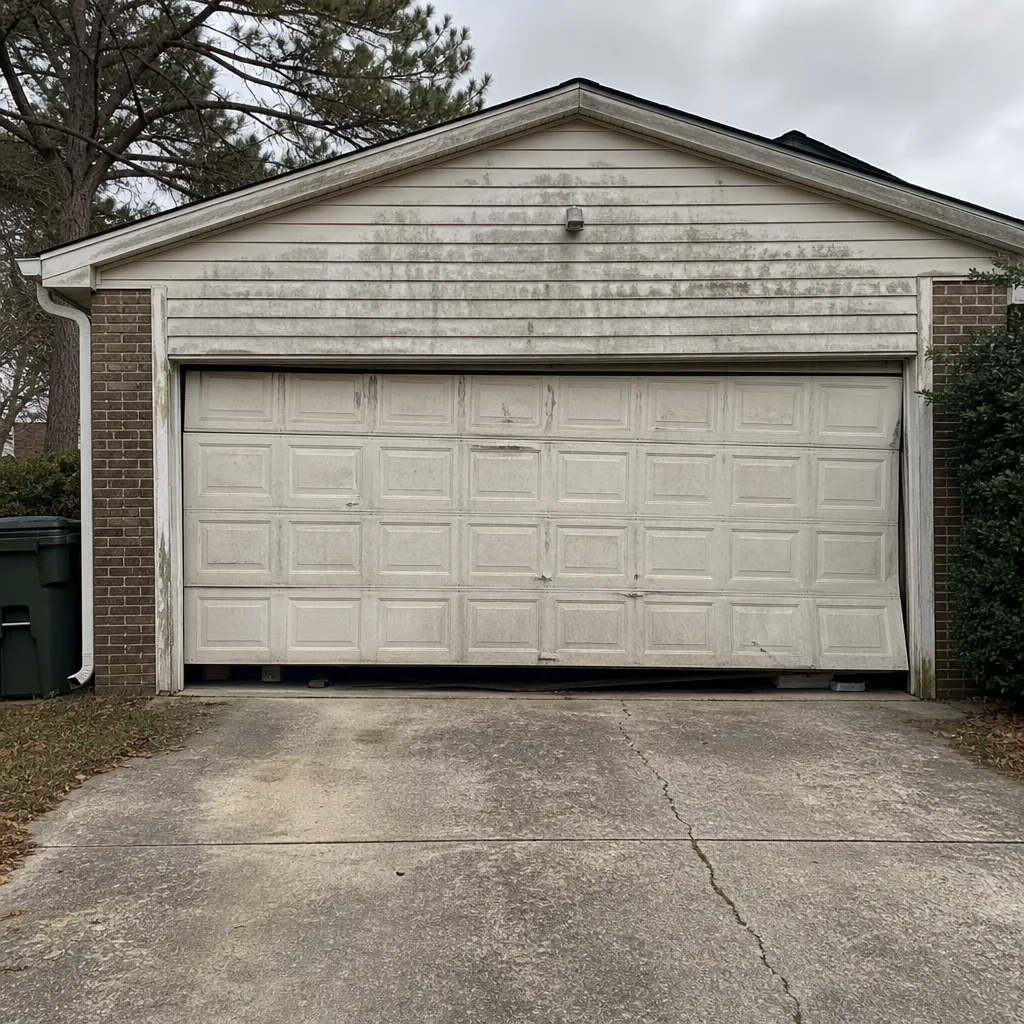
See the difference
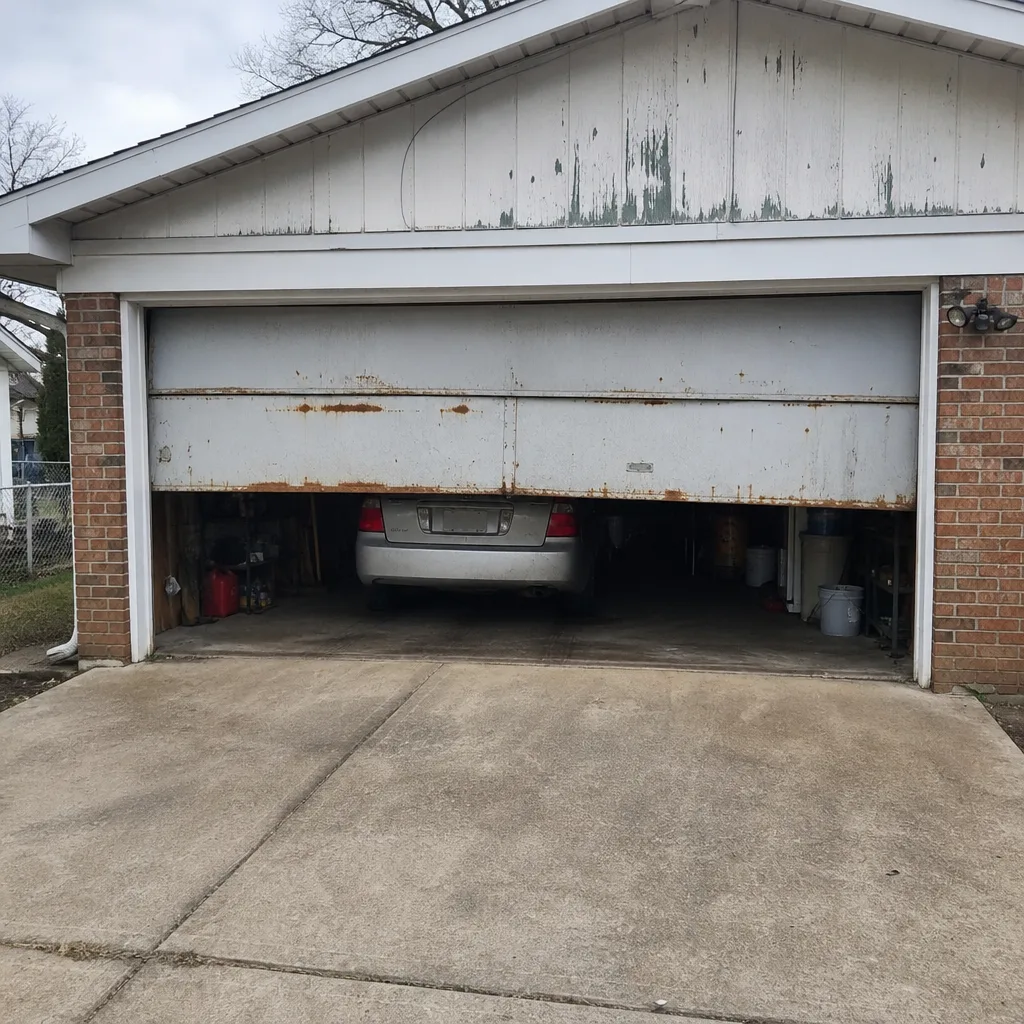 Before
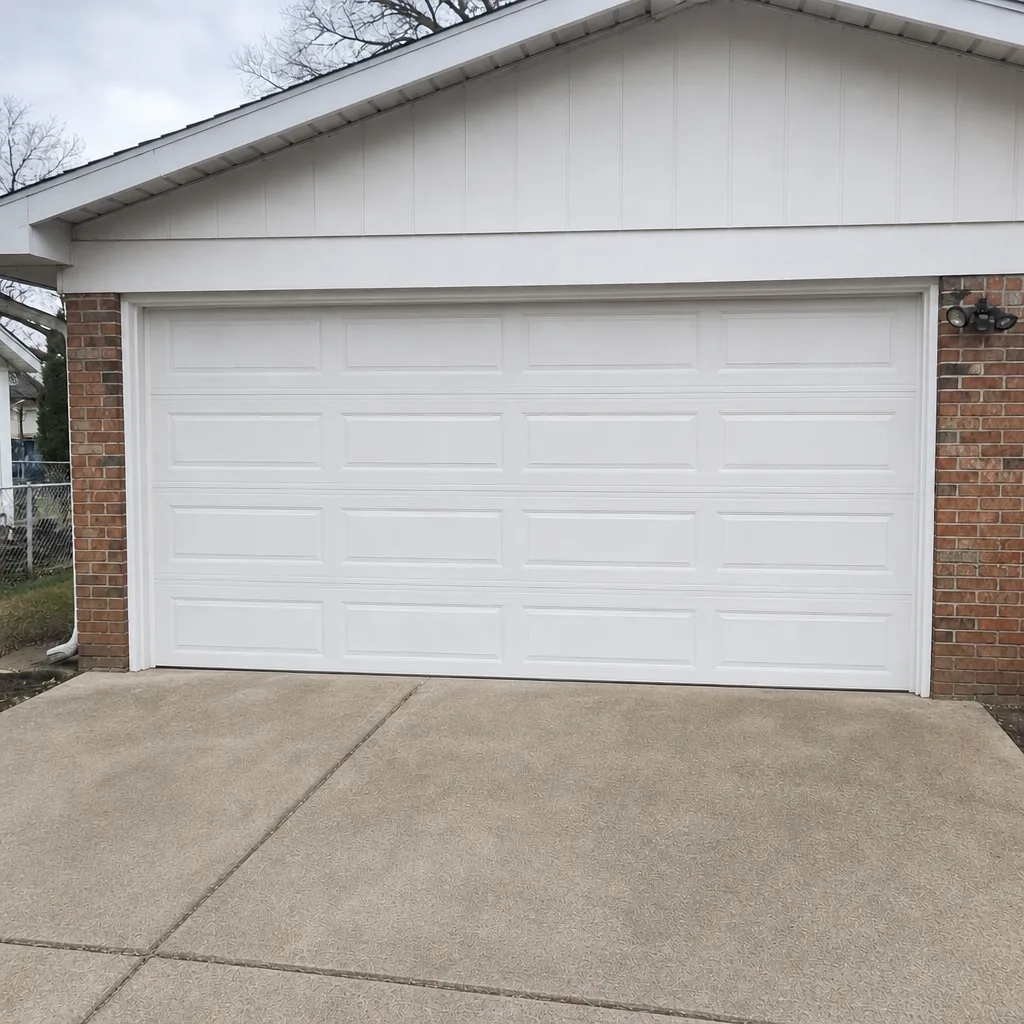 After
 Before
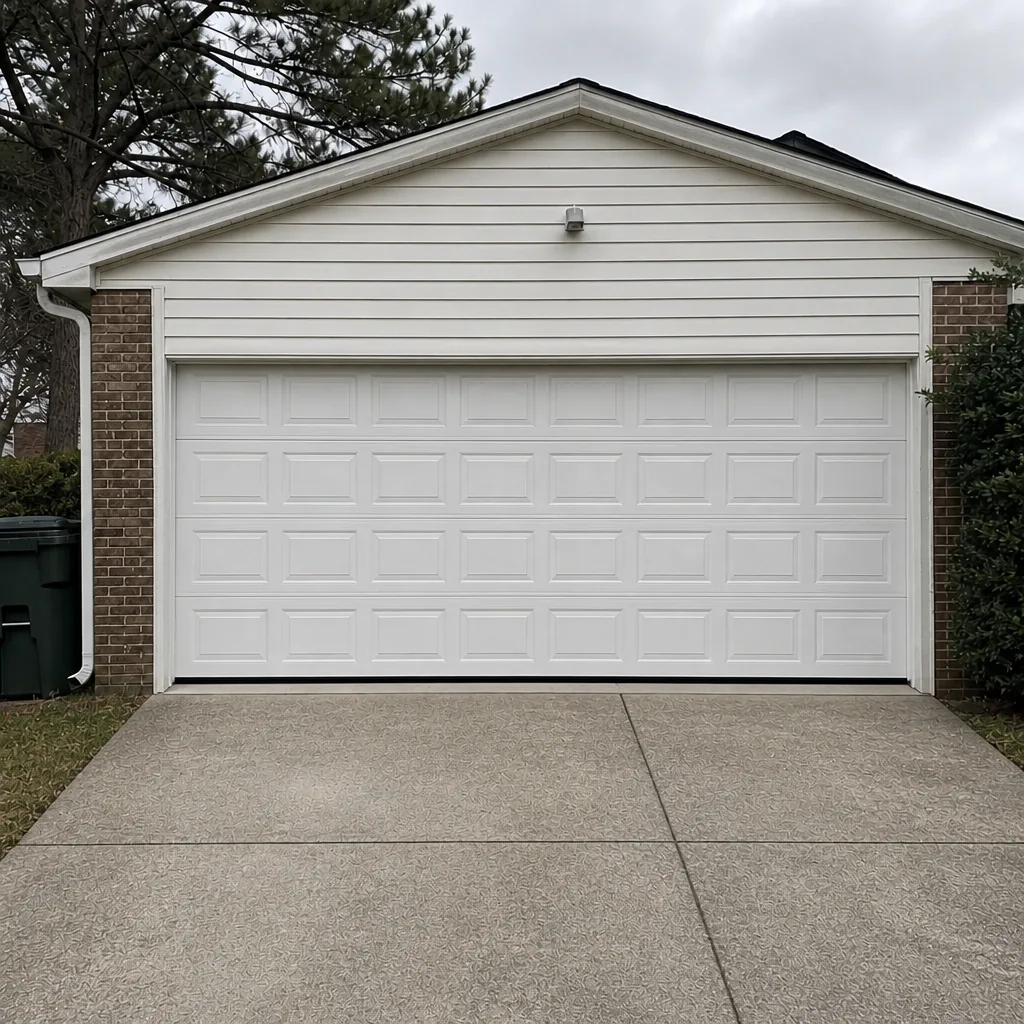 After
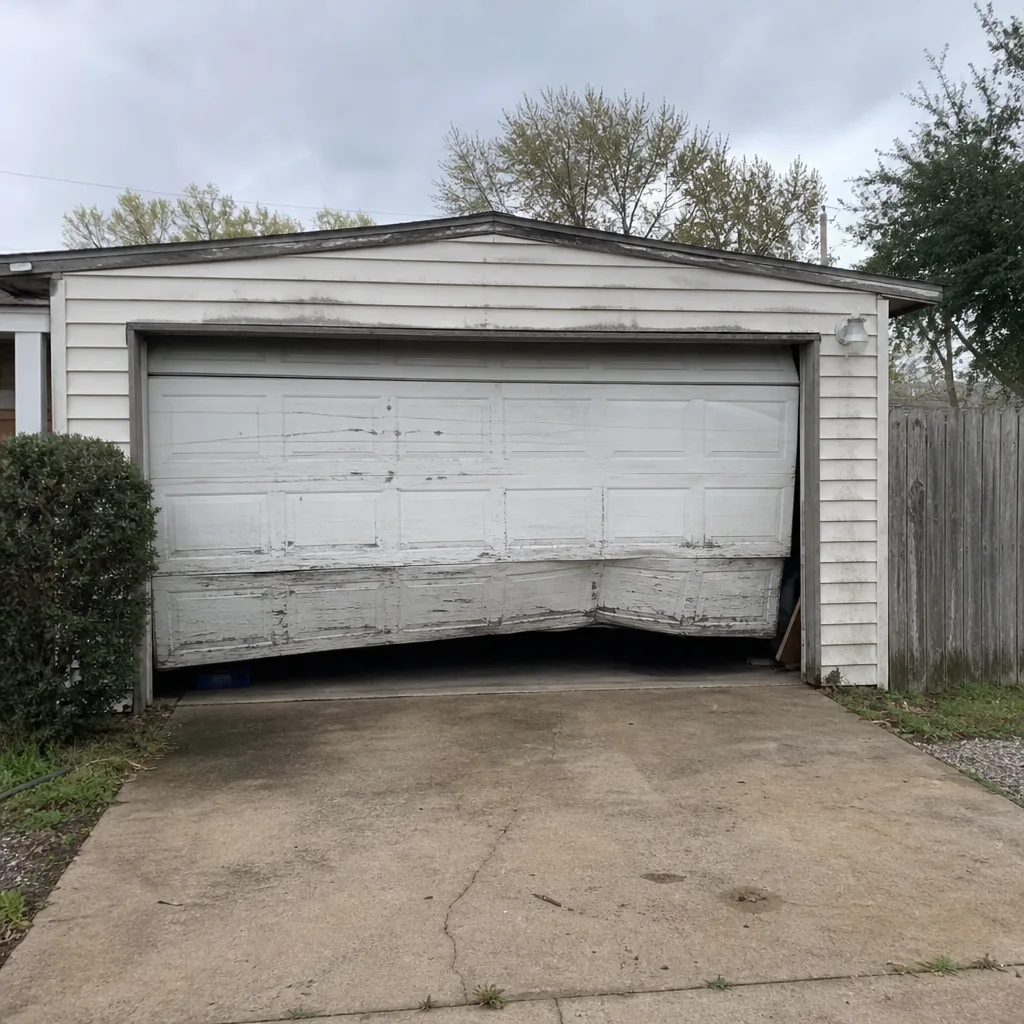 Before
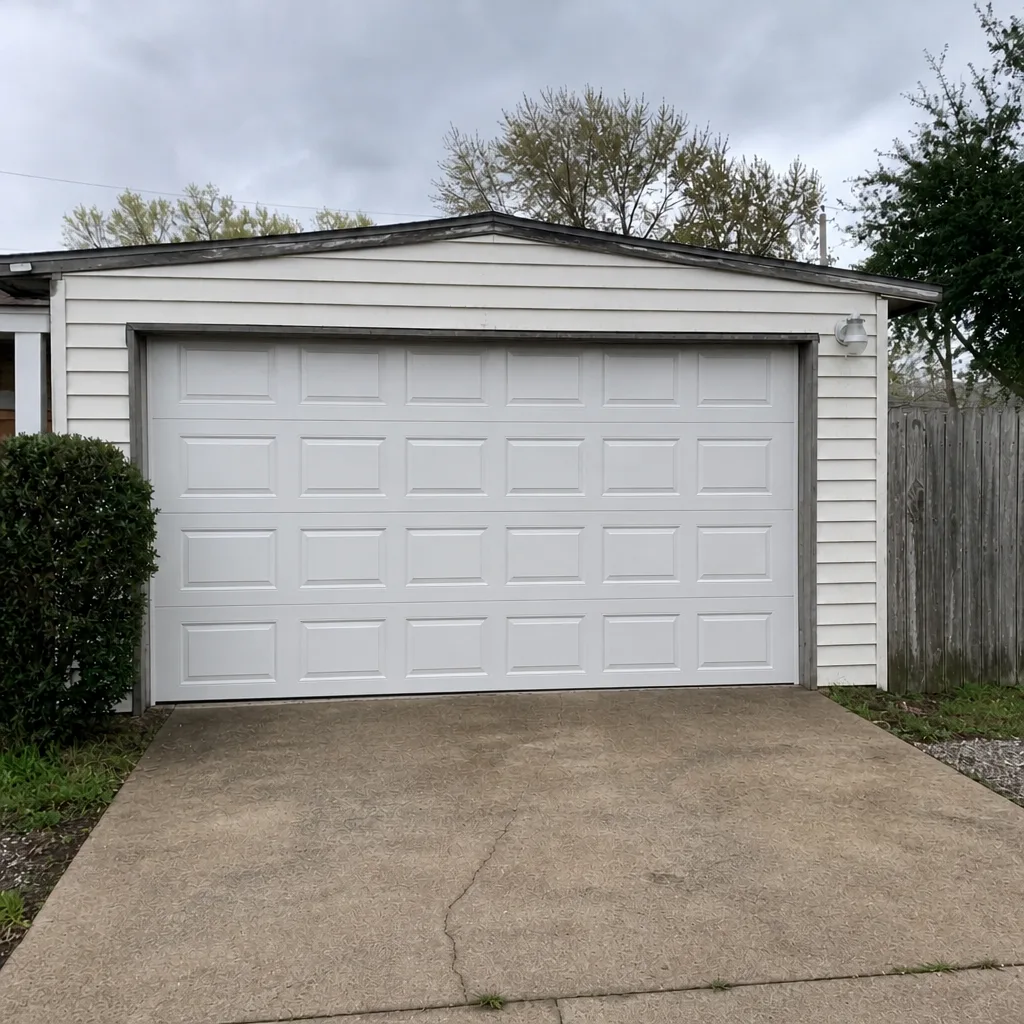 After
When to Call a Professional
Call a professional if the door is jammed, off-track, sagging, or showing a bow after a storm; if a spring is broken or a cable is slack, kinked or off its drum; if you can’t find the door’s wind rating and want it confirmed; or if you’re deciding between reinforcement and replacement. Also call if the door feels heavy when lifted by hand after the manual release, if it doesn’t stay closed evenly on one side, or if the opener runs but the door doesn’t move. Those are physical symptoms that point to the springs, tracks or cables, and they’re the parts most likely to cause injury if handled wrong. Thrive Garage Door Repair offers free estimates in Suffolk. The price is quoted and agreed before any work starts, so there’s no surprise on the invoice. Call (888) 404-3987. We answer 24/7. Fast dispatch from 7am to 7pm, Sunday through Friday.
Frequently Asked Questions
Storm damage repair in Suffolk commonly falls into a few predictable ranges. A single section replacement on a sound door is typically the least expensive path, a set of rollers or hinges is a smaller job, and a full door replacement is the largest. We quote every job on its own because a bent track, a bowed panel and a broken spring are three different jobs with three different scopes. The written estimate sets the final price, and it’s agreed before we start. Call (888) 404-3987 for an exact quote – estimates are free.
For a door installed today, yes, in practice. Virginia’s building code ties the requirement to the design wind speed for your specific address, so the right rating depends on your property rather than the city as a whole. The place to confirm it is the City of Suffolk’s building department, and a technician can tell you what your existing door is rated for. If you’re uncertain, ask before the next storm season.
Yes, using the manual release cord on the opener rail. Close the door fully before you pull it, then lift by hand. If the door feels heavy or won’t stay where you put it, the springs need attention and you should stop rather than force it. Never pull the release if the door is jammed or off its track, because the opener could be the only thing holding the door up.
Often, yes, once the storm has passed and it’s safe to work. We answer 24/7 and we dispatch technicians for same-day repair where the scope allows, from 7am to 7pm, Sunday through Friday. A storm that takes out a whole neighborhood can extend response time, and we’ll tell you honestly when we can get there. Call (888) 404-3987 and we’ll book you in.
No. The written estimate we give you after seeing the door is the price, and we agree it with you before any work begins. If we find something during the repair that changes the scope, we stop and talk to you about it first rather than adding to the bill. That’s how we keep the number you were quoted and the number you pay the same.
The opener tells you nothing about the door’s rating, so you’ll need to identify the door model. Look for the manufacturer’s label on the inside face of the door or the model code stamped on a panel edge, then match it to the manufacturer’s published rating. If the label is gone, a technician can identify the door from its hardware and panel profile. That’s the starting point for deciding whether it needs reinforcement or replacement.
The professionals who work on Suffolk homes through us are licensed and insured, and we’re careful about who we send. Our technicians have up to 8 years of experience working on doors and openers from the major brands, including LiftMaster, Chamberlain, Genie, Clopay, Amarr, Wayne Dalton, Craftsman and Raynor. Call (888) 404-3987 with any questions before you book.
The Bottom Line
Storm readiness for a Suffolk garage door comes down to three things you can check yourself: the door’s wind rating, its reinforcement, and a manual release you know how to use. Get the rating right for your address, clear the garage and driveway before the storm, and never pull the release on a jammed or partly open door. If the door fails during the storm, secure the opening from inside and keep people out. Afterward, inspect the panels, tracks, springs and cables before you operate it. When anything looks off, call a technician rather than push through it. We’re here for Suffolk homeowners before the season and after it passes, and the door we leave behind is meant to work better than it did before the call.
Call Thrive Garage Door Repair at (888) 404-3987 for a free estimate on repair, opener service or a new rated door. We answer 24/7. Fast dispatch from 7am to 7pm, Sunday through Friday.
Written by the team at Thrive Garage Door Repair.