
Last updated November 15, 2026
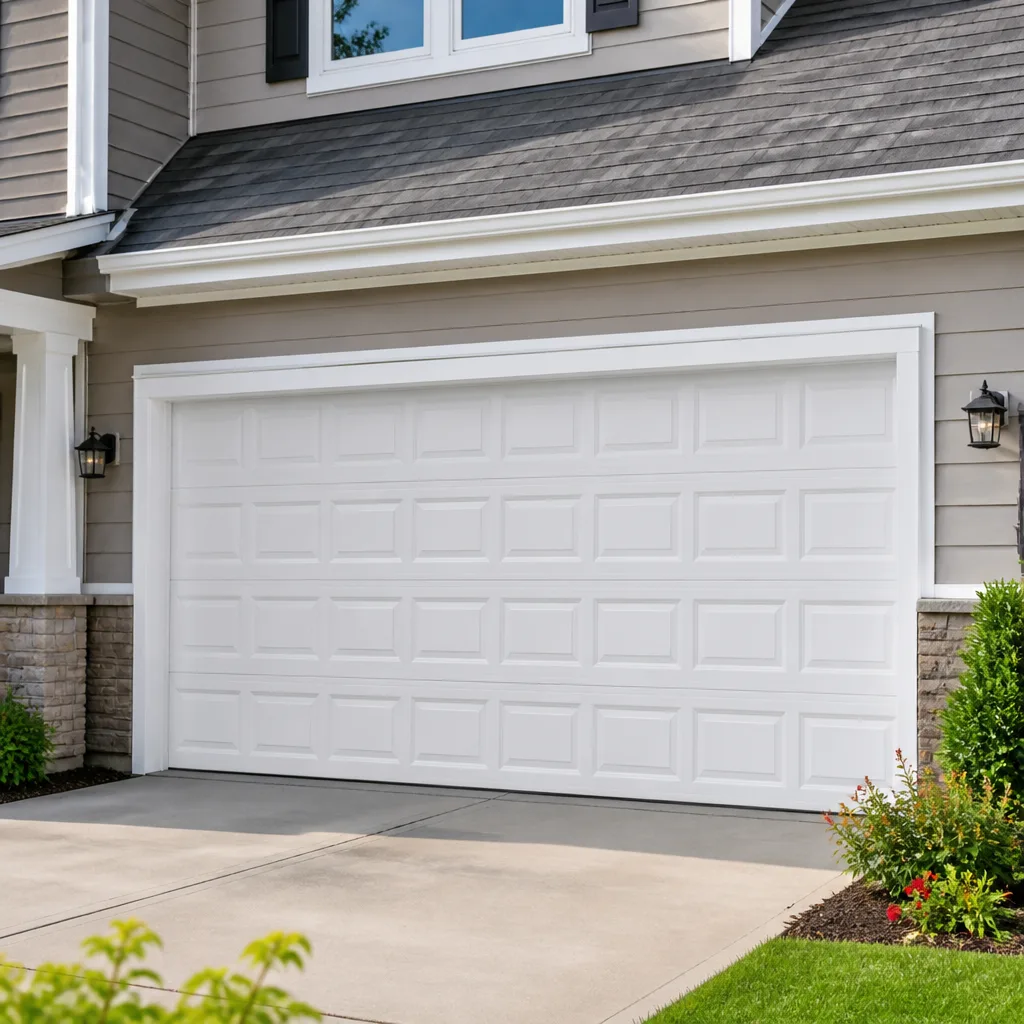 Raised-panel steel
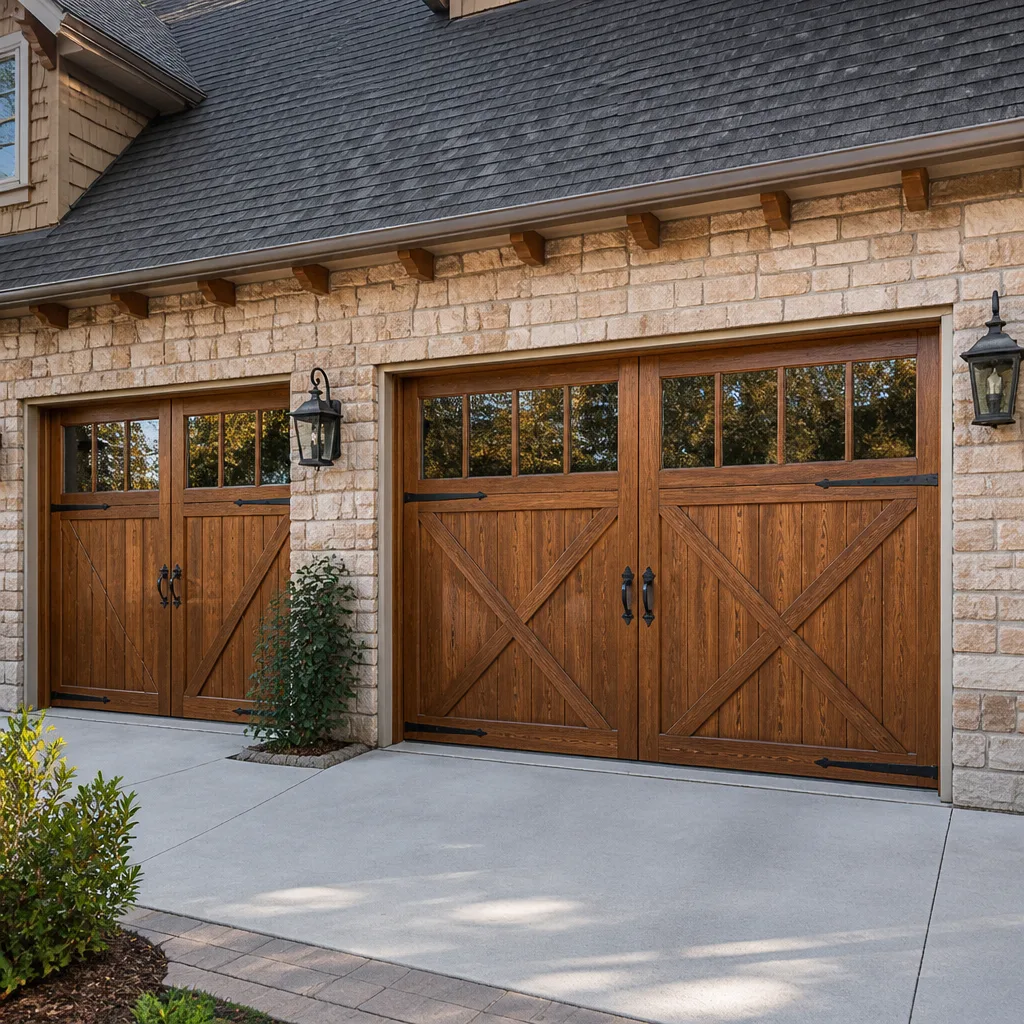 Carriage house
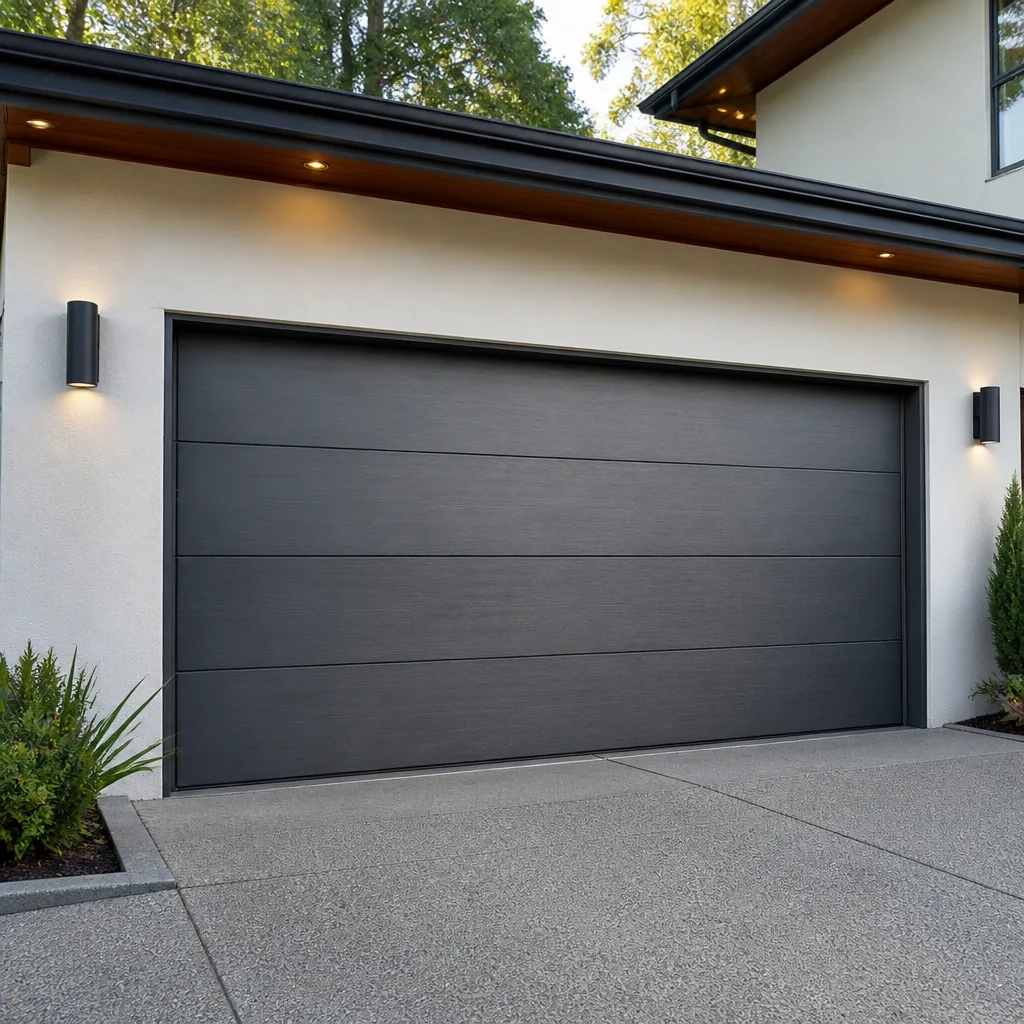 Modern flush
 Full-view glass
 LiftMaster openers
 Chamberlain openers
Full 25-point door and opener safety check with every visit - springs, cables, rollers, tracks, and your LiftMaster or Chamberlain opener included
You get a price before we start. It does not change when the pro arrives.
Get your free estimateGarage Door Warning Signs: A Suffolk Homeowner’s Reference Guide
A garage door that hesitates for half a second before opening isn’t “just getting old.” In most cases it’s a torsion spring that has lost enough tension to trip the opener’s load sensor, and it may be six to eight weeks from snapping completely. That half-second delay is a warning, not a personality trait. Doors rarely fail out of nowhere. They send signals first – noises, uneven movement, visible wear – and each signal points to a specific component. This guide maps those signals to the parts that cause them, so you can tell the difference between something to watch and something to stop using today. Whether your door is a Clopay steel model or an older Wayne Dalton, the warning signs work the same way in Suffolk.
Quick Answer
Garage door warning signs in Suffolk fall into two categories: urgent signs that mean stop using the door immediately (asymmetrical movement, visible cable slack, grinding under load, a door that reverses without obstruction), and monitor-and-schedule signs you can safely watch for a week or two (slower response, minor squeaks, slight vibration). Most failures are preceded by a sequence of these signals over days or weeks, which is why reading them early usually means a smaller repair later.
Styles & brands we work with
- Raised-panel steel
- Carriage house
- Modern flush
- Full-view glass
- LiftMaster openers
- Chamberlain openers
Table of Contents
- Spring Warning Signs
- Cable Warning Signs
- Roller and Hardware Warning Signs
- Track Warning Signs
- Opener Warning Signs
- Safety Sensor Warning Signs
- Urgent vs. Monitor-and-Schedule Signs
- Why Suffolk Humidity Ages Doors Faster
- How to Describe a Warning Sign Over the Phone
Spring Warning Signs: The Component Behind Most Failures
Torsion springs carry the full weight of the door, and when they’re failing they announce it in predictable ways. Springs sit on the shaft above the door, wound tight. When they lose tension, the opener has to work harder to lift the same weight. That’s where most subtle symptoms begin.
Watch for these spring signals:
- A half-second hesitation before the door rises. The opener’s load sensor detects extra resistance and briefly pauses. This is often the earliest sign of a weakening spring.
- Rust streaking on the coils. In Suffolk’s humid summers, condensation forms on the steel and rust begins at the coil gaps. Rust doesn’t just look bad – it weakens the wire.
- A door that feels noticeably heavier when you lift it manually (with the opener disconnected). If lifting by hand takes real effort, the spring isn’t doing its job.
- A loud bang from the garage with a door that won’t lift afterward. That’s a spring that has snapped. Stop using the door immediately and call for repair.
We work on torsion and extension springs on every major brand, and the symptoms look the same whether the door is a Raynor or a LiftMaster-equipped unit – the opener brand doesn’t change how a spring fails. One thing to be clear about: springs are under extreme tension, and adjusting or replacing them is genuinely dangerous work. A wound torsion spring can cause serious injury if it releases unexpectedly. This is not a component for DIY repair. A trained technician with the right winding bars handles it safely.
If you suspect a spring problem, the safest move is to stop running the door and describe what you’re seeing when you call for garage door repair. We can often narrow down the likely cause from your description before anyone drives out, which means a more accurate quote and no surprises.
Cable Warning Signs: What Slack and Fraying Actually Mean
Cables work with the springs to lift and balance the door. On a standard torsion setup, two cables run from the bottom corners of the door up to drums on the spring shaft. When a cable frays or slips off a drum, the door can come down unevenly or jam mid-travel.
Cable warning signs to check from a distance:
- Visible slack in either cable. With the door fully closed, both cables should feel taut. A cable that sags or looks loose has likely jumped its drum – a stop-using-the-door signal.
- Frayed or kinked strands. Look along the length of each cable. Broken strands look like tiny wire whiskers. A frayed cable has lost most of its strength and can snap.
- The door hanging lower on one side. When you close the door, one corner sits a few inches lower than the other. This can be a cable issue, a spring imbalance, or both.
- Scraping sounds as the door moves. A cable rubbing against a drum or track produces a metallic scrape that gets worse over time.
Cables are the second-most dangerous component in a garage door system after springs. They’re under high tension, and a cable that breaks under load can whip violently. Don’t try to re-seat a cable on its drum yourself. Treat visible cable slack as a “stop using the door” warning and call a technician.
In our experience across Suffolk, cable problems often show up alongside spring wear. When one component is under strain, the others compensate – and eventually something gives. Catching cable slack early usually means a straightforward repair rather than a bent track or a damaged panel.
Roller and Hardware Warning Signs: The Slow Wear Signs
Rollers, hinges, and bearings are the quiet workhorses of a garage door. They don’t fail dramatically, but they wear out gradually, and the symptoms build over months. These are the signs you can monitor and schedule rather than act on immediately.
Roller and hardware signals:
- Squeaking, squealing, or grinding during travel. Dry or worn bearings produce a high-pitched squeal. Grinding is more serious – it usually means a metal-on-metal contact from a worn roller or a seized bearing.
- Vibration you can feel through the floor. A door that rattles the whole garage as it moves has worn rollers or loose hinges.
- Visible flat spots or cracks on nylon rollers. Shine a light on each roller. A roller with a flattened edge or a crack won’t roll smoothly and puts extra strain on the opener.
- Loose hinge screws. Vibration works screws loose over time. A loose hinge causes panel misalignment and uneven travel.
- Black dust on the tracks. Worn nylon rollers leave a fine dark residue on the track surface. It’s a sign the rollers are shedding material.
These are the symptoms where a little knowledge pays off. A noisy door isn’t always about to fail, but a squeal plus vibration plus visible roller wear together mean the hardware is near the end of its life. Allowing minor roller wear to continue eventually overworks the opener and can lead to opener failure – a more expensive repair than replacing rollers.
Suffolk’s humidity accelerates this wear. Repeated cycles of condensation and drying work their way into hinges and bearings, rinsing out lubricant faster than in drier climates. Hardware that would last years in Arizona can wear noticeably sooner here. That doesn’t mean Suffolk doors are unreliable; it means maintenance rhymes with the seasons.
Track Warning Signs: Alignment Problems You Can See
Tracks guide the door through its travel. When they’re out of alignment, the door fights the tracks with every cycle. The warning signs are usually visible before the door stops working entirely.
Check for these track signals:
- A visible gap between the roller and the track edge. The roller should sit snugly. A gap means the track has bent or shifted.
- The door binding or jerking in one spot. A single hitch in an otherwise smooth travel suggests a track dent or misalignment at that point.
- Tracks that aren’t parallel to the door edges. Step back and look at the door. If the gap between the door edge and the track is wider at the bottom than at the top (or vice versa), the track has moved.
- A bang or dent after an impact. A car bumper or a stray ball hitting the track bends the steel and disrupts the door’s travel. Even a small dent can cause the roller to jump.
- Loose track mounting brackets. Brackets that have pulled away from the wall framing let the track flex under load.
Mild track misalignment is sometimes adjustable – but realigning a track affects the whole door system, and doing it wrong throws the panels, cables, and springs out of balance. If you see a bent track, note where it is and describe it on the phone. A technician can tell you whether it’s a simple adjustment or whether the track needs replacement.
Opener Warning Signs: When the Motor Tells You Something
The opener is the part that gets blamed for everything, but it’s often just reporting a problem elsewhere. Modern openers have load sensors and force settings that detect resistance from the door. When the door is hard to move, the opener strains – and that strain shows up in the opener’s behavior.
Opener signals that mean “something is wrong”:
- The door reverses before it fully closes. This can be a safety sensor obstruction, but it’s also a sign the opener’s force sensor detects resistance from a failing spring or track.
- The opener runs but the door doesn’t move. A stripped gear, a broken drive belt, or a disconnected trolley are common causes. The motor spins but the door stays put.
- The opener struggles to open the door but closes it fine. The opener lifts less weight than it closes, so an opener that struggles on the way up but not down usually means a balance problem – the springs aren’t helping as they should.
- Repeated clicking without movement. This points to a control board or capacitor issue on the opener itself.
- The remote or wall button needs multiple presses. Sometimes it’s the remote battery, but on older openers it’s often a failing receiver or logic board.
We repair openers from LiftMaster, Chamberlain, Genie, and Craftsman, and the diagnostics differ by brand. A LiftMaster that reverses mid-travel has different likely causes than a Craftsman with the same symptom. Knowing the brand helps us give a more accurate diagnosis over the phone. A Craftsman unit from the 1990s and a newer LiftMaster with MyQ still share the core components – motor, travel module, logic board, and safety sensors – but the failure modes vary.
If your opener is failing, garage door opener repair is often simpler than it sounds. The trick is not to assume the opener is the culprit – the door’s balance and hardware affect how the opener performs every day.
Safety Sensor Warning Signs: The Most Common “Mystery” Failure
Safety sensors sit near the floor at the door opening and stop the door from closing on a person or pet. They’re the most common cause of “my door won’t close” calls, and the warnings are usually obvious once you know what to look for.
Sensor signals:
- The opener’s indicator light flashes a set number of times. Most openers signal a sensor fault with a repeating blink pattern. The pattern varies by brand, so check your opener’s manual or describe the blink pattern when you call.
- One sensor’s LED is off. Each sensor has a small light. If one is dark while the other is lit, the sensors aren’t communicating.
- The door closes partway, then reverses. Something is in the sensor beam, or the sensors are aimed wrong.
- The sensors are visibly knocked out of alignment. Even a small misalignment breaks the beam. Check that both sensors face each other squarely.
- Sunlight hitting the receiver. Direct low-angle sun can blind the sensor. In Suffolk, morning sun and the angle of the door can create a seasonal blind spot.
Sensor alignment is one of the few garage door fixes a homeowner can safely handle – gently adjusting the bracket direction won’t put anyone at risk. If the sensor LED still won’t stay on after you check the alignment, or if the wiring looks damaged, that’s when it’s a technician’s job.
Urgent vs. Monitor-and-Schedule Signs
Not every warning means stop using the door. The distinction matters because using the door on an urgent warning can turn a small repair into a much bigger one – and possibly damage the door’s panels or opener in the process.
Stop using the door immediately and call for repair if you see:
- A snapped torsion spring (loud bang, door won’t lift)
- Visible cable slack or fraying
- The door moving asymmetrically – one side rising before the other
- Grinding metal contact under load
- A door that reverses without anything blocking the sensors
- A door that hangs visibly off the tracks
Monitor and schedule service for:
- A half-second hesitation before opening
- Minor squeaks or rattles
- Slight vibration in the door travel
- Remote buttons that need a second or third press
- Rust spots on springs or hardware that aren’t producing a performance change yet
The urgent signs share one thing: they mean a component is under conditions it can’t safely return from. The monitor signs mean a component is wearing and will likely need attention in the near term. Scheduling before it fails means you choose the timing and avoid an emergency.
If a door fails unexpectedly in Suffolk and you’re not sure which category you’re in, call and describe what you see. The phone line is where the triage happens, and getting it right the first time matters. Call (888) 404-3987. We answer 24/7. Fast dispatch from 7am to 7pm, Sunday through Friday.
Why Suffolk Humidity Ages Doors Faster Than Dry Climates
Garage doors in Suffolk live in a tougher environment than most homeowners realize. Southeastern Virginia’s summers bring humidity that hovers near saturation for weeks. Garage interiors don’t get the climate control the rest of the house does. The combination of heat and humidity is harder on garage door components than the cold of northern states, where the air is dry and doors spend most of the year at stable temperatures.
What the humidity does:
- Rust on springs. Torsion springs are bare steel wire under tension. In a humid garage, condensation collects in the gaps between coils. Rust begins at the coil surfaces and works inward. Rusty springs fail sooner than clean ones.
- Swollen bottom seals. The rubber or vinyl bottom seal absorbs moisture and warps. A swollen seal drags on the floor, crushes unevenly, and changes the door’s travel resistance. That drag shows up as an opener that struggles to close – a warning sign rooted in the seal, not the opener.
- Stiff rollers. Humidity causes lubricant to break down and bearings to seize. Rollers that would last years in dry climates wear faster in Suffolk.
- Wood frame swelling. On homes with wood door frames or wood-paneled doors, humidity causes the wood to swell, tightening roller brackets and creating new sources of resistance.
These are the local signals that don’t show up on a generic warning-signs checklist. A door that hesitates in Suffolk in August is often showing humidity-related symptoms that have nothing to do with the opener. We work with homeowners here on everything from older Amarr steel doors to newer Raynor installations, and the seasonal pattern is real. When the humidity lifts in fall, some symptoms ease – which can fool you into thinking the problem went away. It didn’t; the wear is still there.
The practical takeaway: in Suffolk, pay attention to rust streaks and bottom-seal drag in particular. They’re early warnings that dry-climate checklists rarely emphasize.
How to Describe a Warning Sign Over the Phone
Giving a good description on the phone gets you a more accurate diagnosis and a quote that doesn’t change when the technician arrives. Technicians ask specific questions because the answers narrow the possibilities fast. Here’s how to prepare before you call:
- Note when the symptom happens. Does it happen on opening, closing, or both? Is it worse in the morning or afternoon? A door that hesitates in cool weather and runs fine in warm weather points to spring tension. One that’s worse in humid weather points to seal or roller drag.
- Describe the sound. Squeal, grind, bang, rattle, or scrape. Each sound suggests a different component. “A high-pitched squeal on the way up” tells a technician more than “it’s making noise.”
- Say what the door does, not what you think the problem is. “The door reverses halfway up” is more useful than “the opener is broken.” The symptom points to the component; the guess can send a technician in the wrong direction.
- Note the door type and brand. Is it a single or double door? Steel, wood, or composite? What brand is the opener? Lifmaster, Chamberlain, Genie, and Craftsman openers have different diagnostics, and knowing the brand helps.
- Tell us any recent change. A new paint job, a storm impact, a DIY adjustment, or a recent move can all be relevant. A track that was nudged by a car bumper two days ago is a completely different scenario than a track that’s been off for a year.
- Describe what you’ve already tried. If you checked the sensors, adjusted the remote battery, or pulled the manual release, say so. It saves time and points us away from what’s already ruled out.
A short description, honestly delivered, is worth more than all the guessing. We’d rather hear “it squeals on the left side near the bottom” than a diagnosis you think we want to hear. With the symptoms, the door brand, and the opener brand, we can usually give a realistic estimate range over the phone and firm it up on site. Call (888) 404-3987 for a free estimate.
Common Mistakes to Avoid
- Ignoring a hesitation because “it still works.” A hesitation is a load-sensor trigger, and it gets worse over time. In Suffolk’s humidity, a struggling spring can snap within weeks rather than months.
- Spraying lubricant on a problem you haven’t diagnosed. Lubricant on a worn roller or a bent track masks the symptom and can attract grit. Clean and inspect first, then lubricate the right component.
- Pulling the manual release when the door is stuck open. On a spring or cable failure, the door can drop fast when the release is pulled. Leave the manual release alone unless you’re sure the door is balanced.
- Assuming the opener is the problem. In our experience, many “opener failures” are actually door-side issues – failing springs, dragging seals, or track misalignment. A new opener on a bad door just fails again.
- Replacing the whole door when the warning signs point to a repair. Panels, springs, and openers can usually be repaired separately. Not every symptom is a reason to install a new door.
- Waiting out the fall humidity. Some symptoms do ease when the air dries. But the rust and wear from summer don’t reverse themselves. Get the door checked before winter, not after the failure.
- Adjusting the door’s force settings to compensate. Turning up the opener’s force setting to overcome resistance is a way to hide a problem that will eventually damage the opener or the door. Fix the resistance, not the symptom.
See the difference
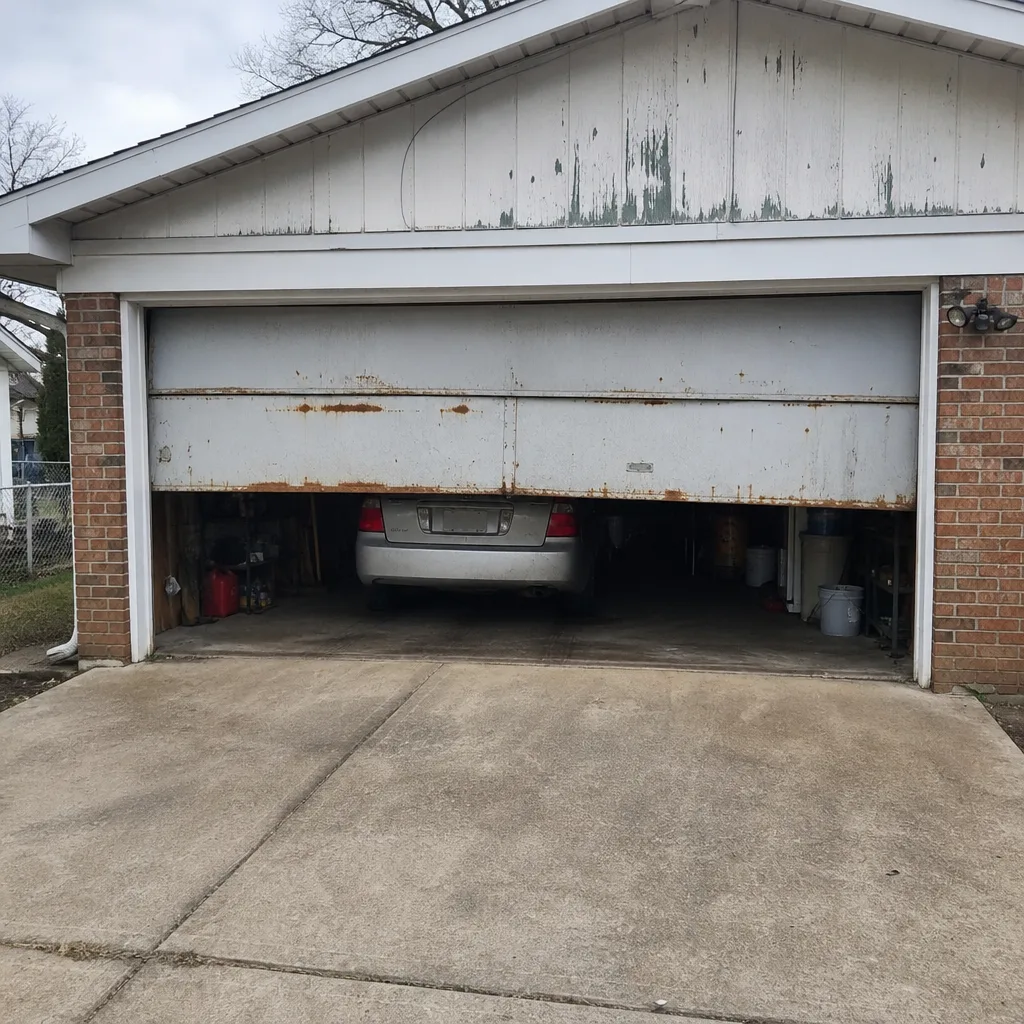 Before
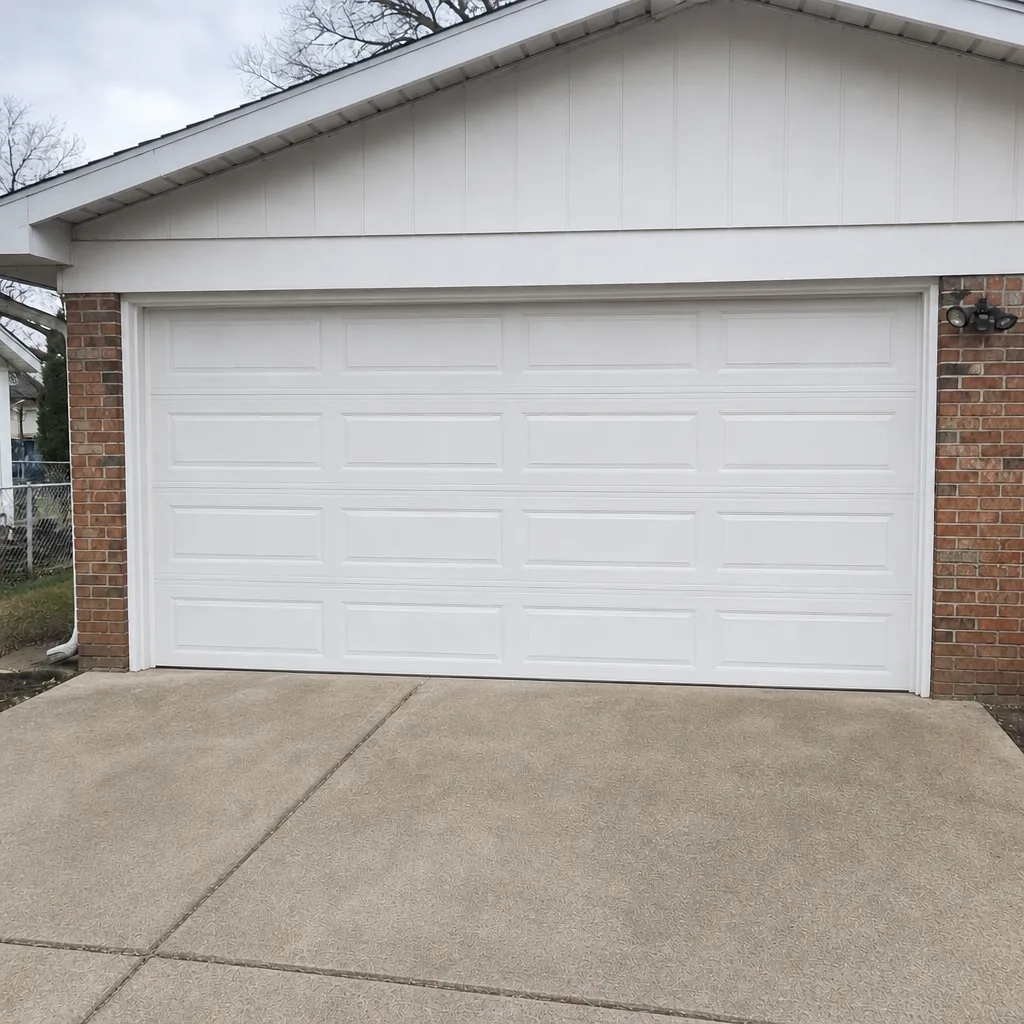 After
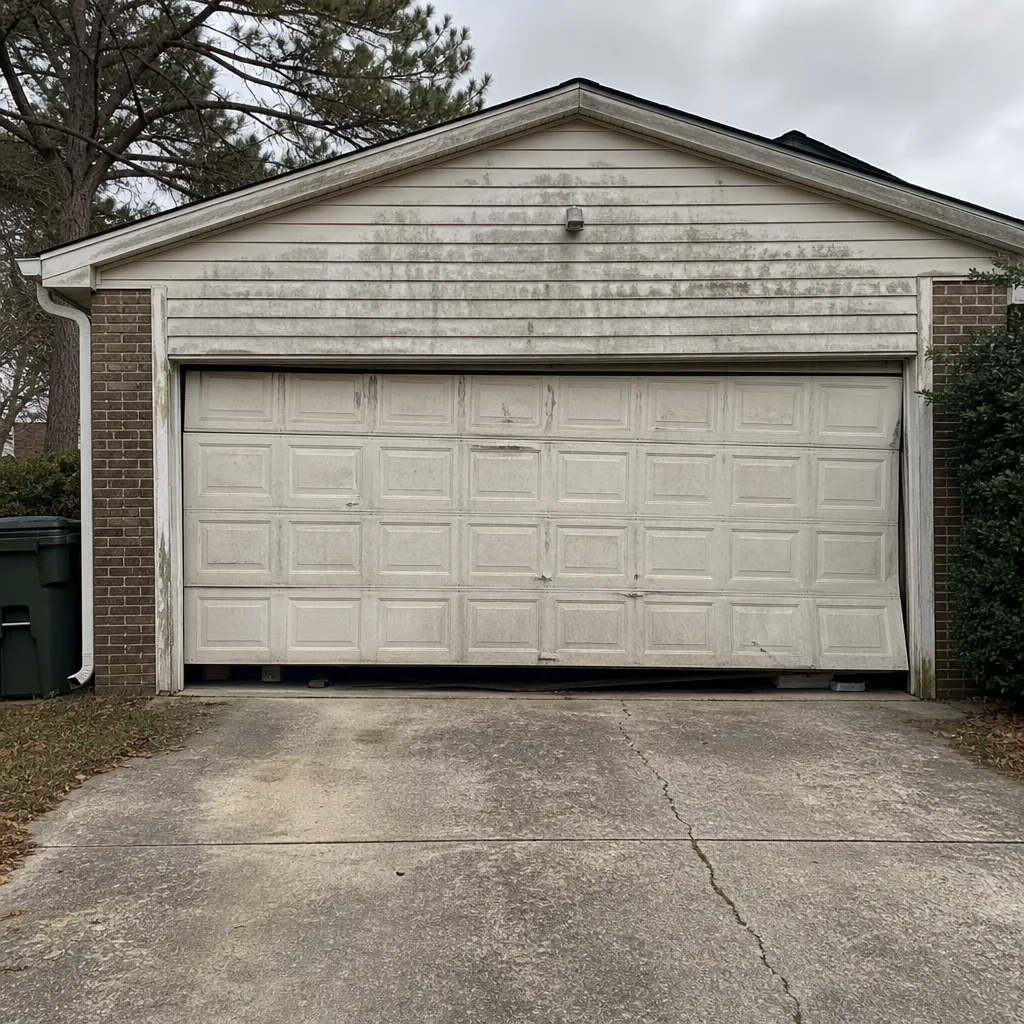 Before
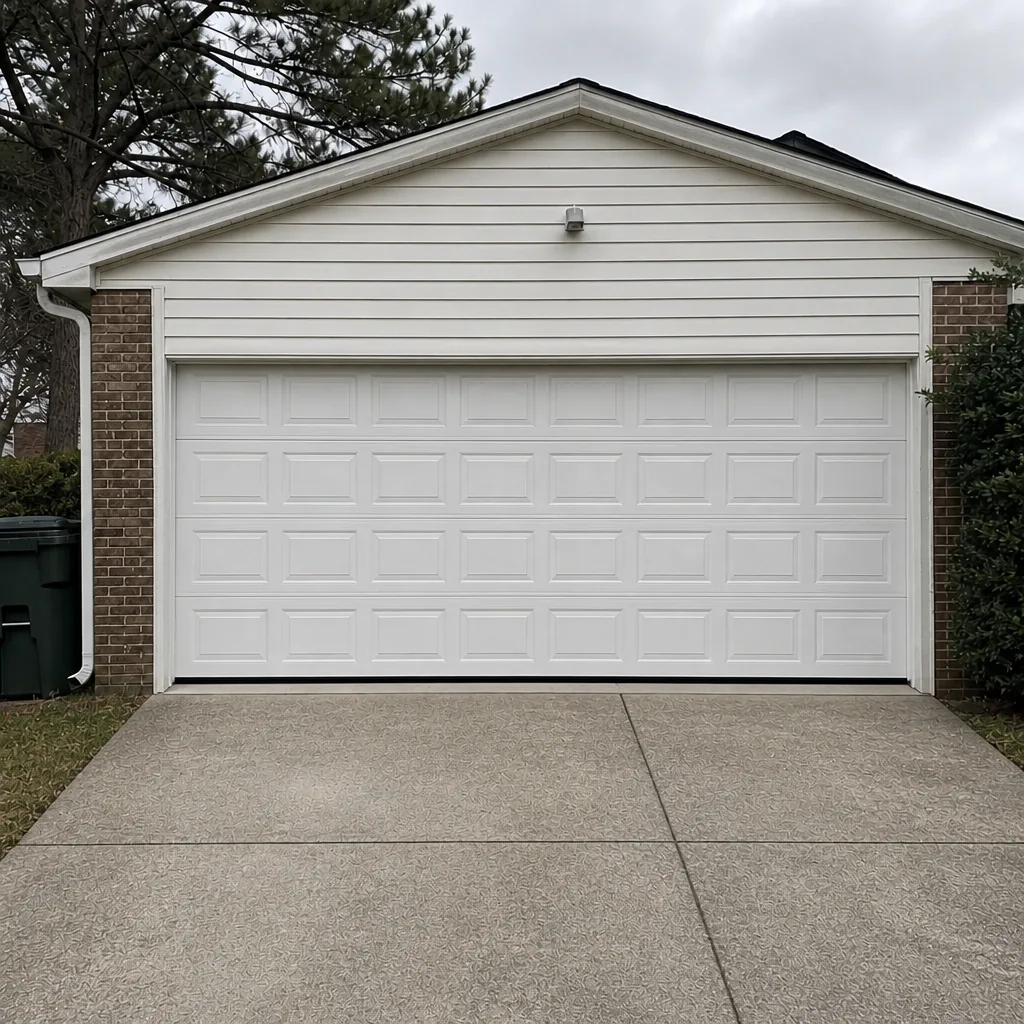 After
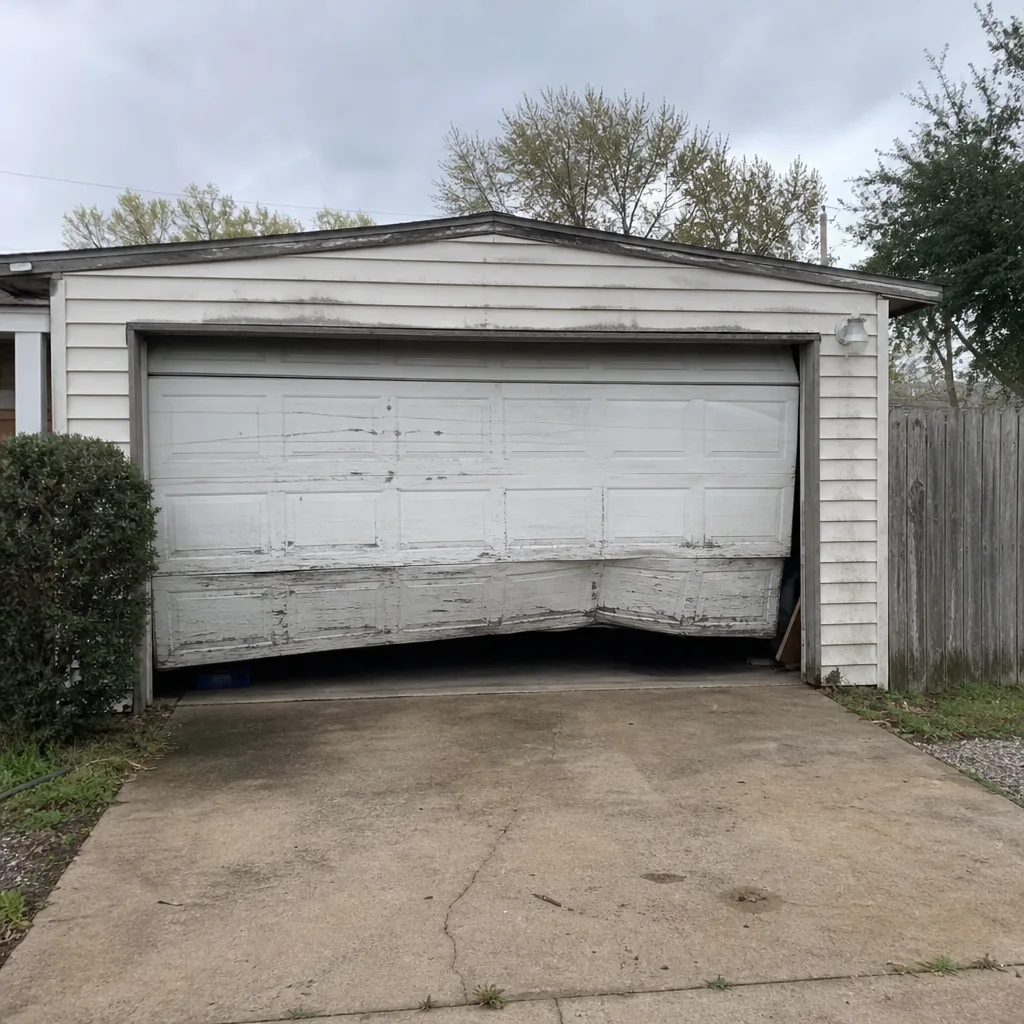 Before
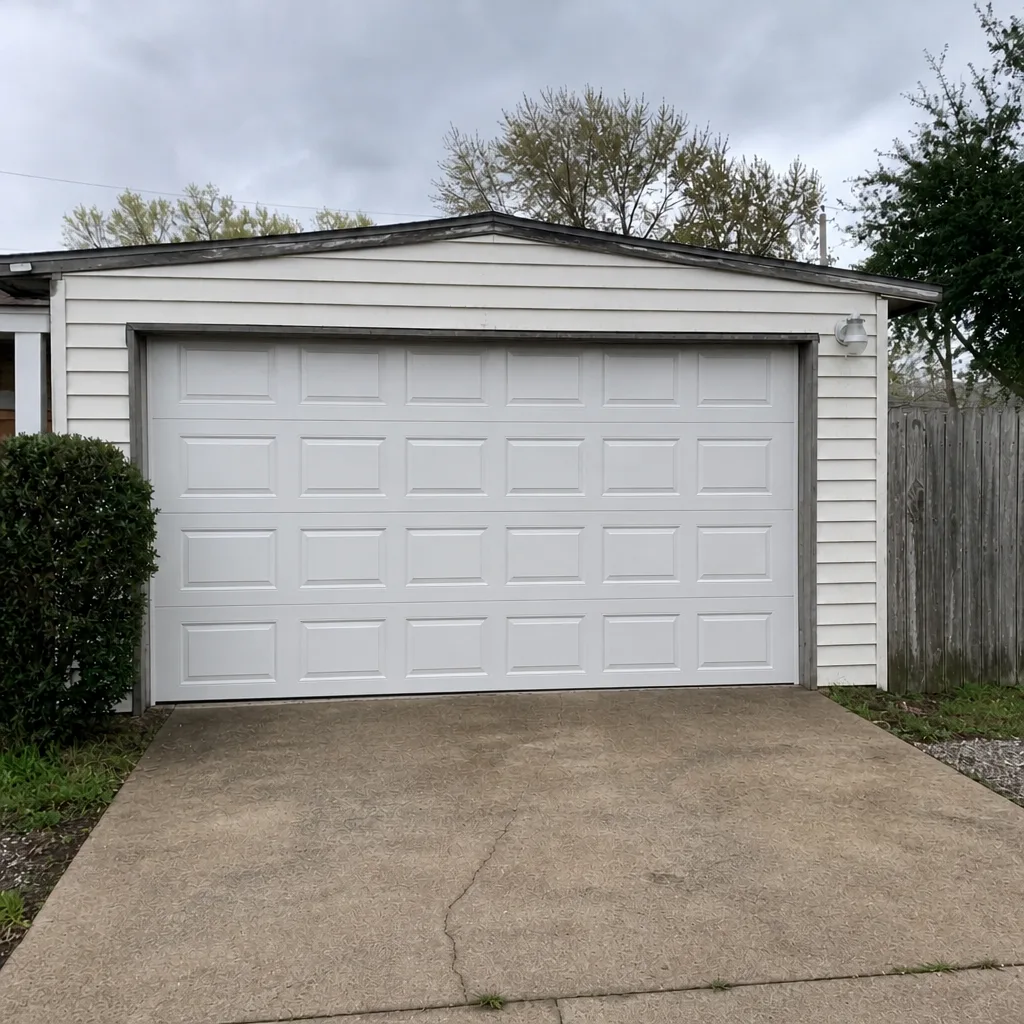 After
When to Call a Professional
Call a professional when the warning sign involves a component that can hurt you – springs, cables, or anything under tension – or when the door’s movement has changed in a way that affects safety. That includes a snapped spring, visible cable slack, asymmetric movement, grinding under load, or a door that reverses without an obstruction. These are not situations to troubleshoot over a weekend. Also call a professional when you’ve tried the obvious checks (sensors, remote battery, manual release) and the door still misbehaves – at that point the diagnosis needs eyes on the system.
Thrive Garage Door Repair offers free estimates in Suffolk – call (888) 404-3987. We answer 24/7. Fast dispatch from 7am to 7pm, Sunday through Friday. Our technicians have up to 8 years of experience, and we know the brands you already own – LiftMaster, Chamberlain, Genie, Clopay, Amarr, Wayne Dalton, Craftsman, and Raynor. Whether the warning sign points to a repair or a full replacement, you’ll get an honest read on what’s actually failing. The written estimate sets the price, and the price is agreed before any work starts.
Frequently Asked Questions
The most common warning signs in Suffolk homes are a half-second hesitation before the door opens (spring tension), rust streaks on the torsion springs (humidity), a dragging bottom seal (moisture swelling), squealing rollers, and a sluggish opener. Two local factors – heat and humidity – push these symptoms into the urgent category faster than dry-climate homeowners might expect. Call (888) 404-3987 for a free estimate.
It depends on the sign. Urgent signs – asymmetric movement, visible cable slack, grinding, or a door that reverses on its own – mean stop using the door and call now. Monitor-and-schedule signs like a mild squeak or a slightly slow opener can usually wait a week or so while you arrange a routine visit. In our experience, the earlier you book a monitor sign, the simpler and cheaper the fix. Call (888) 404-3987 to talk through what you’re seeing.
A hesitation before opening is usually a sign of spring tension loss. The opener’s load sensor detects extra resistance from the weakened spring and briefly pauses. It usually gets worse over time and often signals a spring that is close to snapping. Don’t wait for the bang. Call for a free estimate – the written quote sets the price.
No. Torsion springs are wound tight enough to cause serious injury if you attempt to adjust or remove one without the right tools and training. Even experienced technicians handle them carefully. The safest move is to disconnect the door from the opener and call a professional. Our technicians have up to 8 years of experience handling springs and cables safely. Call (888) 404-3987.
Yes – the humidity accelerates wear in ways dry climates don’t. It causes rust on springs, warps bottom seals, and degrades roller lubricants faster. A symptom that seems “minor” in summer can progress faster than you’d expect. When you call, mention whether the door is in a humid, shaded garage or a well-ventilated one.
The written estimate you receive before any work starts sets the price. We agree on the price before we begin. What changes after a phone description is the estimate itself – we’ll give you a realistic range on the phone and firm it up when we see the door. Nothing gets done without your approval. Call (888) 404-3987 for a free estimate.
The Bottom Line
Garage doors are honest machines. They give you warning – a hesitation, a squeal, a rust streak, a slight lean – long before they fail outright. The difference between a modest repair and a rushed emergency comes down to how you read those signals. In Suffolk, heat and humidity make some signs appear faster: rust on springs, drag from swollen seals, and stiff rollers. Urgent signs (asymmetric movement, cable slack, grinding) mean stop using the door. Monitor signs mean book a service visit. Either way, describing what you see accurately on the phone gets you a better quote before anyone drives out.
Thrive Garage Door Repair works on what you already have – LiftMaster, Chamberlain, Genie, Clopay, Amarr, Wayne Dalton, Craftsman, and Raynor – and we fix it right, not just for now. From a stuck spring to a full new door, one call handles the diagnosis and the repair or replacement. Your door, our expertise. Thrive Garage Door Repair offers free estimates across Suffolk. Call (888) 404-3987. We answer 24/7. Fast dispatch from 7am to 7pm, Sunday through Friday.
Written by the team at Thrive Garage Door Repair.