
Last updated November 15, 2026
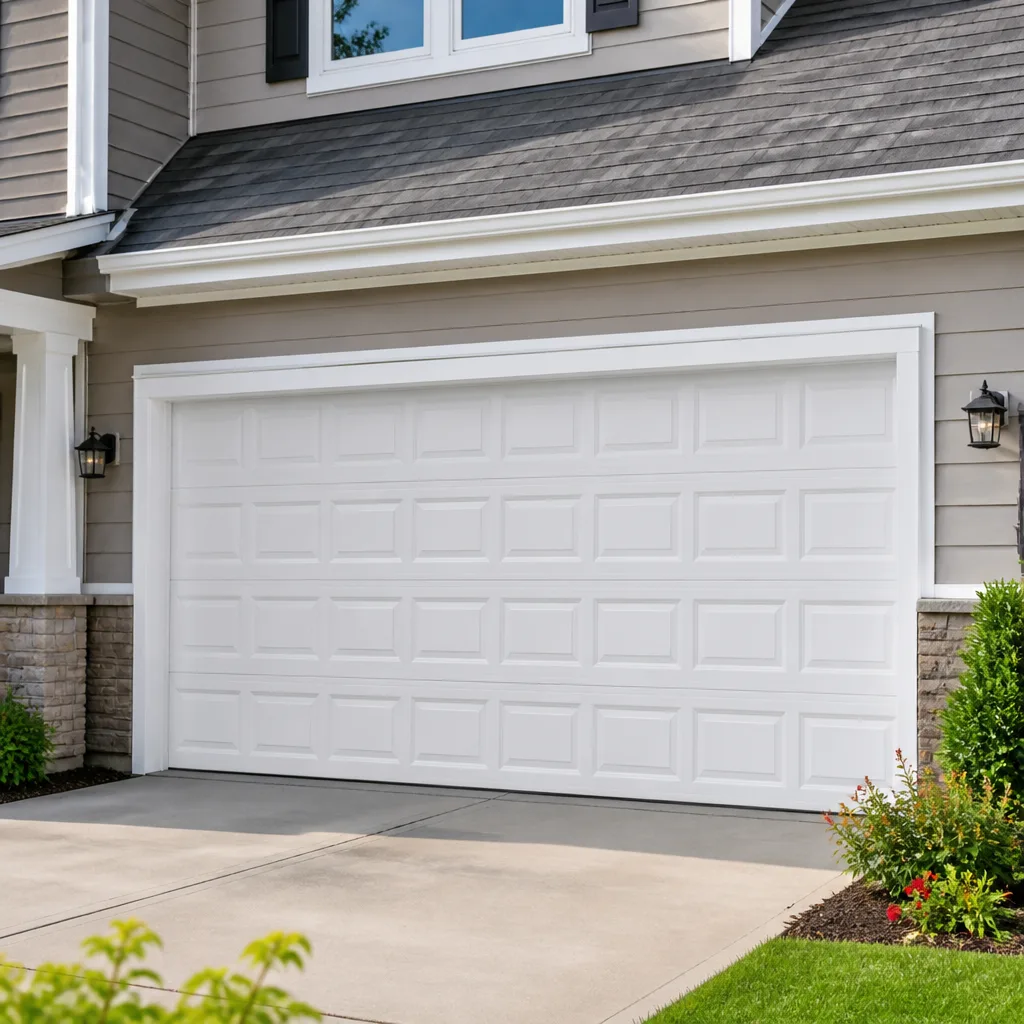 Raised-panel steel
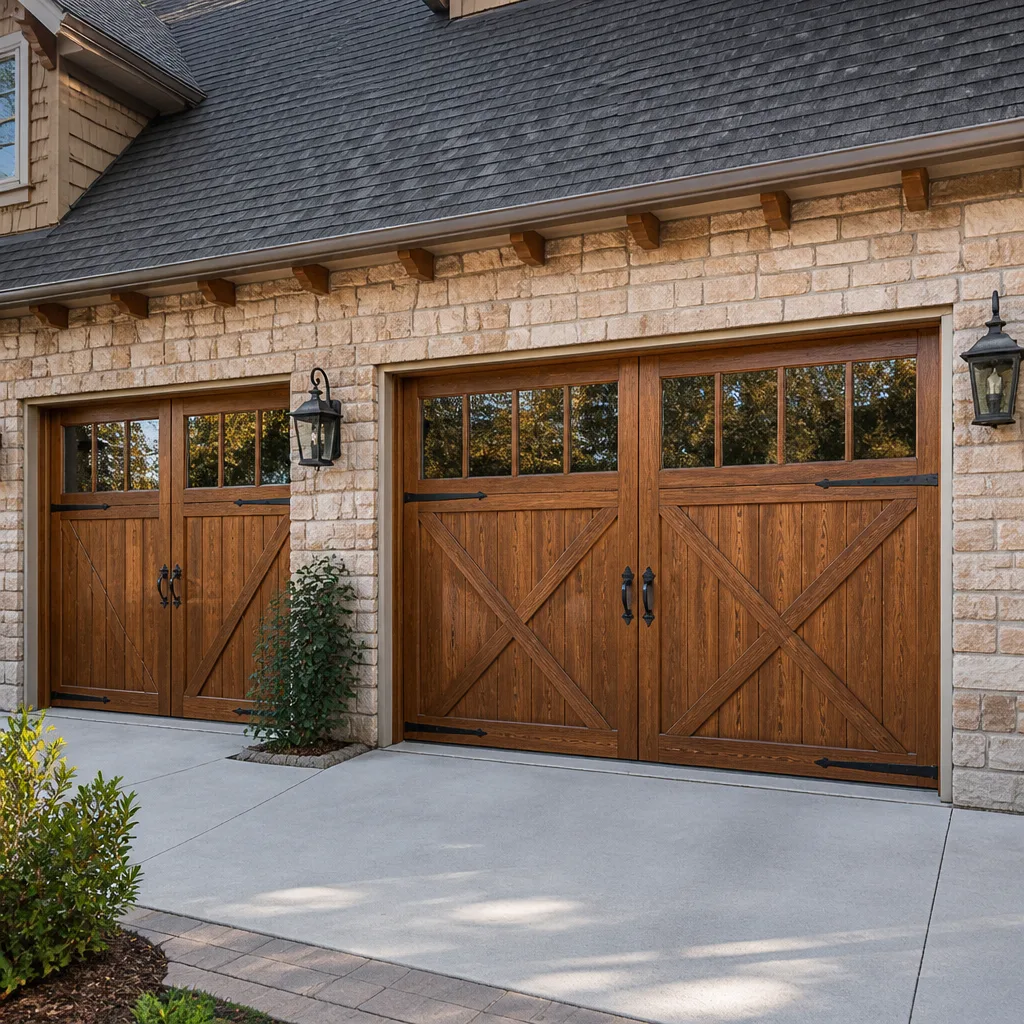 Carriage house
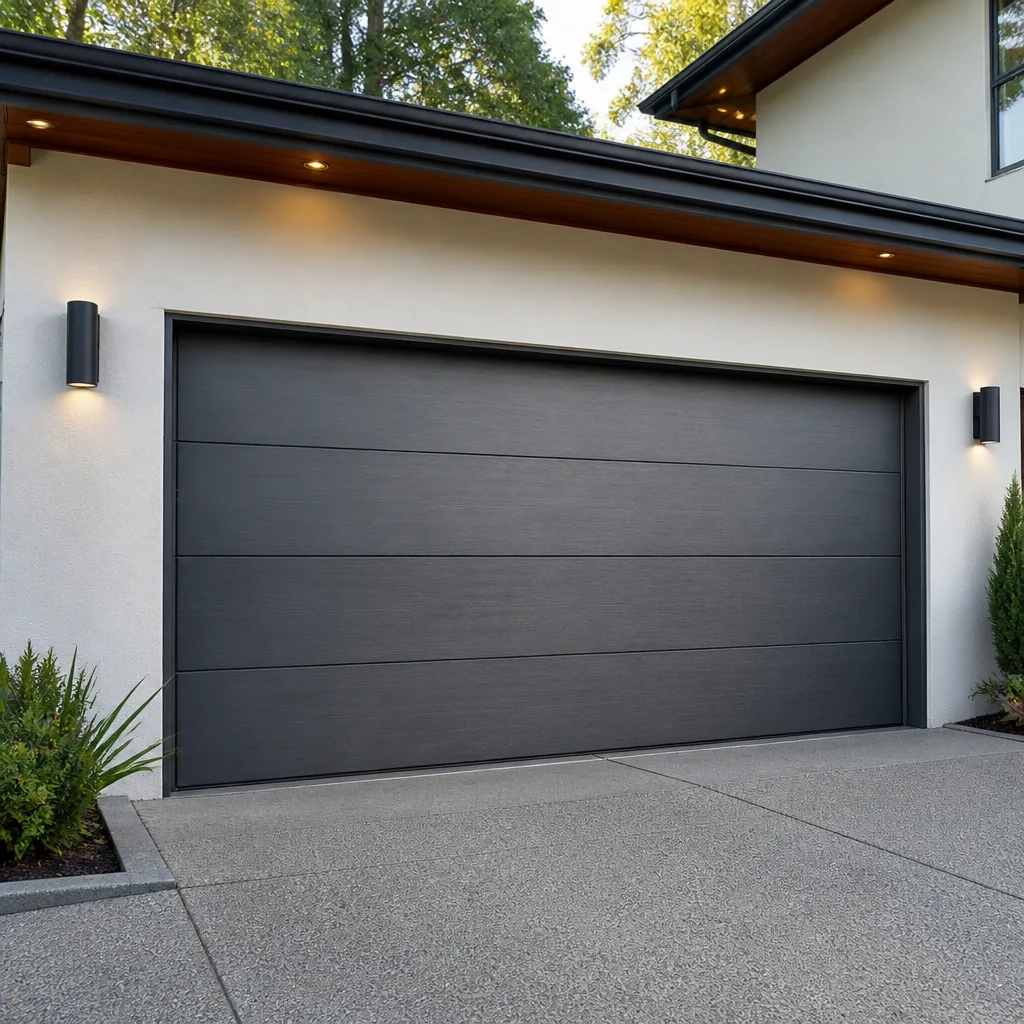 Modern flush
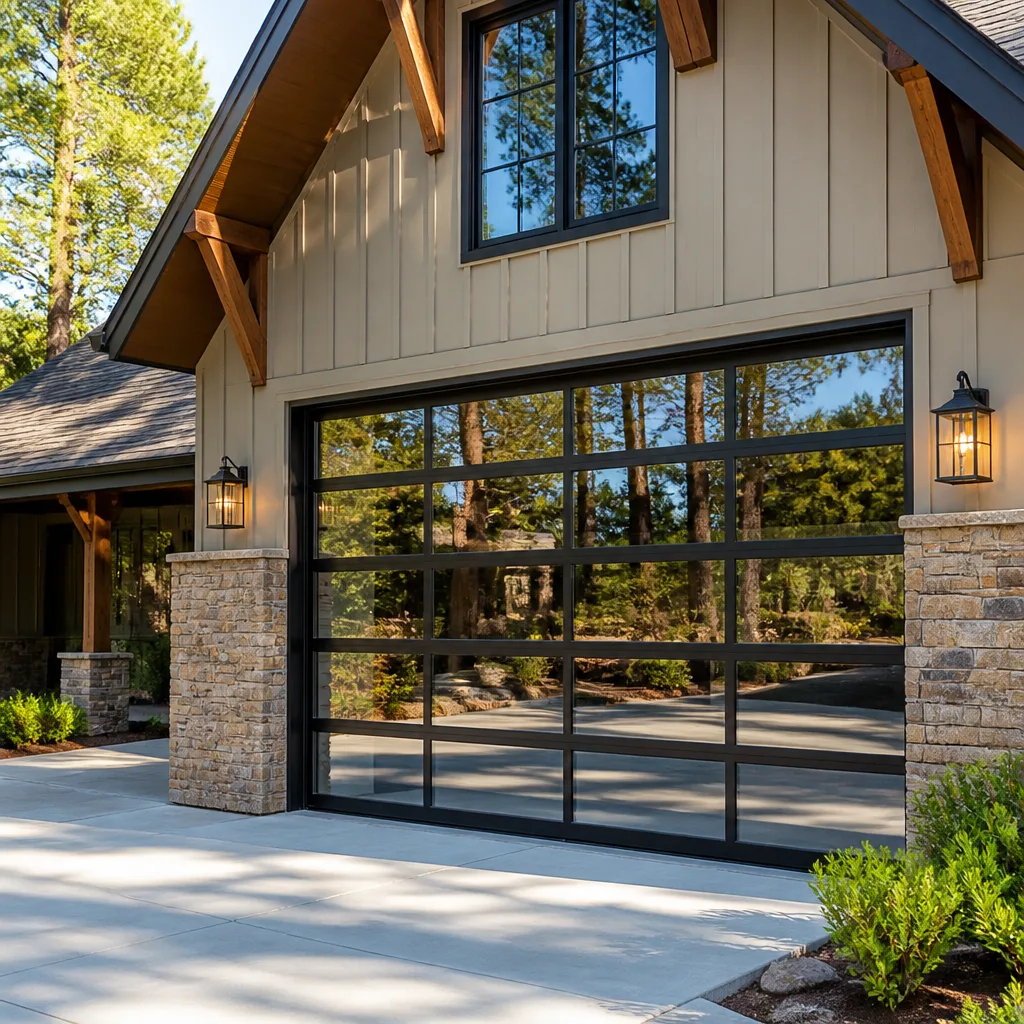 Full-view glass
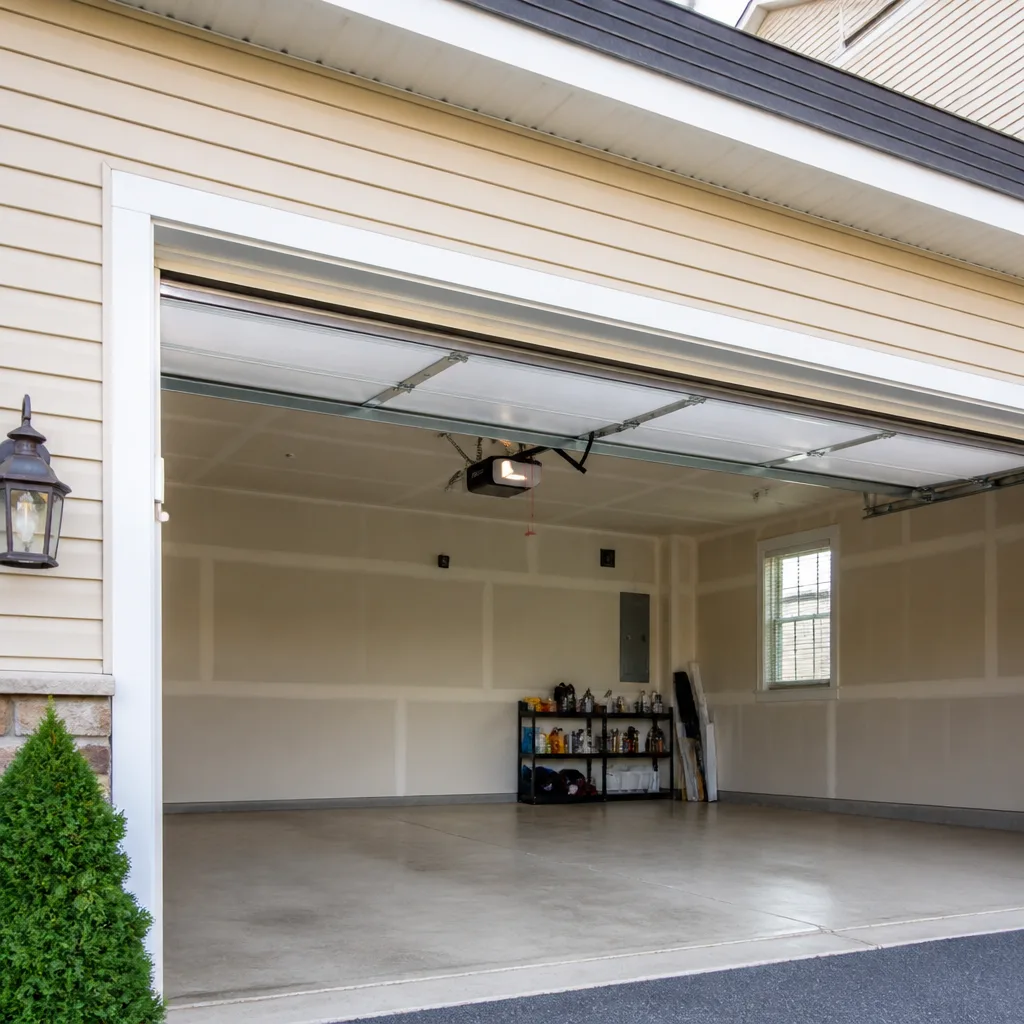 LiftMaster openers
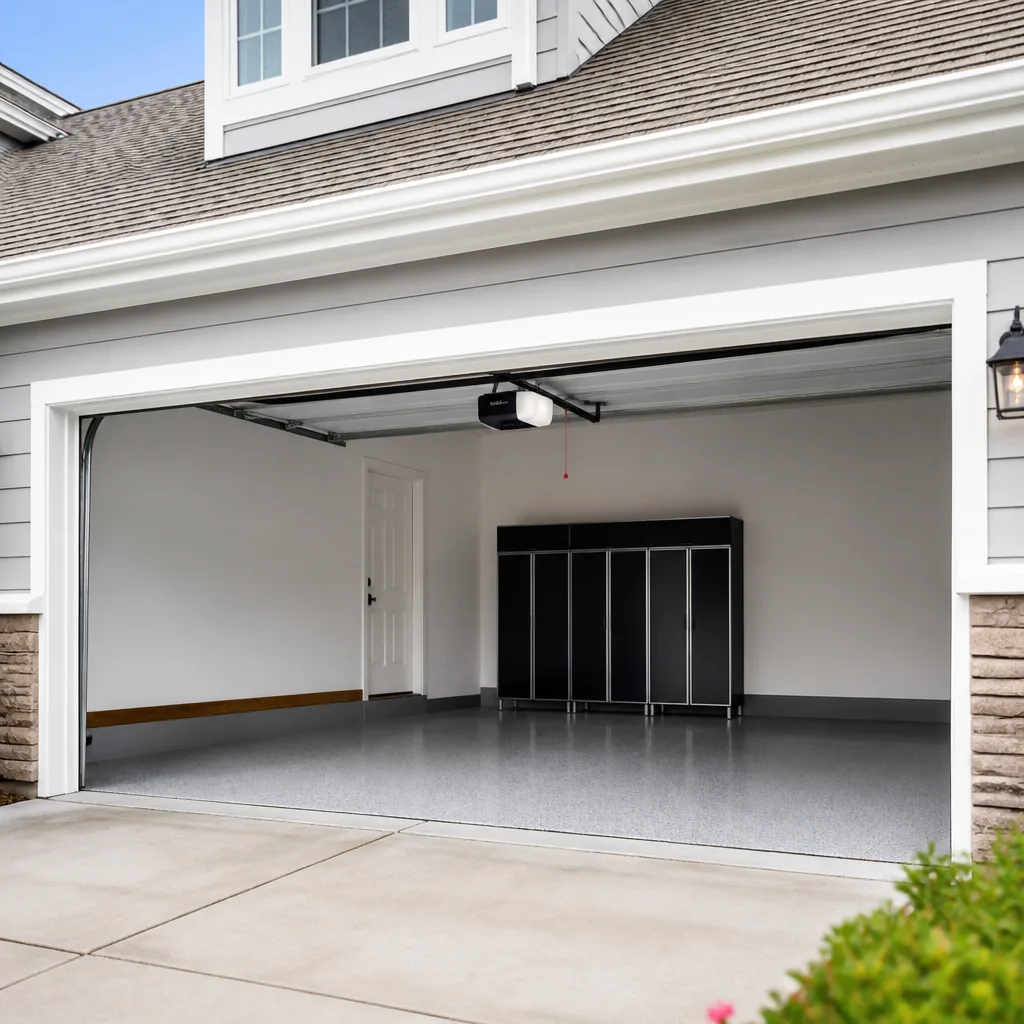 Chamberlain openers
Full 25-point door and opener safety check with every visit - springs, cables, rollers, tracks, and your LiftMaster or Chamberlain opener included
You get a price before we start. It does not change when the pro arrives.
Get your free estimateChoosing the Right Garage Door Brand: A Buyer’s Guide for Suffolk
Most homeowners in Suffolk assume the brand on the door matters less than the door itself. The opposite tends to be true over time. The brand you pick decides who can fix it, how long you wait for parts, and whether the price you pay for repairs is set by a competitive market or a locked-in dealer network. A door that costs a little more upfront but uses standard parts often ends up cheaper to own over fifteen years than a bargain door with proprietary components. This guide walks through how to judge a garage door brand on the things that actually shape your ownership experience in Suffolk – parts availability, independent serviceability, warranty fine print, and how the door’s specs match our climate. You’ll finish knowing which questions to ask before you sign anything.
Quick Answer
The right garage door brand in Suffolk is the one whose parts are stocked for same-day fixes, whose springs and hardware any trained technician can service, and whose insulation and steel gauge match our humid summers and storm season. Clopay, Amarr, Wayne Dalton, and Raynor all fit that profile when specified well. LiftMaster and Chamberlain own the opener side. Brand prestige matters far less than parts access and honest installation.
Styles & brands we work with
- Raised-panel steel
- Carriage house
- Modern flush
- Full-view glass
- LiftMaster openers
- Chamberlain openers
Table of Contents
- What garage door brands are actually available in Suffolk?
- Which door features actually matter for Suffolk’s climate?
- The parts ecosystem problem: how proprietary components lock you in
- How to check a brand’s local parts availability before you buy
- How to read a garage door warranty without getting burned
- Why the right brand is sometimes the one already on your house
- Side-by-side comparison: the major brands in Suffolk
- A step-by-step process for choosing your brand
What Garage Door Brands Are Actually Available in Suffolk?
A handful of manufacturers dominate the residential market in Suffolk, and knowing which ones you’re likely to encounter makes every other decision easier. Most homes here have one of five door brands or a close equivalent. On the opener side, the field is even narrower. We work on doors and openers from Thrive Garage Door Repair approved brands including Clopay, Amarr, Wayne Dalton, Raynor, LiftMaster, Chamberlain, Genie, and Craftsman, and in our experience these cover the overwhelming majority of what’s already installed in the area.
Here’s how the brands break down by category:
- Residential door manufacturers: Clopay, Amarr, Wayne Dalton, and Raynor. These four cover most new installations and most existing doors. Each has a distinct strength. Clopay is widely distributed with a deep catalog of styles. Amarr leans toward durable steel construction and clean design lines. Wayne Dalton ranges from builder-grade to premium. Raynor is known for build quality and longer service life on the high end.
- Opener manufacturers: LiftMaster and Chamberlain share one design lineage and dominate the smart-home integration space. Genie and Craftsman fill in the second major platform. If your opener has an app or a wall console with battery backup, it’s almost certainly from one of these lines.
- Builder-grade doors: Many Suffolk homes built in the last two decades came with a basic steel door from one of the majors in their entry-level line. These are perfectly serviceable. They just don’t have the insulation or the hardware of a mid-tier or premium model.
What this means for you: you don’t need to hunt for an exotic brand. What you need is to understand which brand fits your budget, your home’s style, and how easy it will be to repair when something wears out. Every brand above has authorized dealers somewhere in Hampton Roads. The question is whether the parts you’ll need in five years are an easy order or a two-week wait.
Which Door Features Actually Matter for Suffolk’s Climate?
Suffolk sits in a humid, storm-prone stretch of southeastern Virginia. Summers are long and wet. Winters are mild but not trivial. Thunderstorms move through with real force, and the area has seen more than its share of wind events. Your garage door has to hold up to all of that while staying easy to operate and quiet enough not to wake the house. Here’s what to prioritize versus what to ignore.
Features that matter
- Insulation value: A well-insulated door keeps the garage – and any room above it or beside it – noticeably more comfortable in July and August. Look for a door with a continuous layer of foam or polyurethane rather than a thin vinyl back. If your garage is attached to living space, insulation is one of the most valuable upgrades you can make.
- Steel gauge: Thicker steel resists dents from wind-blown debris and from everyday bumps. A 24-gauge steel outer skin is a reasonable baseline for a mid-tier residential door. Thinner 27-gauge or 28-gauge doors are fine for low-traffic situations but flex more over time.
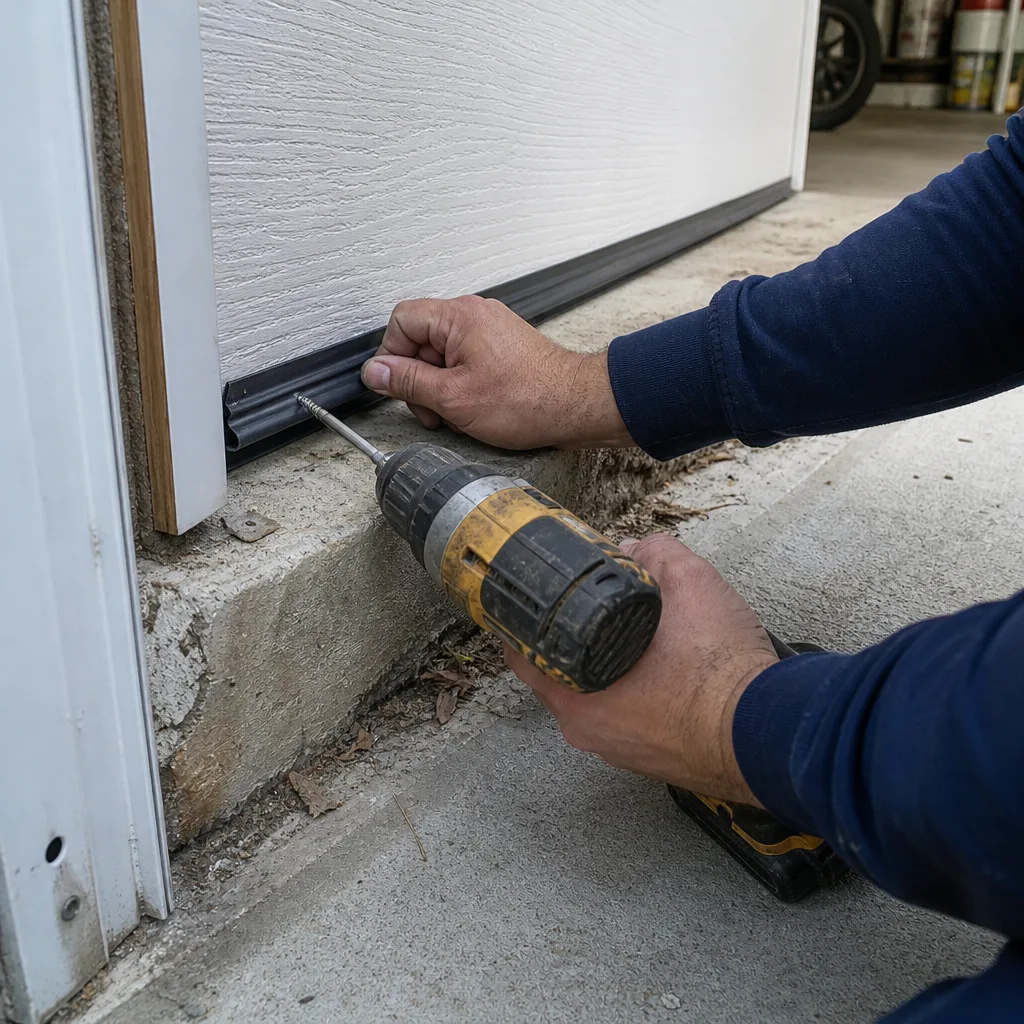
- Weatherstripping and bottom seal: With Suffolk’s humidity, a tight seal keeps moisture, insects, and hot air out of the garage. This is cheap and easy to upgrade on almost any door, new or existing.
- Wind-load rating for high-exposure homes: If your home sits on a more open lot or in a neighborhood with sustained wind exposure, look for a door rated for higher wind loads. This is a specification the manufacturer publishes, not a marketing claim. Ask directly for it.
- Powder-coated finish: A factory-applied powder coat or a baked-on finish holds up better than a painted door. It resists the fading and chalking that inevitably hit cheaper finishes in strong UV exposure.
Features that are mostly marketing
- Exotic window options: Decorative glass and fancy trim look great, but the practical differences between brands on window construction are small. Pick what you like visually and don’t pay a premium for a “technology” that’s really just a style.
- Premium hardware names: Branded hinges and rollers sound impressive. In practice, quality hardware from any brand will outlast cheap hardware from a supposedly premium one. What matters is the hinge thickness and whether the rollers are nylon or steel.
- “Smart” doors built into the door itself: The door panel doesn’t need to be smart. The opener is where smart features belong, and every major opener brand supports the same app platforms from LiftMaster and Chamberlain on down.
When you’re comparing quotes for a new door in Suffolk, insist on seeing the spec sheet for the door each quote proposes. Insulation value, steel gauge, and wind rating are real numbers. Anything else is subjective. And if you’re upgrading the opener along with the door, garage door opener repair and replacement are typically a separate decision from the door itself. You want a door brand and an opener brand that work together without adapters or workarounds.
The Parts Ecosystem Problem: How Proprietary Components Lock You In
This is the single most overlooked factor in choosing a garage door brand, and it’s where the cost difference between brands plays out over years rather than days. When a brand uses standard, widely-available components, any trained technician can service it. When a brand uses proprietary components, you often have to go through the manufacturer’s dealer network. That has real consequences.
Here’s how it plays out in practice in Suffolk:
- Springs: A torsion spring is a wear item. It breaks, and it breaks on its own schedule. Common spring sizes are stocked at most supply houses in Hampton Roads, which means a same-day or next-day fix. Proprietary spring specifications from certain brands have to be ordered through an authorized dealer, which can mean a week without a functional door. Anyone who has lived through that week knows the cost of a locked-in brand.
- Cables and drums: Standard cable diameters and drum sizes are interchangeable across most brands. Proprietary ones aren’t. If your door has proprietary drums, a cable failure that should be a simple repair becomes an order-and-wait situation.
- Hinges and rollers: The good news is these are usually cross-compatible even across brands. But not always. Some brands use unique hinge hole patterns that force you into their parts catalog.
- Panels: If a panel is damaged by a car or a wind-blown limb, a standard-profile door lets any installer source a replacement panel. A proprietary profile can be a custom order, which affects both cost and lead time.
- Openers: On the opener side, the ecosystem is a bit more open. Most opener brands share logic boards and safety sensors across their own product lines, which is why major brands like LiftMaster and Chamberlain are so widely serviceable. We’d argue the openers are the least of your worries – it’s the door hardware that matters more.
None of this means proprietary brands are bad. It means you’re paying a premium every time you call for a repair, forever, in exchange for whatever design or aesthetic benefit the proprietary component provides. Over a fifteen-year ownership window, that premium adds up to more than the difference in the door’s purchase price.
How to Check a Brand’s Local Parts Availability Before You Buy
You can answer most of the parts question with a single phone call before you sign a contract for a new door. Here’s the process:
- Ask the dealer for the brand and model number in writing. Not the marketing name. The actual model number on the spec sheet.
- Ask which supplier would stock replacement springs for that model. If the answer is “our warehouse, and we do all the repairs,” that’s a warning sign. If the answer is a named supply house that any contractor can buy from, that’s a good sign.
- Call a couple of independent garage door repair companies in Suffolk and ask them directly. “Do you stock or can you same-day source springs for a [brand] [model]?” Most technicians will tell you straight. We’ve seen the same two or three models trip up technicians across the region, and they’re always the proprietary ones.
- Search online for the model number plus “spring.” If you find several suppliers selling replacement springs at reasonable prices, that’s a good sign. If the only results are the manufacturer’s own site, you know what you’re dealing with.
- Ask about a common failure scenario. “It’s Friday afternoon, one of my springs breaks. When is the door back in service?” The answer tells you everything about the brand’s real local availability.
Suffolk is a genuinely mixed market. Some neighborhoods have a lot of builder-grade doors. Others have custom installation work from a high-end builder. Both kinds of door are serviceable. The question is whether your specific brand has a local supply chain that keeps up with the failures that happen with every door over time.
How to Read a Garage Door Warranty Without Getting Burned
Garage door warranties look straightforward until you read the fine print. Manufacturers separate coverage into categories – panels, hardware, spring, and sometimes finish – and each category has its own terms, length, and exclusions. The confusing part is that a “limited lifetime warranty” on a panel usually means something quite different from what the salesperson implies.
What to look at in the warranty document:
- Coverage length per component. A 10-year panel warranty with a 1-year hardware warranty means your hardware is effectively out of coverage by the time it starts breaking. Ask for the component-by-component breakdown in writing.
- Pro-rating. A pro-rated warranty means the manufacturer covers less of the cost the older the door gets. A 5-year pro-rated spring warranty means year five is nearly worthless in practice. Look for non-pro-rated coverage on wear items, or budget for the repair cost regardless.
- Labor. Almost no manufacturer warranty covers labor. That means even a “fully covered” panel failure costs you the installation labor. Read the labor clause explicitly.
- Duty rating on springs. Spring warranties are measured in cycles – the number of times the door opens and closes. A 10,000-cycle spring warranty means roughly ten years of average use. A 20,000-cycle spring is an upgrade worth paying for if it’s available for your door.
- Transferability. Some brands’ warranties transfer to the next homeowner, which is worth a small amount of money at resale. Others don’t. If you’re planning to sell before the warranty runs out, transferability is worth asking about.
The honest summary: no manufacturer warranty is going to cover the cost of every repair over the life of your door. Treat the warranty as one factor among several. A door that uses standard parts and gets serviced by any trained technician will cost you less over fifteen years than a door with a stellar warranty and proprietary parts, almost regardless of what the warranty paperwork says.
Why the Right Brand Is Sometimes the One Already on Your House
Here’s a point that gets missed in a lot of brand comparison guides: a new brand of door almost never saves you money in the first ten years, and frequently costs more than maintaining and upgrading what you have. If your door is structurally sound – panels intact, tracks aligned, hardware functional – you can often get the same result from a repair-plus-upgrade path as from a full replacement, at a fraction of the cost.
Three situations where keeping the existing door is the smarter call:
- The panels are in good shape but the hardware is worn. New hinges, new rollers, new springs, and new weatherstripping can make a door feel like new. We’ve seen plenty of Suffolk doors from every major brand get another decade of life from a hardware overhaul.
- The door works but the opener is aging. If the door itself is fine and the opener is the weak link, a new opener is a much smaller investment than a new door. This is the single most common upgrade we recommend. It’s usually the right call.
- The insulation is the only real weakness. If your door is thin, uninsulated steel, some brands offer retrofit insulation kits. These don’t match a factory-insulated door’s performance, but they close most of the gap for a fraction of the price.
Where replacement beats repair: a door with bent or cracked panels, a track that’s badly out of alignment, or a door that’s approaching end of service life across multiple components at once. In those cases, a full new door from Clopay, Amarr, Wayne Dalton, or Raynor is usually the sensible choice, and the brand question becomes relevant again. But the honest answer to “should I replace” is often no. A door that’s structurally sound and can be made to run quietly and smoothly is a better investment than a new door that costs the same as five years of repairs.
Side-by-Side Comparison: The Major Brands in Suffolk
The table below lays out how the four major residential door manufacturers stack up on the factors that matter most for Suffolk homeowners. It’s a starting point, not a verdict. The right brand for you depends on your home, your budget, and the specific model within that brand.
| Brand | Parts Availability | Independent Serviceability | Best Fit | Warranty Style |
|---|---|---|---|---|
| Clopay | Widest distribution; standard springs and hardware widely stocked | High – most trained technicians service Clopay daily | Most homeowners; strong style range and mid-tier insulation | Tiered by product line; entry-level is shorter, premium is longer |
| Amarr | Strong local supply through most Hampton Roads dealers | High – standard components across most of the line | Durability-focused buyers; clean steel door designs | Component-based; hardware often runs shorter than panels |
| Wayne Dalton | Mixed – builder-grade models are easy; some premium lines proprietary | Medium – depends heavily on the specific model | Custom looks on the high end; builder-grade replacements | Varies widely by model; check the specific spec sheet |
| Raynor | Good – dealer network is responsive but less ubiquitous | Medium-high – most components are serviceable | Buyers prioritizing build quality and service life | Generally strong on panels and springs |
On the opener side, LiftMaster and Chamberlain lead on smart-home features and parts availability. Genie and Craftsman cover the second major platform. Any of the four will work fine with any of the doors above. If you’re coordinating a new door with a new opener, that’s a good time to look at the whole system together. Our Suffolk service page has details on how we structure a combined installation quote.
A Step-by-Step Process for Choosing Your Brand
Here’s the practical process we recommend to homeowners planning a new door in Suffolk. It takes thirty minutes of research and saves days of frustration later:
- Decide your non-negotiables first. Insulation value, steel gauge, appearance, and budget are the big four. Write down what matters most before you look at any brand.
- Get two or three quotes on the same specification. Don’t let a dealer quote you a premium door against a competitor’s entry-level model. Ask for quotes on the same insulation value, same steel gauge, same wind rating.
- Run the parts check we described above. Call an independent garage door company in Suffolk and ask about the specific model you’re being quoted. If it takes two weeks to source a spring, that’s a problem.
- Read the warranty component by component. Panel, hardware, spring, finish. Ask for the cycle count on the springs. Ask about pro-rating. Ask about labor.
- Verify the opener will play nicely with the door. Most combinations work fine, but confirm before you buy. Confirm the opener brand has local parts availability too.
- Ask what happens if the model you’re being quoted isn’t available. Some dealers will substitute a comparable model from a different line. Ask for it in writing that the substitute meets or exceeds the spec you approved.
- Get the final quote in writing before work starts. The written quote sets the price. That’s the standard you should hold any installation company to in Suffolk.
Common Mistakes to Avoid
- Buying on showroom aesthetic alone. A door that looks perfect in the showroom can be the wrong choice for your home’s exposure and insulation needs. Ask for the spec sheet before committing.
- Assuming a recognizable brand means easy repairs. Some of the best-known brands have proprietary springs. Ask the parts-availability question before you sign anything.
- Ignoring steel gauge. Two doors can look identical on the showroom floor but be built from very different steel thickness. Ask for the gauge in writing on the quote.
- Skipping the opener decision until after the door is ordered. The door and opener work together. A poorly matched combination means adapters, extra brackets, or premature opener wear.
- Trusting a warranty without reading the exclusions. Every warranty has a labor clause, a pro-rating clause, and a list of things that void coverage. Read all three before comparing brands.
- Replacing a door that could be repaired. A structurally sound door that needs new hardware, springs, or weatherstripping is usually worth repairing, not replacing.
- Choosing a brand based on one dealer’s sales pitch. Ask the same parts-availability question of two or three independent repair companies before you buy. You’ll get the truth from people who service the brand, not sell it.
See the difference
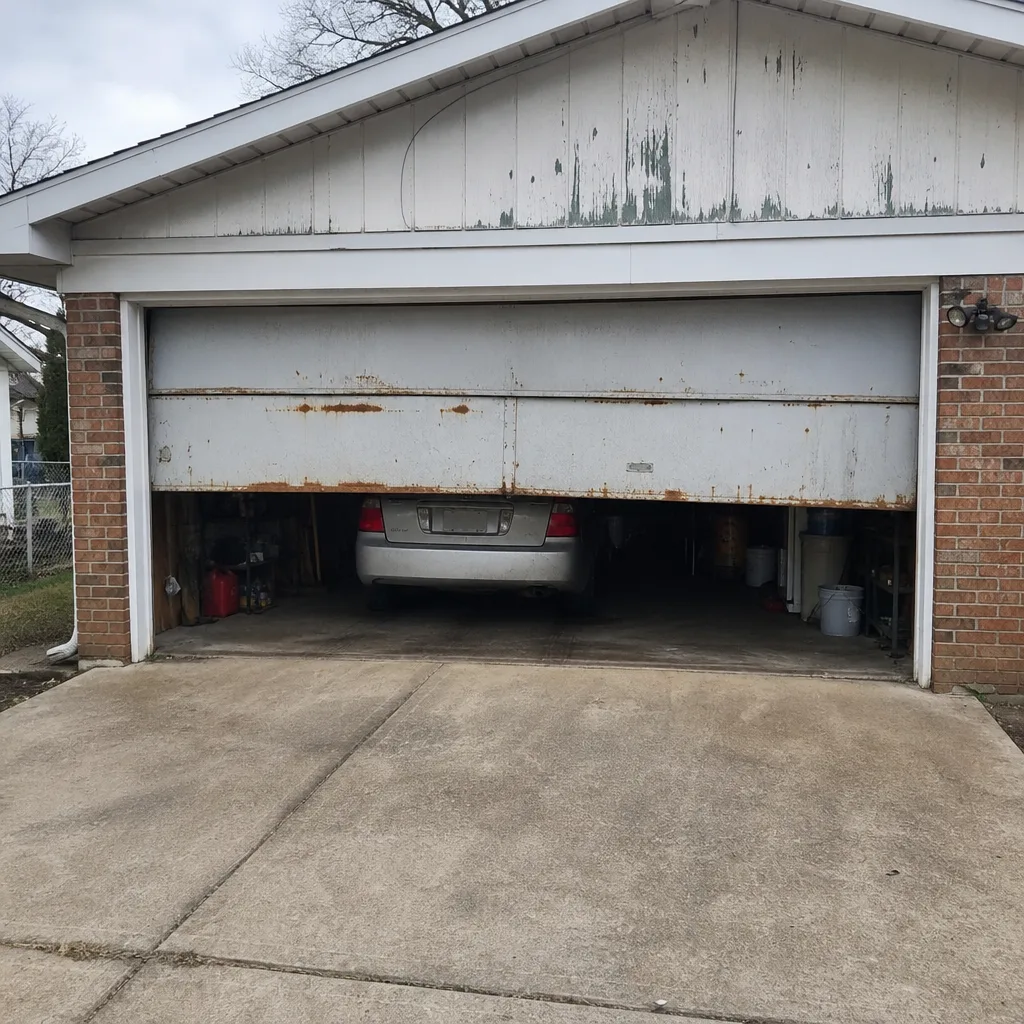 Before
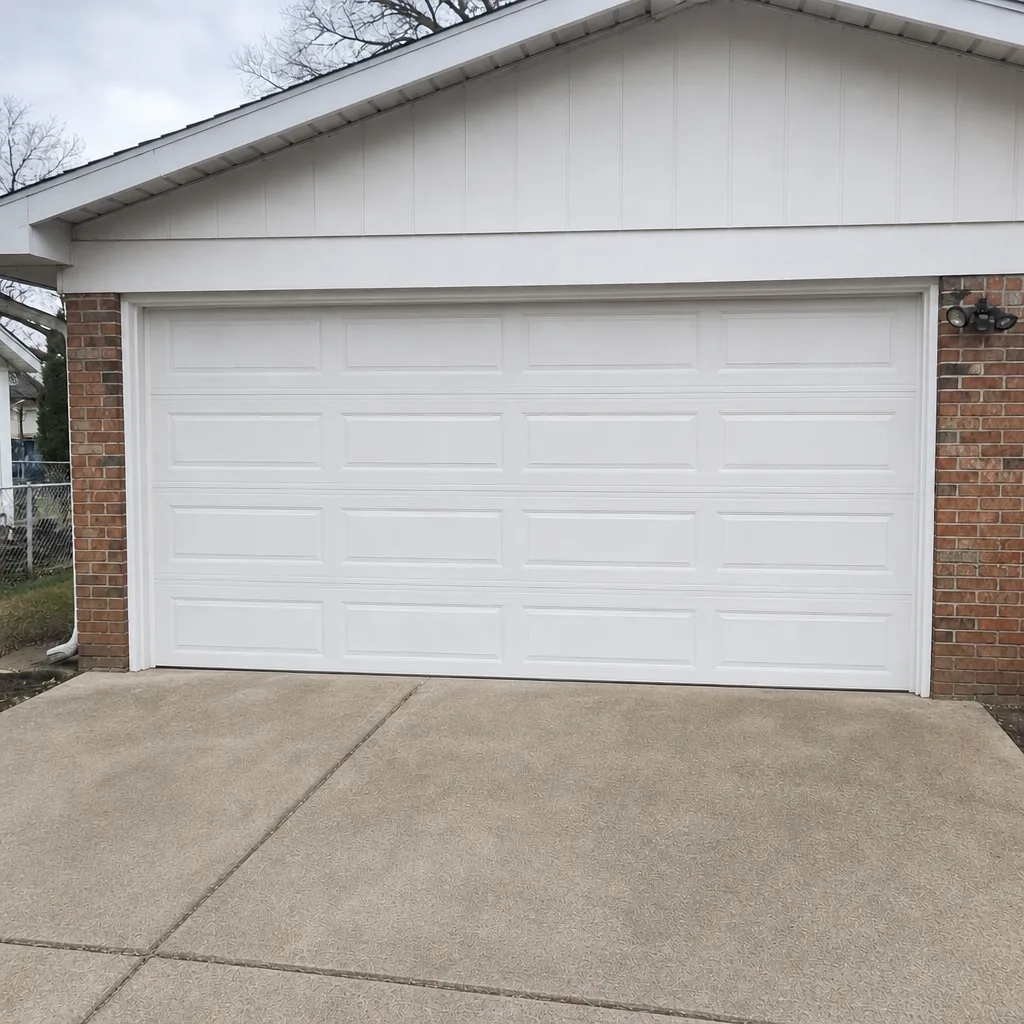 After
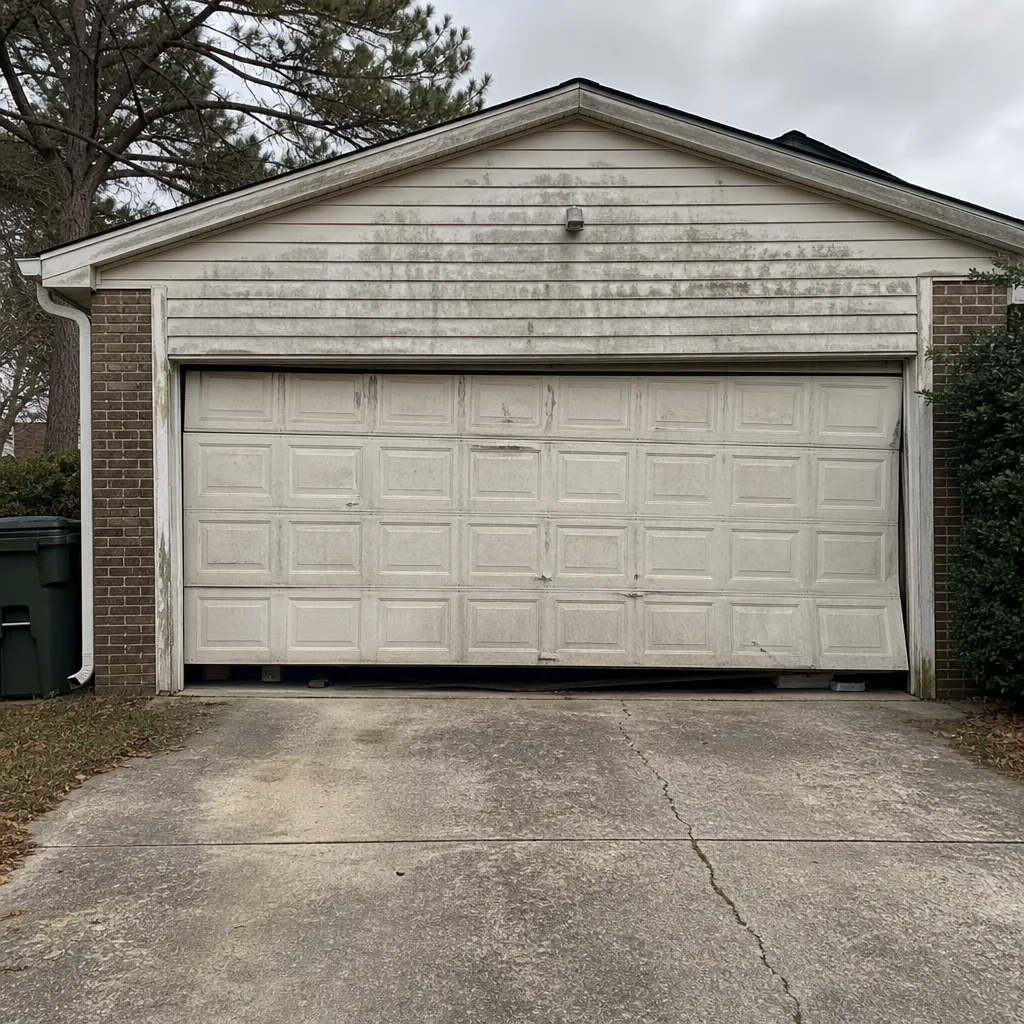 Before
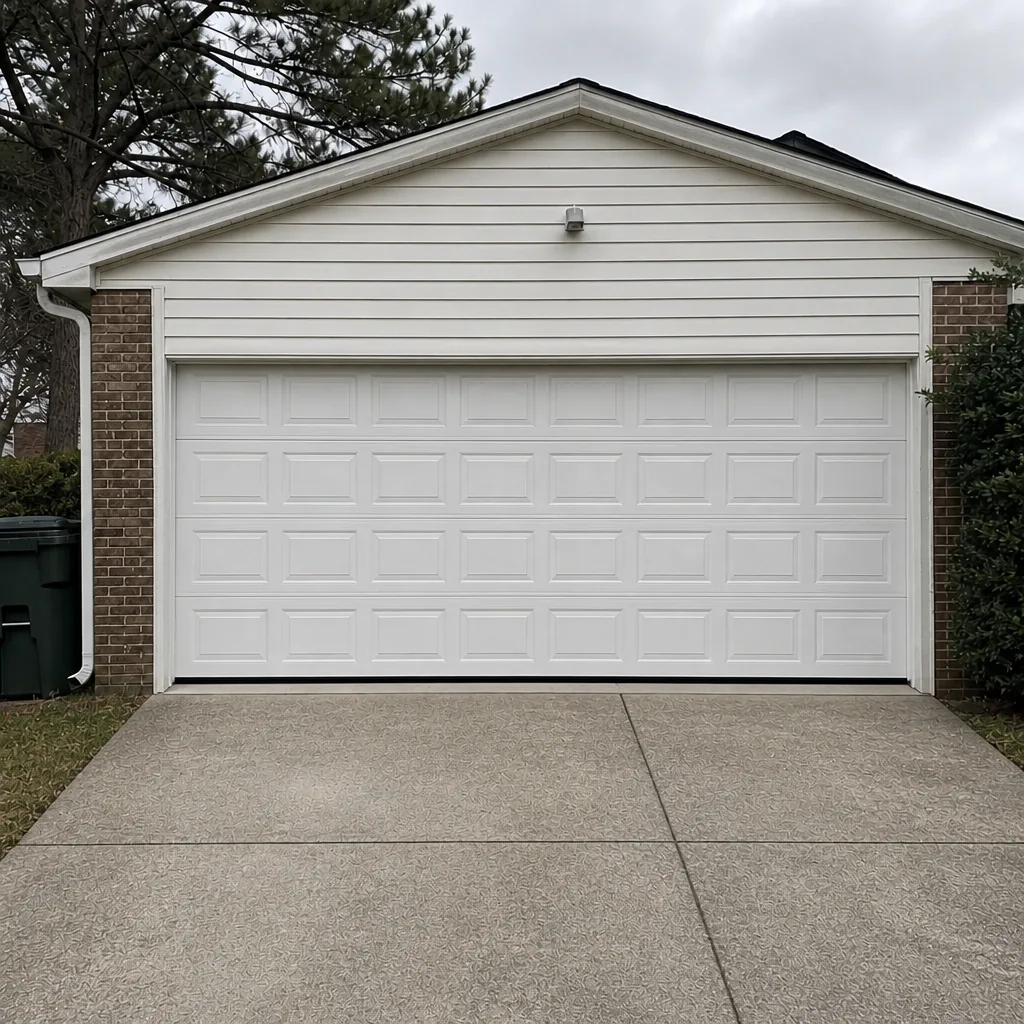 After
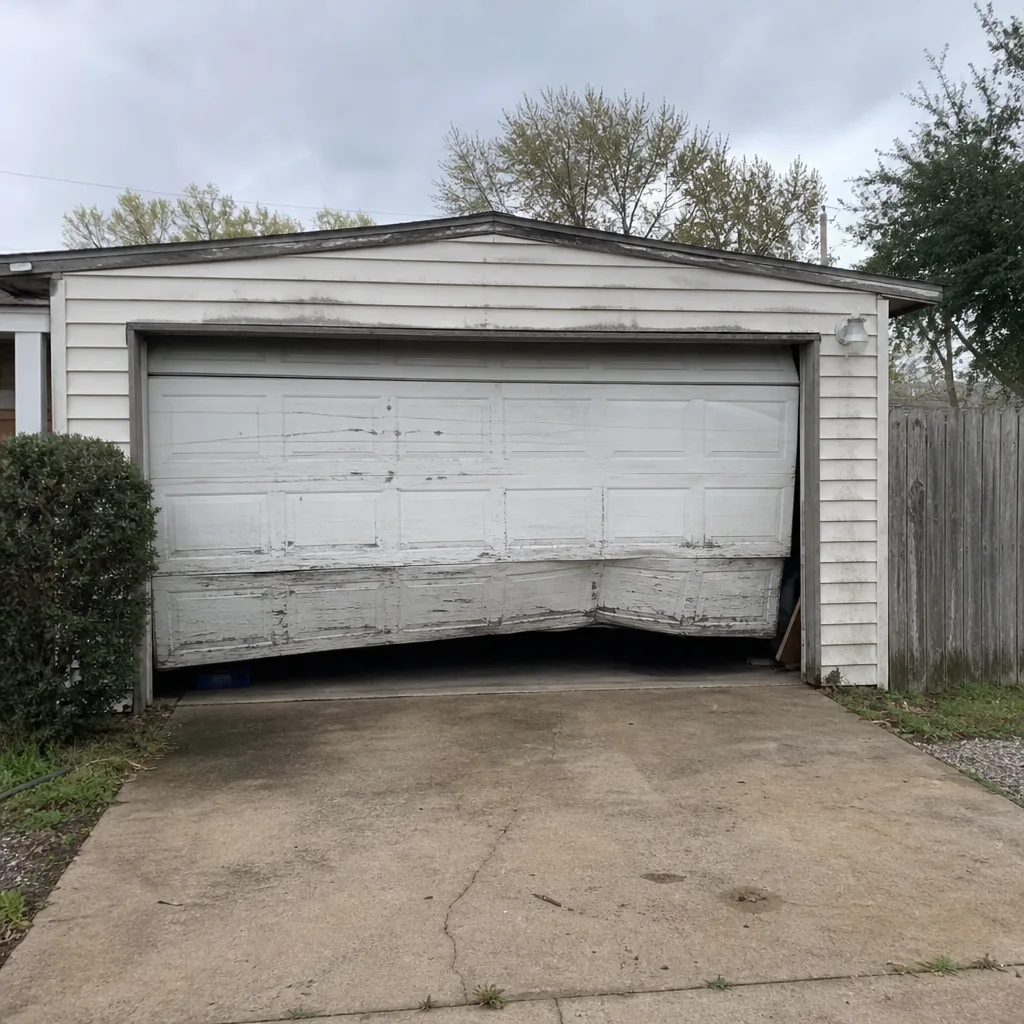 Before
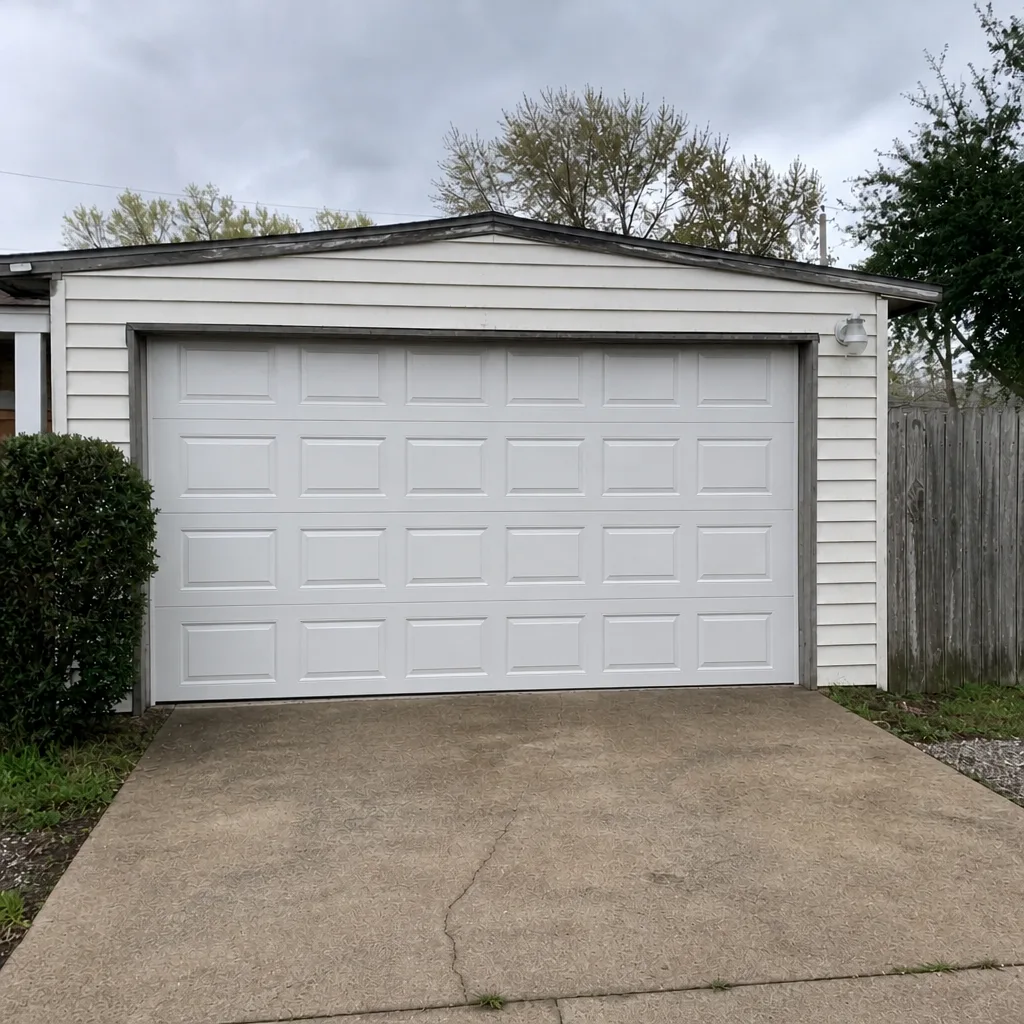 After
When to Call a Professional
Some jobs are safe for a homeowner to handle: replacing weatherstripping, lubricating hinges and rollers, resetting a remote, or adjusting the safety sensors on an opener. The moment work involves torsion springs, cables, drums, or the high-tension parts of the door, it’s a job for a trained technician. A torsion spring under load can cause serious injury if it releases unexpectedly, and cables are under similar tension. The same goes for anything involving the electrical supply to an opener or the wiring inside its panel. If your door has come off its tracks, if a spring has snapped, if the door is unbalanced, or if you’re not sure what’s wrong, call a professional rather than experimenting.
Thrive Garage Door Repair offers free estimates in Suffolk – call (888) 404-3987. We work on doors and openers from every major brand, and our technicians have up to 8 years of experience diagnosing and repairing the systems already in local homes. The price is set by the written estimate before any work starts, and the estimate itself is free.
Frequently Asked Questions
There’s no single best brand for every home in Suffolk. For most homeowners, Clopay, Amarr, Wayne Dalton, and Raynor all fit well because their parts are widely available and any trained technician can service them. The best brand for you is the one whose parts can be sourced locally and whose specs match your home’s climate exposure and insulation needs.
Not necessarily, but the network behind the brand matters more than the brand’s price. Doors that use standard, cross-compatible parts are often cheaper to repair than proprietary ones. Doors that require manufacturer-specific components tend to cost more every time they break. Ask about parts availability before you buy, not after.
Usually not. If the door is structurally sound, a hardware overhaul plus new weatherstripping or a retrofit insulation kit often gets you the same result at a fraction of the cost. Replacement is the sensible choice when panels are damaged, tracks are badly out of alignment, or multiple components are approaching end of life at once.
Call two or three independent garage door repair companies in Suffolk and give them your door’s model number. Ask when they could have a replacement spring on site. If they can source it same-day or next-day, you’re in good shape. If they have to order through a dealer, you’re now aware of your ownership cost.
For most homeowners, the door brand matters more, but the opener brand still matters. LiftMaster and Chamberlain lead on parts availability and smart-home features. Genie and Craftsman cover the second major platform. Any of these brands will work with any of the major door brands when it’s installed correctly.
Insulation value and steel gauge together. Insulation matters because of Suffolk’s long humid summers, especially on attached garages. Steel gauge matters because it determines how the door handles wind-blown debris and everyday bumps over the years. Everything else is secondary.
The Bottom Line
The right garage door brand isn’t the one with the biggest showroom or the longest list of premium features. It’s the one whose parts are stocked locally, whose components any trained technician can service, and whose specifications match your home’s climate and insulation needs. Clopay, Amarr, Wayne Dalton, and Raynor all fit that profile when specified well. LiftMaster and Chamberlain own the opener side. Read the warranty’s fine print, run the parts-availability check before you sign anything, and don’t overlook a door that’s already working – sometimes the brand that’s already on your house is the right brand for the next ten years.
For a free estimate on a new door, a repair, or an opener upgrade in Suffolk, call Thrive Garage Door Repair at (888) 404-3987. We answer 24/7, we dispatch technicians from 7am to 7pm Sunday through Friday, and we close on Saturdays. The price is set by the written estimate before any work starts, and the estimate is free.
Written by the team at Thrive Garage Door Repair.